Universities across the country are adopting policies under the banner of “institutional neutrality,” which, at face value, sounds entirely reasonable. A university’s official voice should remain measured, cautious, and focused on its core mission regardless of which elected officials are in office. But two very different interpretations of institutional neutrality are emerging.
At places like the University of Wisconsin – Madison and Harvard, neutrality is applied narrowly and traditionally: the institution itself refrains from partisan political statements, while faculty leaders and scholars remain free to speak in their professional and civic capacities. Elsewhere, the same term is being applied far more aggressively — not to restrain institutions, but to silence individuals.
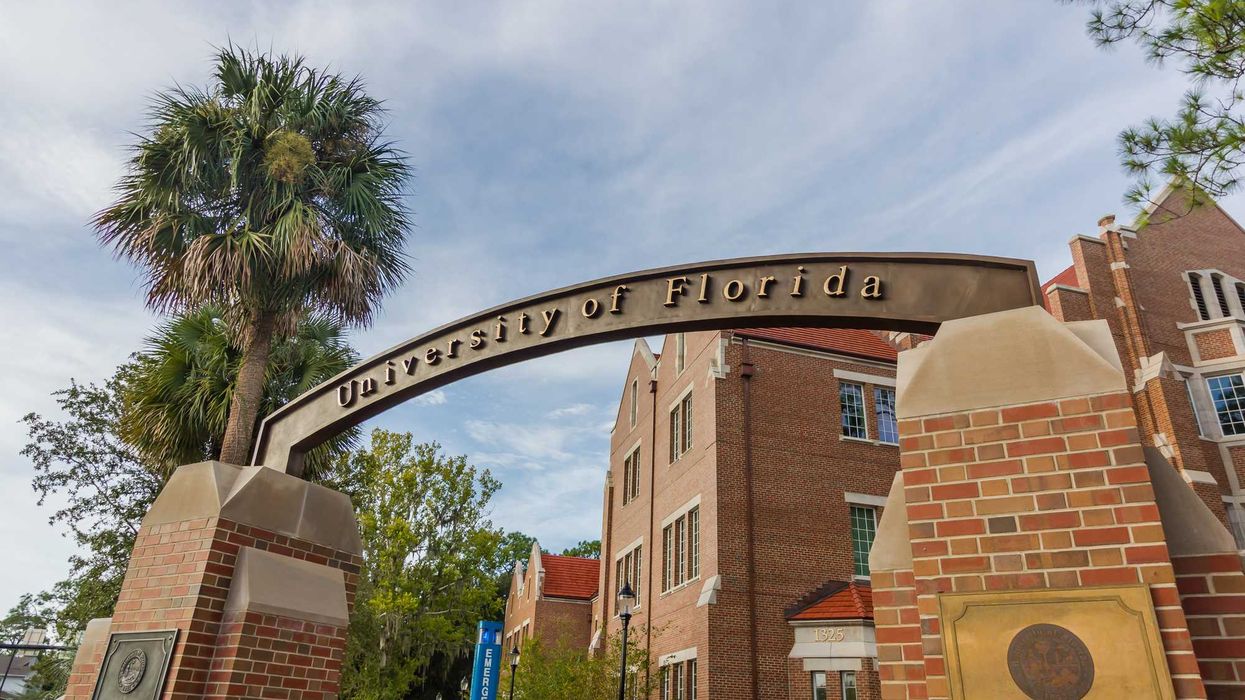
The University of Florida — my own alma mater — is one of those schools where institutional neutrality is being used to squelch far more than just the voice of the university and its top leadership. UF’s rule bars a deeper layer of campus “leaders” — including department chairs, program directors, and faculty administrators — from making statements that top-level administrators could interpret as political, even when those statements arise from professional expertise rather than any official university role. It’s one thing for a university president to refrain from endorsing candidates. It’s another to tell the head of an athletic program that advocating for Title IX protections is now too “political,” or to punish a department chair for defending the integrity of their curriculum.
Those examples aren’t hypothetical — this kind of speech has long been part of UF’s identity. In 2002, UF Athletic Director Jeremy Foley publicly defended the university’s commitment to women’s athletics at a time when some sought to scale back Title IX enforcement. He called gender equity in sports “the biggest dilemma facing us” and made clear UF would expand opportunities rather than shrink them. That stance was political and principled — and it strengthened the university.
A decade later, Dr. Paul Ortiz, director of UF’s Samuel Proctor Oral History Program, spoke out when political pressure threatened to limit how UF faculty could teach subjects such as race, inequality, and Florida’s contested histories. As faculty union president, he warned that outside influence was already narrowing what scholars could say in the classroom. His remarks were pointed and public — exactly the kind of intellectual honesty universities depend on.
Under UF’s definition of “neutrality,” both of these statements would be forbidden. Foley and Ortiz were not issuing university proclamations; they were exercising the civic and professional responsibility their roles demand. Silencing voices like theirs doesn’t make a university neutral. It makes it timid — and turns an institution into a place unwilling to let its own experts speak.
This policy arrives at a moment when independent internal voices at UF matter more than ever. Over the past year, the university’s presidential search became a political spectacle. Former U.S. Senator Ben Sasse resigned abruptly as university president. University of Michigan President Santa Ono was then unanimously approved by the Board of Trustees to become UF’s next president — only to have the appointment blocked when the state’s Board of Governors refused to confirm him after grilling him over DEI programs at Michigan. UF has since hired Donald Landry on an interim basis, under a contract that ties key elements of the role to Tallahassee’s culture-war priorities. When key variables in a university’s leadership are explicitly aligned with political priorities, restricting internal voices removes a critical check on power.
Contrast UF’s approach with how other major universities have handled institutional neutrality. At the University of Wisconsin–Madison, the policy is narrowly defined: the institution refrains from partisan political statements, but it does not police the speech of department chairs, program directors, or faculty leaders acting as individuals. Harvard and other institutions have taken a similar approach, limiting neutrality to official university communications rather than the voices of scholars and academic leaders. The institution stays neutral; the people who make the institution excellent remain free to speak.
That is the correct balance. UF’s approach is not.
Universities nationwide are grappling with how to remain institutionally neutral without suppressing academic freedom. The choices being made now will determine whether neutrality serves as a guardrail for public trust or a mechanism for enforced silence.
Florida’s political environment makes the consequences especially stark. Higher education in the state is already under pressure from sweeping legislation affecting academic freedom, admissions, curricula, and hiring.
As a UF graduate, I want my alma mater to model intellectual courage, not fear. A university can function without political statements from its president. It cannot function if the people responsible for teaching, research, and student advocacy are told their expertise is too risky to share.
Neutrality, in its honest form, protects institutional trust. But used as it is at UF — and increasingly elsewhere — neutrality becomes a gag order.
And if this shift stands, the silence won’t reflect restraint at all. It will reflect the cost of speaking the truth in institutions that once existed to protect it.
Brent McKenzie is a writer and educator based in the United States. He is the creator of Idiots & Charlatans, a watchdog-style website focused on democratic values and climate change. He previously taught in Brussels and has spent the majority of his professional career in educational publishing.