

Skip to content
Search

Latest Stories

Top Stories

Election Cycle

The period between elections for each federal office, used by the Federal Election Commission to set campaign contribution limits. A donor may give the hard money maximum to a House candidate every two years, a presidential candidate every four and a Senate candidate every six, for example.

Read more about election cycles.


Read More

The Pennsylvania state capitol building.

The Pennsylvania state capitol building.

jimfeng/Getty Images

Pennsylvania’s Bipartisan Exchange Is Rebuilding Trust in Governance

The University of Pittsburgh Institute of Politics has nearly 40 years of experience working with legislators from different political parties, and it is building on this history by drawing on lessons from the successful American Congressional Exchange model, begun in 2018 at the Bipartisan Policy Center, and from state exchanges now underway in Minnesota and Michigan. The University of Pittsburgh Institute of Politics, in collaboration with the Bridge Alliance, has launched the Pennsylvania Legislative Exchange.

This state-based, systematic approach is designed to foster better relationships and build trust across the political aisle with the following guiding principles:

Keep ReadingShow less
Shadow on a wall of Judge hitting gavel in court, concept of justice, law, and legal protection

DOJ lawsuits in Alaska and California preview post-Election Day fights over certification and seating winners. Here’s how officials and voters can prepare.

Aitor Diago / Getty Images

The Lawsuits Will Lose. The Delays Will Still Win.

Less than two weeks before Election Day, President Trump’s Justice Department asked a federal court to stop Alaska from certifying its U.S. Senate race if Republican Sen. Dan Sullivan loses to Democrat Mary Peltola. The lawsuit claims that a second candidate on the ballot, Daniel J. Sullivan, will confuse voters. That argument went nowhere in June, when the Alaska Supreme Court ruled that the state had no legal way to remove him from the ballot. Asked about the suit, the president took credit. “I’m the one that said do it,” he told reporters.

Alongside the Alaska suit, the Trump administration sued California to keep the state from counting mail ballots from 20,000 people it calls “likely” noncitizens. Over the summer, the Department of Homeland Security put that number at 190,000. Legal experts expect both suits to fail, as so many suits like them have. Still, Alaska and California give us an early look at what the weeks after November 3rd could bring: recount demands, calls to review or throw out ballots, and pressure to delay seating winners.

Keep ReadingShow less
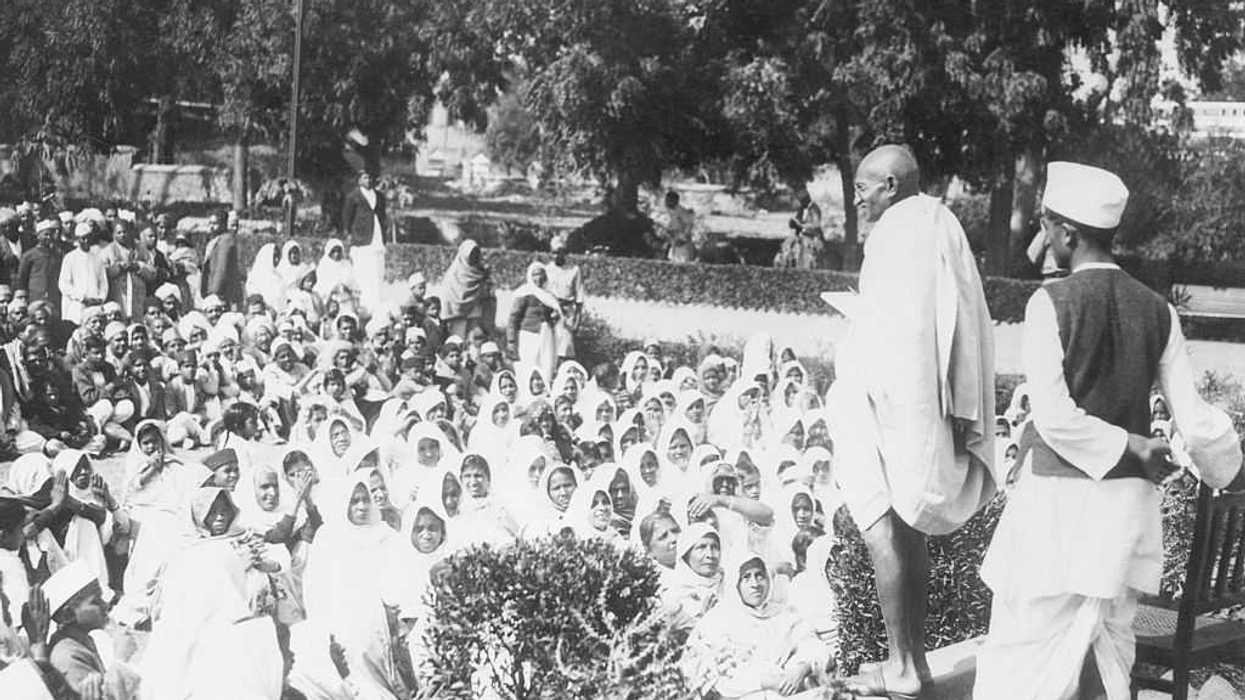
Mahatma Gandhi addressing some of his thousands of followers on a lawn.

Mahatma Gandhi addressing some of his thousands of followers on the lawn of the home of Dr. Ansari where Gandhi stopped during his peace meetings with Viceroy Lord Irwin.

Bettmann/Getty Images

Everyone Wants Peace. That’s the Problem.

In 2007, the United Nations gathered to declare an International Day of Non-Violence. It fittingly chose Gandhi’s birthday, October 2nd, for the occasion: a day to affirm “the universal relevance of the principle of non-violence” and strive toward a common culture of tolerance and understanding.

The resolution passed by consensus, co-sponsored by 140 member nations. Each attested to what nearly everyone believes: that they—their culture, their country, their party, their movement— want peace.

Keep ReadingShow less