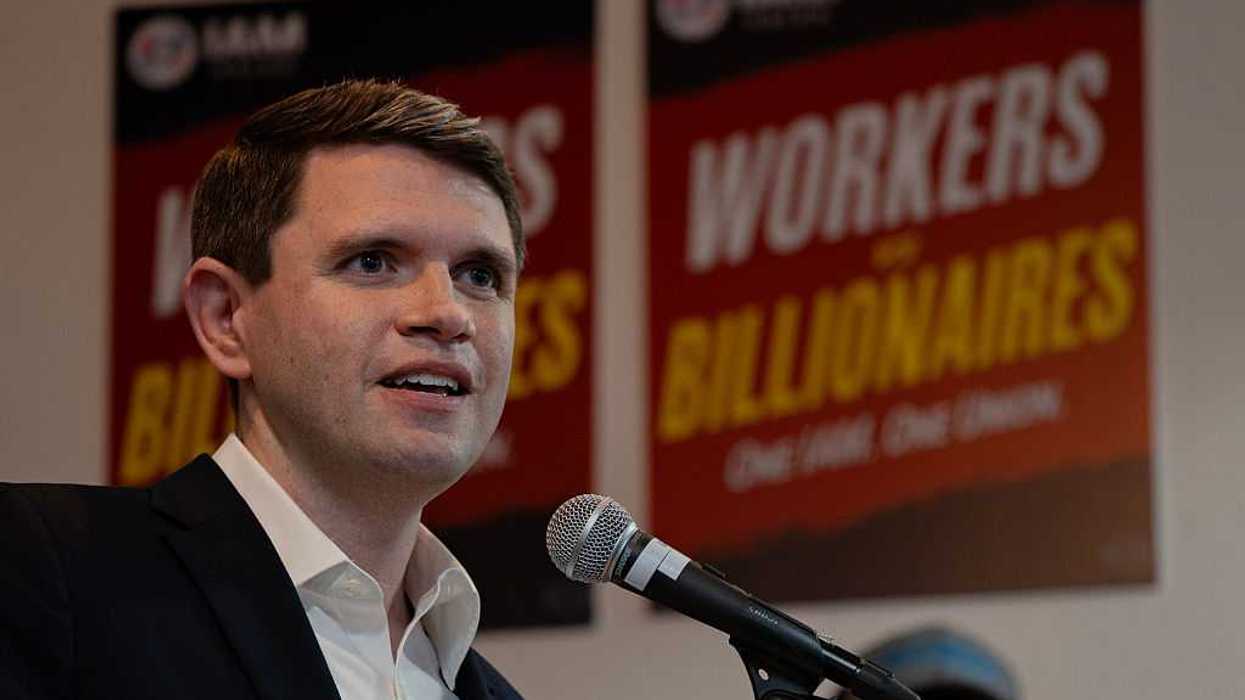

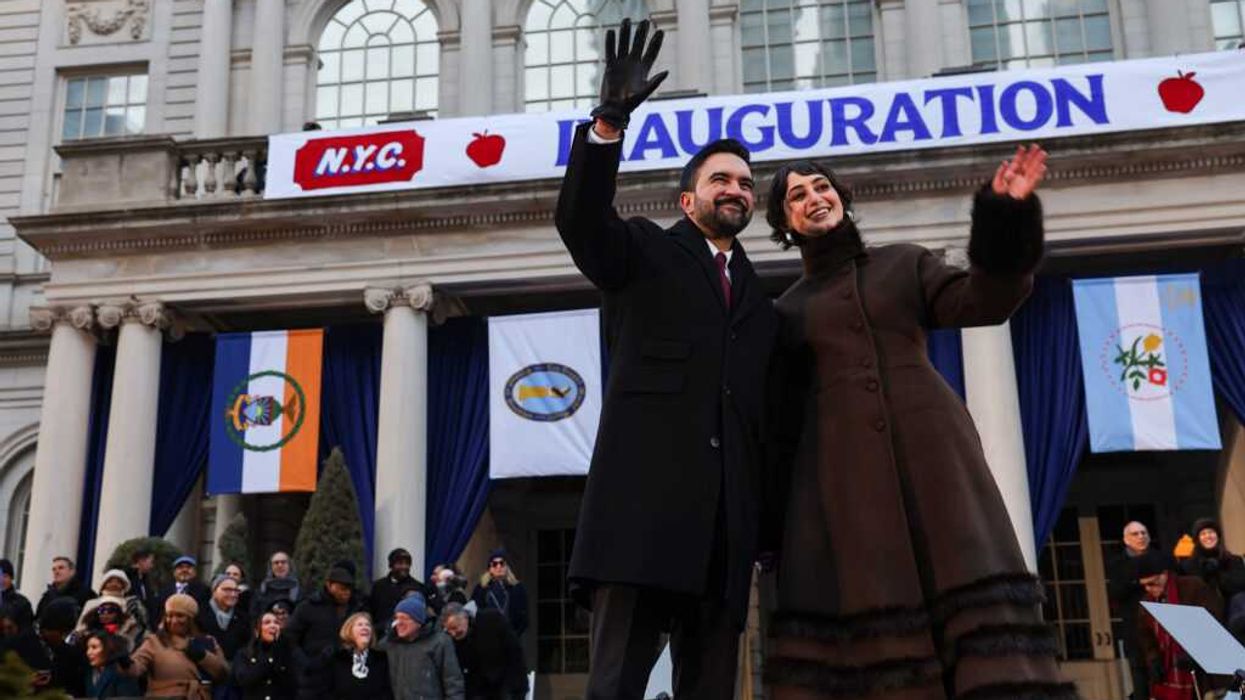

The day before the Trump administration captured and extradited Venezuelan dictator Nicolás Maduro, many on the right (including yours truly) had a field day mocking something the newly minted mayor of New York City, Zohran Mamdani, said during his inaugural address.
The proud member of the Democratic Socialists of America proclaimed: “We will replace the frigidity of rugged individualism with the warmth of collectivism.”
The phrase “warmth of collectivism” offended many of us because “collectivism” is widely understood as a generic label for extreme left-wing political systems.
Understandably, the following night’s big news — the socialist dictator of Venezuela, itself a shining example of “warm collectivism,” being removed at the point of a gun(boat) — quieted the ideological brouhaha.
But I think it’s worth returning to something else Mamdani said in his inaugural address, and in that same sentence: “rugged individualism.”
The term “rugged individualism” was coined by President Hoover in 1928. But we have Democrats to thank for its immortality because Democrats — and democratic socialists — have been running against it, and against Hoover, ever since. FDR campaigned in 1932 by denouncing Hoover’s “doctrine of American individualism” and never really stopped suggesting that Hoover and his party were fanatically anti-government, favoring “devil take the hindmost” capitalism.
The attacks on Hoover and conservatives generally as libertarian zealots remain ingrained in the popular, journalistic and academic imagination to this day. And they were unfair from the start. A progressive Republican who’d served in the Wilson administration, Hoover was never the heartless advocate of do-nothing austerity his opponents painted. Indeed, government spending during Hoover’s four years in office nearly doubled in real terms (and, yes, Republicans controlled Congress).
For generations the hard left has framed every debate as between frigid rapacious capitalism and nurturing, warm government help. The right often offers the mirror image of the American dream and free enterprise versus sinister un-American collectivism in one form or another.
This framing fuels political dysfunction and popular distrust because it renders political combatants blind to the reality of the status quo: America is neither a free market utopia nor a free market dystopia. Indeed, as an actual free market fanboy myself, I cringe when people call Trump a champion of unfettered capitalism. State capitalism, maybe. But protectionism and industrial policy is not the capitalism of Milton Friedman and Friedrich Hayek.
The suggestion that capitalism in America has no fetters is hard to square with the existence of a vast apparatus of regulatory agencies — FCC, SEC, EPA, OSHA, FHA, etc. — or the fact that roughly half of all federal spending goes to entitlement programs, chiefly Medicare, Medicaid and Social Security.
It is flatly preposterous to look at New York City in 2026 — or in 1986, or even 1936 — and see devil-take-the-hindmost capitalism at work. The city budget Mamdani inherited spends $19.26 billion on public assistance. That money sits atop billions more in state and federal spending. There is a vast network of social workers, health and safety inspectors, sanitation workers and educators among its more than 300,000 employees. Maybe they don’t have enough. But that’s not a regime of “rugged individualism” either.
Sen. Bernie Sanders, who spoke at the Mamdani ceremony last week, repeated his refrain about the need for the rich to pay their “fair share.” In 2022, millionaires in NYC made up less than 1% of tax filers, yet they paid 40% of city income taxes. Is that a “fair share”? People can disagree, but it ain’t nothing.
Maybe it’s bad that the top 10% of American tax filers make nearly half of the income in America — and provide three-quarters of the income tax revenues. Maybe it’s good that the average wage earner will receive more in entitlements than they paid in. Maybe it’s right that the poorest 20% of Americans receive roughly $6 from the government for every dollar they pay in taxes. Perhaps we should be ashamed that we spend less than France on social welfare programs but more than Switzerland and the Netherlands. Reasonable people will differ.
But that’s the point. Talking about an America that doesn’t exist is unreasonable. It makes it harder to offer reasonable proposals for government action in any ideological direction. If people believe that the status quo is wild west capitalism, then even attempts to cut red tape or reform public assistance sound cruel and unnecessary. And if the existing safety net counts as “rugged individualism” to politicians like Mamdani, you can’t — or at least I can’t — blame critics for fearing his vision of “warm collectivism.”
Jonah Goldberg is editor-in-chief of The Dispatch and the host of The Remnant podcast. His Twitter handle is @JonahDispatch.