



Not only is the emperor wearing no clothes, but he is standing alone in front of a world that is laughing at him.
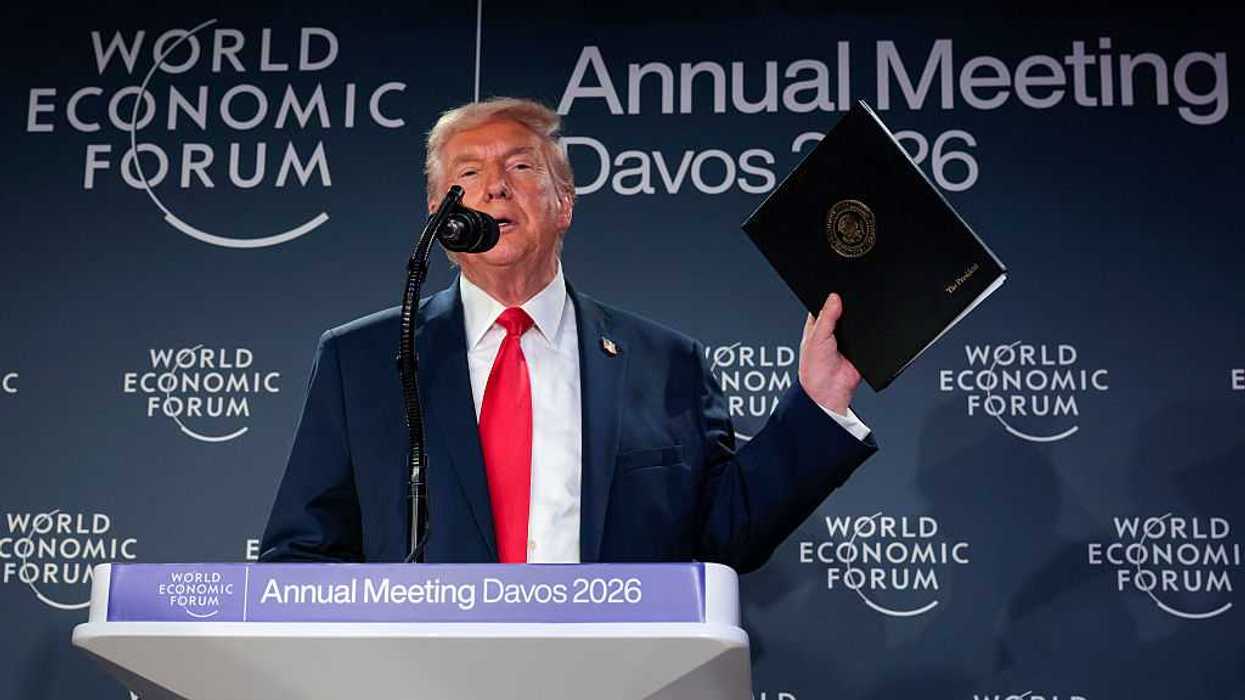
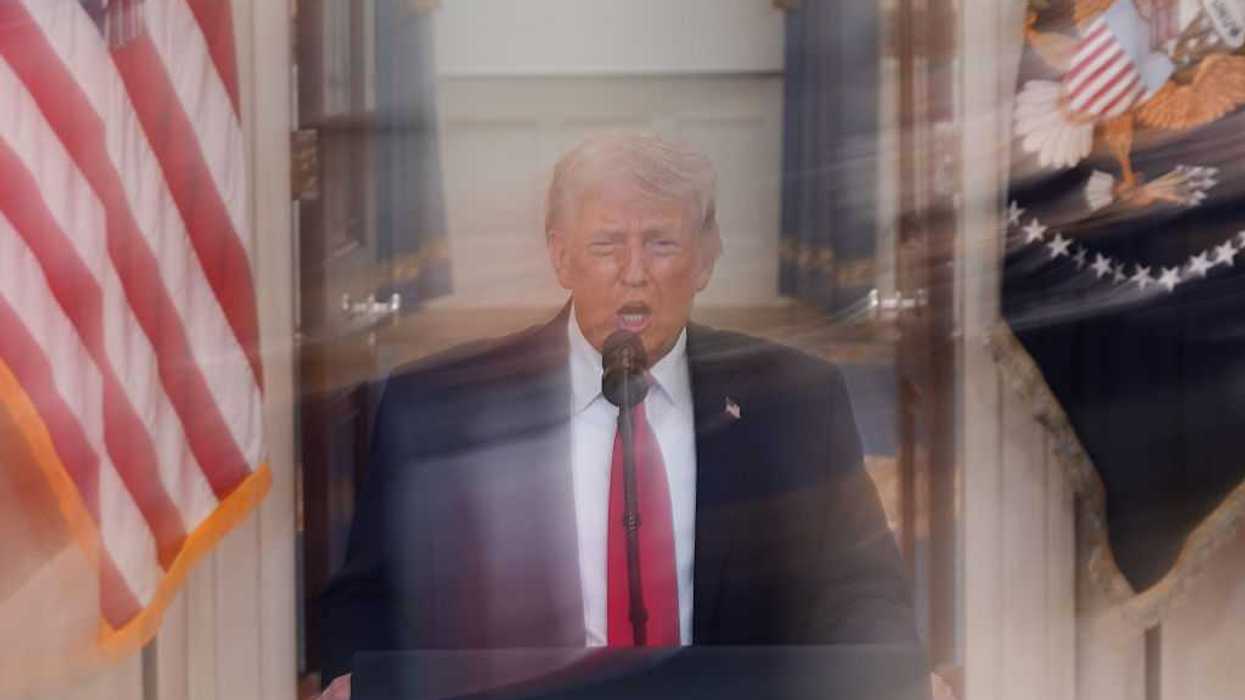
President Donald Trump addressed top political leaders from around the world at the World Economic Forum's Annual Meeting 2026 in Davos, Switzerland, on Jan. 21. During the speech, Trump revisited his old, grievance-filled hits, such as “Sleepy Joe Biden” and the 2020 election being stolen. He was tilting at windmills, both literally and figuratively. He also appeared confused, mixing up Greenland with Iceland on more than one occasion.
But perhaps the most damaging part of his speech was the way Trump spoke of our North Atlantic Treaty Organization (NATO) allies. The casualties of his words and recent actions may be irreparable in the world’s eyes.
America needs allies to stay safe, but Trump’s narcissistic foreign policy tactics will never admit that. Trump’s foreign policy views are based on what he wants or what he thinks might benefit him, and rather than true isolationism, he treats security guarantees as protection rackets rather than as mutual interests.
This vision of solitary strength appeals to those who see alliances as burdens, foreign entanglements as traps, and international cooperation as weakness. But this thinking fundamentally misunderstands how power works in the modern world and ignores the hard experiences of history.
Alliances are not charity. They are investments in American security that return dividends far exceeding their costs. Consider the global network of military bases that enables American strength. From Ramstein in Germany to Japan, Qatar to Australia, these installations exist because host nations permit them.
Without allied cooperation, the United States would lose its ability to respond rapidly to threats, collect critical intelligence, and maintain credible deterrence against adversaries.
The intelligence sharing among Five Eyes partners, the United States, the United Kingdom, Canada, Australia, and New Zealand, provides capabilities no single nation could replicate alone. This cooperation depends on decades of trust. Treating allies as transactional partners erodes that trust and the unique access it provides.
Maintaining the United States' technological advantage also depends on allied cooperation. The most advanced semiconductors powering everything from smartphones to weapons systems come from Taiwan and South Korea. Leading-edge research happens in partnerships spanning allied universities and laboratories. Supply chains for critical technologies stretch across friendly nations. Alienating these partners doesn't make America more independent; it makes the country more vulnerable to disruption and weakness.
Trump seems incapable of recognizing the ultimate, and non-quantifiable sacrifice that our NATO partners made. When the United States invoked NATO Article 5 after Sept. 11, allied nations answered. They fought and died in Afghanistan and Iraq, with over 1,000 non-American NATO troops giving their lives in that conflict.
Denmark, which has sovereignty over Greenland, suffered 43 fatalities in the war in Afghanistan, the highest loss per capita within the coalition forces.
It is particularly repulsive when Trump said, “The United States is treated very unfairly by NATO. I want to tell you that. And when you think about it, nobody can dispute it. We give so much, and we get so little in return. And I've been a critic of NATO for many years. And yet I've done more to help NATO than any other president by far than any other person.”
Trump is no student of history because if he were, he would understand that it can provide a strong warning. In the 1930s, democratic nations failed to maintain their alliances and stand together against rising authoritarianism. The result was the most destructive war in human history. The postwar alliance system was built on that painful lesson: collective security prevents conflicts that cost far more than alliance maintenance ever could.
America standing alone isn't a strength; it's strategic suicide. In a dangerous world, allies fortify American power, extend its reach, share its obligations, and provide the partnerships necessary for addressing threats no nation can face successfully in isolation. The choice isn't between independence and entanglement; it's between security through cooperation and vulnerability through isolation.
So, the big cheese stands alone, and Americans are less safe because of it.
Lynn Schmidt is a columnist and Editorial Board member with the St. Louis Post-Dispatch. She holds a master's of science in political science as well as a bachelor's of science in nursing.









The President Invited Iran to Bomb My Home