

Skip to content
Search

Latest Stories

Follow Us:
Top Stories

Podcast: Fear and loathing in Washington: The debt ceiling

Podcast: Fear and loathing in Washington: The debt ceiling

Here we go again. Congress is facing a June 1 deadline to avoid a totally preventable “debt ceiling” crisis. If no one flinches in this dangerous game of chicken, the U.S. economy will be dragged into a cataclysm, destroying America’s global reputation and unleashing unfathomable pain for every American family.

An artifact from World War I, the debt ceiling comes back every few years to provide existential drama — the battlefield of partisan politics. It all sounds a bit insane, but it’s only the latest crisis to be spawned by our increasingly dysfunctional political system.


On this week’s episode, Fernando is joined by Washington uber-insider Maya MacGuineas, president of the Committee for a Responsible Federal Budget, to discuss her mounting fear that a “default is possible” and what we can do about it.

Also, Fernando chats with Nellie Gorbea, former Rhode Island Secretary of State, for the latest installment of the X-Ray Vision interview. In this quirky conversation, Nellie shares her dream superpower, transformative leadership vision, and why Puerto Rican rum is superior to scotch.

Listen.


Read More

A Constitutional Provision We Ignored for 150 Years

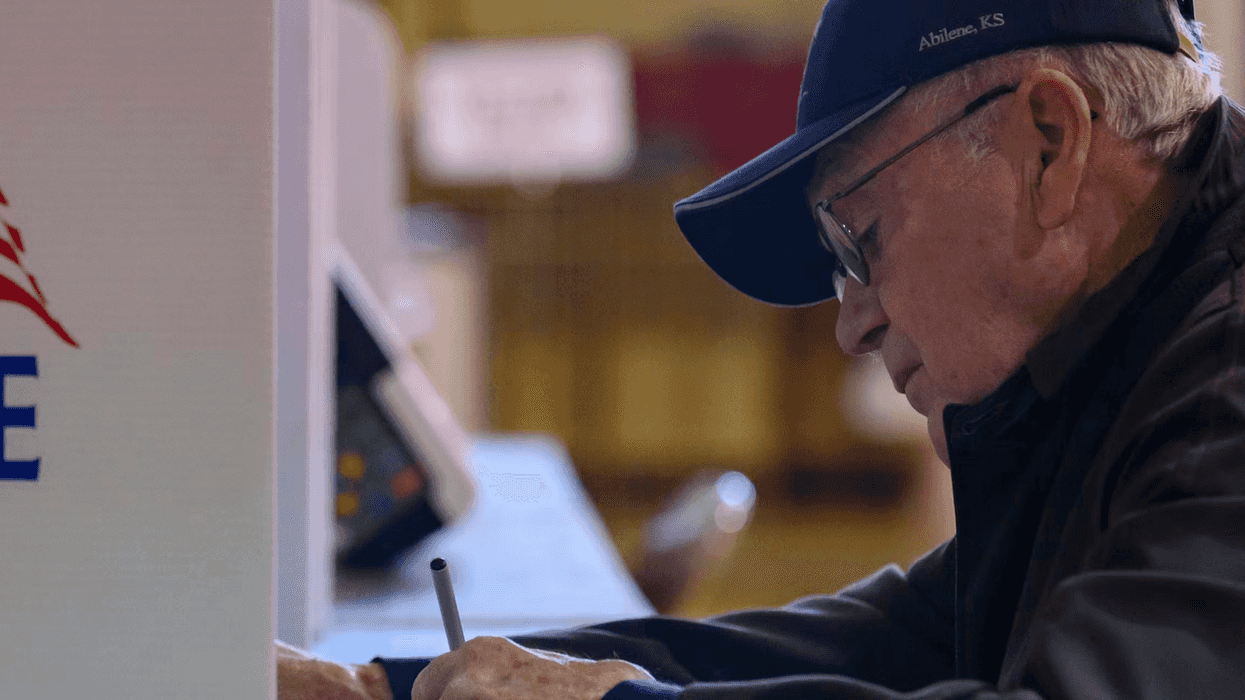
Voter registration in Wisconsin

Michael Newman

A Constitutional Provision We Ignored for 150 Years

Imagine there was a way to discourage states from passing photo voter ID laws, restricting early voting, purging voter registration rolls, or otherwise suppressing voter turnout. What if any state that did so risked losing seats in the House of Representatives?

Surprisingly, this is not merely an idle fantasy of voting rights activists, but an actual plan envisioned in Section 2 of the 14th Amendment, which was ratified in 1868 – but never enforced.

Keep ReadingShow less
An illustration of two hands controlling a small person attached to strings.

A comparison of the Trump administration, Orwell’s 1984, and Hitler explores warning signs of authoritarianism, propaganda, and threats to American democracy.

Getty Images, S-S-S

Parallels and Patterns: George Orwell’s 1984, Hitler’s Nazi, and Trump 2.0

George Orwell’s 1984 is a classic dystopian novel that is a regular part of American high school English and social studies classes. It is usually taught in 9th or 10th grade to introduce students to themes like totalitarianism, propaganda, and censorship. The book remains relevant because it helps students understand how oppression and manipulation operate, offering important insights into their roles as citizens who help protect democracy.

Similarly, American high schools teach about Adolf Hitler’s rise to power in 1933 and how the Nazis changed German society, usually in 11th or 12th grade. This history provides students with clear ways to judge modern leaders and helps them spot similar patterns in today’s politics, including those seen in figures like Donald Trump.

Keep ReadingShow less
A close up of a person's hands typing on a laptop.

As AI reshapes the labor market, workers must think like entrepreneurs. Explore skills gaps, apprenticeships, and policy reforms shaping the future of work.

Getty Images, Maria Korneeva

We’re All Entrepreneurs Now: Learning, Pivoting, and Thriving the Age of AI

What do a recent grad, a disenchanted employee, and a parent returning to the workforce all have in common? They’re each trying to determine which skills are in demand and how they can convince employers that they are competent in those fields. This is easier said than done.

Recent grads point to transcripts lined with As to persuade firms that they can add value. Firms, well aware of grade inflation, may scoff.

Keep ReadingShow less