



In recent days, headlines have carried a familiar and unsettling refrain: a shooting at Brown University; gunfire at a Chanukah celebration on Bondi Beach; a violent attack at the doorstep of a professor in Brookline, Massachusetts. Each incident is different, yet together they form a troubling pattern. American life is increasingly interrupted by violence, intolerance, and the erosion of the civic norms that once sustained our democracy.
These interruptions are no longer rare. They come in schools, houses of worship, public gatherings, and private homes from coast to coast. They disrupt daily life and our understanding of what it means to share a society with people of different identities and beliefs. When individuals begin to see those who disagree with them not as neighbors but as enemies, democracy begins to unravel.
My latest research interest focuses on President James A. Garfield, the subject of the Netflix series Death by Lightning. Garfield is often remembered as a historical footnote, a promising leader whose presidency lasted just 200 days before he was assassinated in 1881. Yet his life story is extraordinary: he rose from poverty and familial instability to become a scholar, Civil War general, congressman, and ultimately president, a position he neither sought nor campaigned for.
It was Garfield’s death, however, rather than his accomplishments, that shaped his legacy. He was killed by a man who believed his personal grievance justified reshaping the nation through violence. The specific circumstances may feel distant, but the underlying dynamic of grievance untethered from democratic guardrails is painfully recognizable today.
Garfield understood this danger long before he became its victim. He wrote: “Next in importance to freedom and justice is popular education, without which neither freedom nor justice can be permanently maintained.” For Garfield, education was the cornerstone of self-government, the means by which citizens develop responsibility, character, and the civic habits that allow a diverse people to resolve conflict without abandoning democracy for force.
We are sadly again confronting a moment when violence has become the language of despair. Hate crimes are rising. Threats against public officials have become commonplace. School shootings are traumatizing a generation. Social media accelerates division and dehumanization. Political rhetoric rewards outrage rather than understanding. Many Americans feel unmoored and afraid.
If the disease is despair and disconnection, then the treatment must be civic formation.
Civic education is not an enrichment program or a list of governmental facts. It is the shared work of shaping citizens who understand how to sustain a free society. Done well, it teaches students how to disagree without distrust, how to balance rights with responsibilities, how to evaluate information, how to listen and argue, and how to see themselves as part of something larger than their own tribal network online. These are the dispositions that allow a pluralistic democracy to function and thrive.
At a time when many young people feel disempowered, angry, or unheard, civic education also provides agency and offers alternatives grounded in dignity and shared purpose. And at a time when violence interrupts the fabric of daily life, civic education helps repair the bonds that violence seeks to sever.
History also offers us voices of resilience. Rabbi Morris Adler of Detroit, a towering figure in American Jewish leadership, was murdered during Shabbat services in 1966 by a congregant in crisis. While cut down at the prime of his life, Adler consistently insisted that civic responsibility begins with refusing to surrender to hopelessness. His words inspired his community then and remind us today that “We dare not despair of the future, for despair is defeat before the battle is joined.”
As the United States approaches its 250th anniversary in 2026, Garfield’s approach to liberty and Adler’s steadfast embrace of hope feel newly urgent. A democratic society is not inherited fully formed; it must be taught, practiced, and renewed by every generation.
This sacred enterprise continues each day because our national future depends on it.
Savenor is a rabbi and executive director of Civic Spirit, a nonpartisan organization that provides training and resources to faith-based schools across the United States.










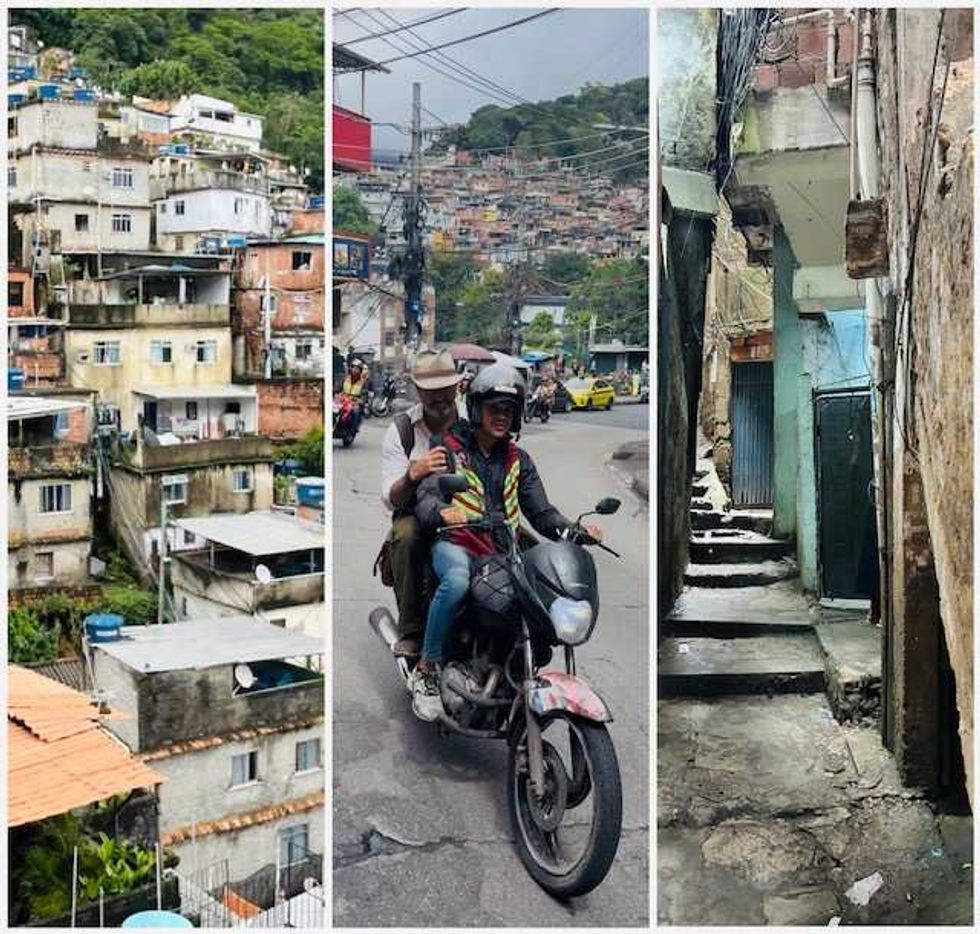 Scenes from Favela Rocinha, Brazil - (R-L) Rows of brick homes, Hugo Balta on a motorcycle taxi, and steep, winding roadsHugo Balta

 Following our HWF Civic Futures kickoff last week with Eric Liu, our design partners at Public/Official have created a unique visual to capture the “civic scaffolding” spirit of this conversation.
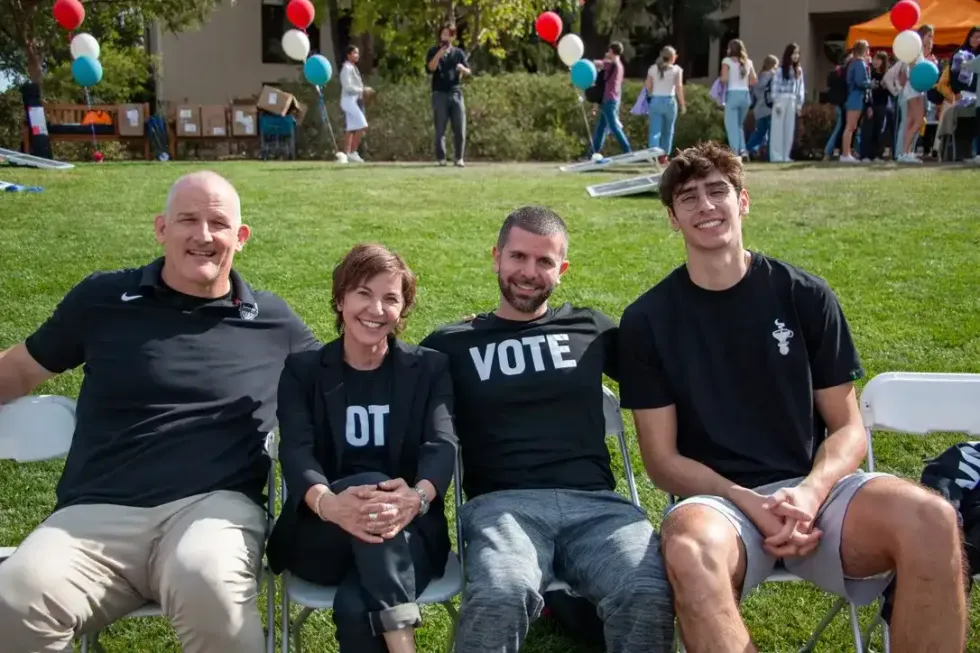 Lisa, Coaches Rev and Matt Elkin, and former Stanford Men’s Basketball star Maxime Raynaud at Stanford’s “All Vote No Play” Democracy Day, 2025