




Skip to content
Search

Latest Stories

Follow Us:
Top Stories

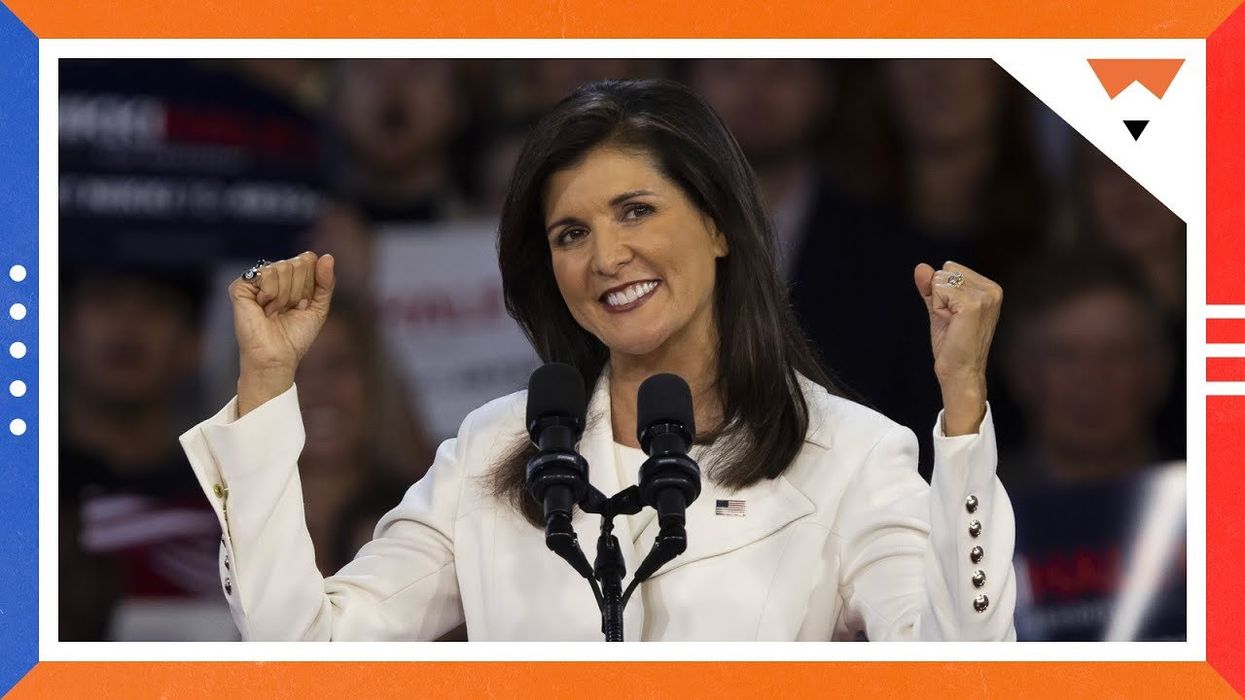
Video: Nikki Haley has tough competition in Trump and DeSantis

Last week, Nikki Haley became the first major candidate to challenge former President Donald Trump in the 2024 Republican presidential primary. She is a former state legislator and two term governor of South Carolina and former ambassador to the U.N. under Trump. If she were to win the nomination, she would be the first woman and first Asian American to lead the Republican ticket.

In this installment of the FiveThirtyEight Politics podcast, the crew discusses what her path to the nomination could look like, given that Trump and Florida Gov. Ron DeSantis are the only candidates who currently have sizable support in national polls.
Read More

DHS Funding During the Shutdown
Getty Images, Charles-McClintock Wilson

DHS Funding During the Shutdown

When Congress failed to approve funding for the Department of Homeland Security for the remainder of this fiscal year in February, almost all of its employees began to work without pay. That situation changed, however, on April 3, when President Donald Trump issued a memorandum ordering the DHS secretary and director of the Office of Management and Budget to “use funds that have a reasonable and logical nexus to the functions of DHS” to pay its employees and issue back pay.

Trump shifted money to avoid the political embarrassment that would be caused by the collapse of airport security screening through the actions of disgruntled agents and the disruption to air travel that would ensue. But it’s legally dubious.

Keep ReadingShow less
Living Underground: Tel Aviv in the Shadow of a Widening War

Steps leading to a private underground bunker in Tel Aviv, Israel.

Hugo Balta
A billboard that reads, "We've got your six," and "Confidential abortion support for service members, veterans, and their families. You make the appointment, we handle the rest."

Female service members face higher rates of sexual assault, limited reproductive healthcare, and policy barriers shaped by the Hyde Amendment and the Dobbs decision. This piece examines how military and VA policies are failing women in uniform and after service, widening inequality and restricting access to critical care.

All Women Left Behind

Our sisters in arms are facing a life cycle of abandonment. Female service members have a separation rate 28% higher than men, largely attributed to sexual assault, family planning, and childcare—inherently sexist issues that threaten to weaken our force. When women are more likely to be raped by a fellow soldier than killed by the enemy, with decades of unsuccessful efforts to reduce rape in the ranks, the military is lucky women volunteer to serve at all. But for those who do take the oath, the betrayal only deepens. In states with abortion bans, the uniform offers no protection against healthcare deserts created by Dobbs. Instead of expanding care, the Departments of Defense and Veterans Affairs have retreated, leaving these women with less access to care than they would have in a federal prison. Their president might be a blue falcon, but We the People are going to have their backs.

Just as the military sees more rapes than the civilian population, it also sees more unplanned pregnancies. Maternal death rates are higher in America than in other developed nations, but they are higher still in states with abortion restrictions. In fact, for women of reproductive age who live there, death rates are higher, independent of pregnancy. Following Dobbs, 40% of female service members saw increased risks to their health and careers, simply by being stationed at one of the 100 military installations housed in one of those states, while Pentagon officials admitted: “there is not much they can do [for them].”

Keep ReadingShow less