



Transportation Secretary Sean Duffy has been one of the most vociferous defenders of President Donald Trump’s expansive use of executive authority, withholding billions of dollars in federal funding to states and dismissing protests of the White House’s boundary-pushing behavior as the gripings of “disenfranchised Democrats.”
But court documents reviewed by ProPublica show that a decade ago, as a House member, Duffy took a drastically different position on presidential power, articulating a full-throated defense of Congress’ role as a check on the president — one that resembled the very arguments made by speakers at recent anti-Trump “No Kings” rallies around the country.
In an assertive, thoroughly researched 2015 legal brief, Duffy, then a Republican representative from Wisconsin, detailed the history of America’s creation in reaction to the absolute power of the English crown, invoking the Magna Carta and the Founding Fathers as he made the case for the separation of powers.
“Just as Congress may not bestow upon the President Congress’s own exclusive power to make, or to repeal, federal law,” Duffy argued, citing a 1998 court decision, “it may not bestow upon the Executive its own exclusive power of the purse.”
The brief went on to cite James Madison’s account of the Constitutional Convention, where there was “unanimous agreement that Congress, not the President, should control the purse.”
At the time, Duffy filed the friend-of-the-court brief in support of a lawsuit challenging the constitutionality of how the Consumer Financial Protection Bureau gets funded. Duffy, who chaired the House Financial Services Subcommittee on Oversight and Investigations, maintained that the agency’s unique funding system — its dollars come directly from the Federal Reserve System rather than by a congressional appropriation — improperly bypassed lawmakers’ authority.
The 39-page brief was filed under Duffy’s name along with a nonprofit group aligned with the Republican legal activist Leonard Leo and submitted by a preeminent conservative lawyer. Today, it stands in stark contrast to Duffy’s own actions as transportation secretary in the first year of Trump’s second stint in the White House. Indeed, his attempts to restrict congressionally appropriated transportation funding across all 50 states this year have been condemned by a congressional watchdog and federal judges, resulting in stinging public rebukes from the other branches of government that echo his own 2015 position.
Peter Levine, a civics expert at Tufts University, said that while it could be that Duffy’s views on presidential power have evolved over time, his apparent flip-flopping on something as fundamental as the meaning of the Constitution raises the prospect that Duffy may “just be playing a game for power.”
“The Constitution is a promise to continue to apply the same rules and norms over time to everybody,” he added. “When political actors completely ignore that, and just go after their own thing, I don’t think the Constitution can actually function.”
In response to questions, a Department of Transportation spokesperson asked for a copy of Duffy’s brief. But after ProPublica provided it, the spokesperson stopped responding. A message sent to a number listed for Duffy hasn’t been returned.
The expansion of executive power has been a hallmark of Trump’s second administration. The president issued a whopping 214 executive orders between Jan. 20 and Nov. 20, according to the The American Presidency Project at the University of California, Santa Barbara. In both “number and ambition,” the orders and resulting actions are “exceeded on these dimensions in the last century only by Franklin D. Roosevelt,” one Harvard Law School professor recently noted.
Duffy has cited some of those directives as he has withheld congressionally approved transportation funds. And administration officials have defended doing so, claiming that a post-Watergate law asserting Congress’ power over spending improperly restrains the president’s authority.
But a congressional watchdog and the courts have taken issue with that expansive interpretation of federal authority.
For Duffy, the first instance came in May, when the Government Accountability Office, a nonpartisan arm of Congress, concluded that the DOT had violated the law when it halted payments in February from a $5 billion fund for electric car charging stations that Congress approved under former President Joe Biden’s bipartisan infrastructure law.
“The Constitution specifically vests Congress with the power of the purse,” the congressional watchdog wrote, arguing that the payments should resume. “The Constitution grants the President no unilateral authority to withhold funds from obligation.”
A White House spokesperson called the GAO’s opinion “incorrect” when it was issued and argued that the DOT was “appropriately using” its authority.
In June, a federal judge in Washington ordered transportation officials to lift the pause after a handful of states sued Duffy and the DOT, writing that when the executive branch “treads upon the will of the Legislative Branch,” it’s up to the court “to remediate the situation and restore the balance of power.”
The government has moved to dismiss the lawsuit, writing that it had revamped the grant application process for the charging station money and also that the states’ constitutional concerns were unfounded, since another part of the Constitution “vests the President with broad, discretionary authority to ‘take Care that the Laws be faithfully executed.’” The suit is ongoing.
Separately, a federal judge last month sided with states that had challenged an attempt by Duffy to condition billions of dollars more in federal funds for highway maintenance and other core transportation functions in exchange for helping the administration detain immigrants.
“Should Congress have wished, it could have attempted to entice State cooperation with federal civil immigration enforcement through lawful means, and it could have sought to empower federal agencies to assist it in doing so,” John McConnell Jr., the chief judge of the U.S. District Court in Rhode Island, wrote in a Nov. 4 decision blocking Duffy’s actions.
But it didn’t, he said, and instead administration officials had “transgressed well-settled constitutional limitations on federal funding conditions.”
“The Constitution demands the Court set aside this lawless behavior,” he wrote.
The lawsuits are among hundreds of legal actions this year challenging the constitutionality of the White House’s various actions, including its attempts to halt the disbursement of hundreds of billions of dollars in government spending that Congress had previously approved.
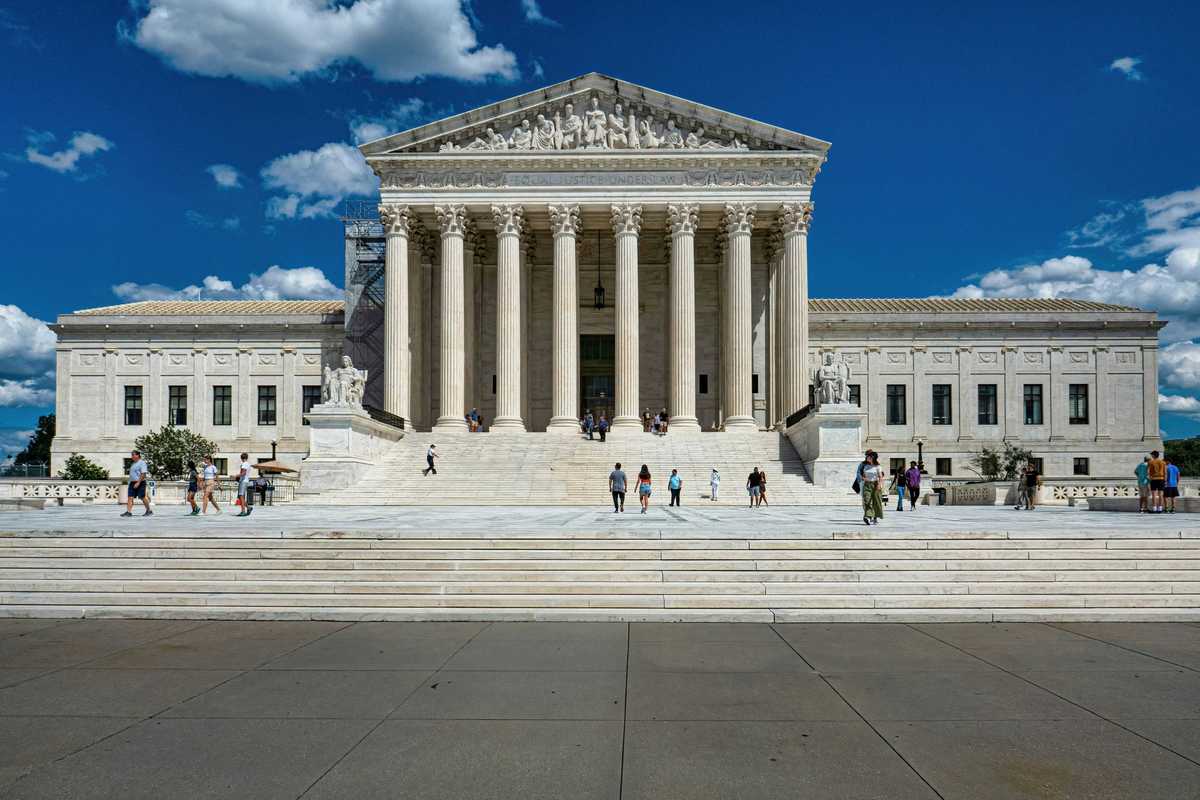
As for the legal challenge Duffy supported in 2015, it was ultimately unsuccessful and the Supreme Court last year affirmed the constitutionality of the CFPB’s funding mechanism.
Yet the ruling has not insulated the bureau from the Trump administration, and officials have advanced novel legal theories to achieve what Duffy sought a decade ago. The administration now argues that since the Fed operates at a loss, it has no profits to transfer to the CFPB.
As a result, the bureau is being starved. According to a recent court filing by government lawyers, it will run out of operating funds by early next year.
Trump’s Transportation Secretary Sean Duffy Once Defended Congress’ Power of the Purse. Now He Defies It. was originally published by ProPublica and is republished with permission.











The President Invited Iran to Bomb My Home