


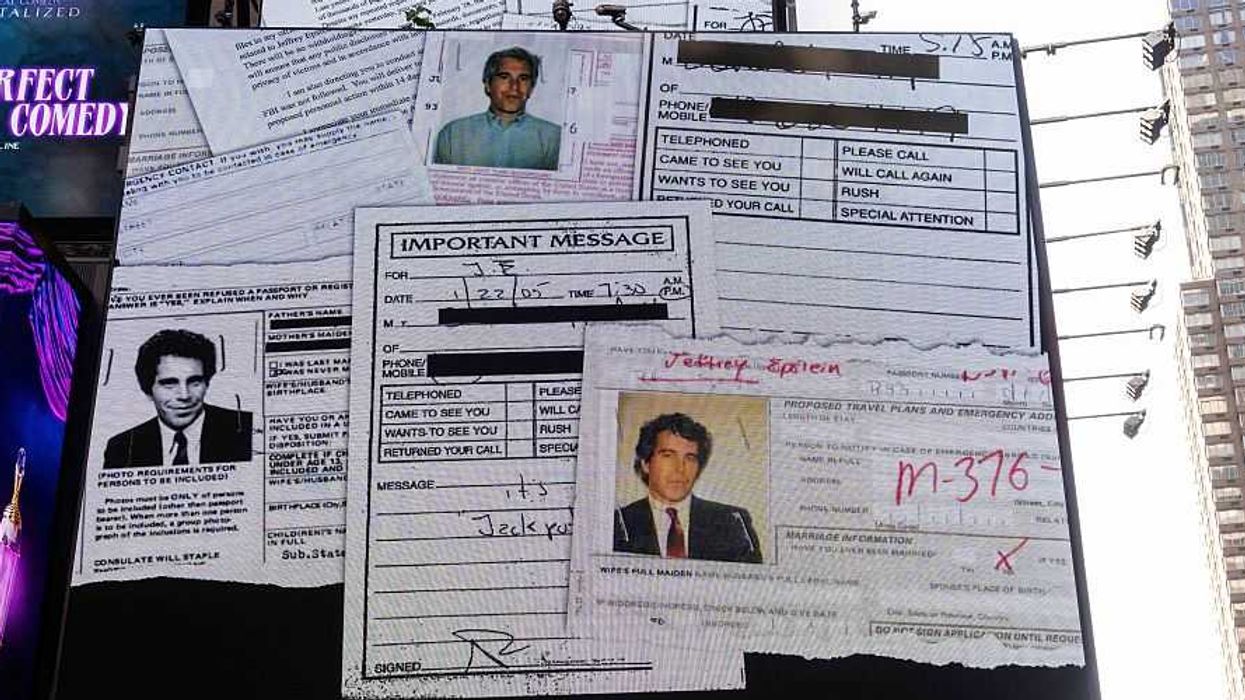

On Aug. 29, 1996, Maria Farmer reported her sexual assault by Jeffrey Epstein and Ghislaine Maxwell to the New York Police Department. Ms. Farmer contacted the FBI as advised by the police. On Sept. 3, 1996, the FBI identified the case as “child pornography” since naked or semi-naked hard copy pictures existed.
It wasn’t until Nov. 19, 2025 when the Epstein Files Transparency Act became law whereby all files – including Farmer’s 1996 complaint -- were to be made public by Dec. 19. Pam Bondi’s Department of Justice (DOJ) failed to release 100% of the files as mandated by law.
Obviously, Congress should question six individuals who had access to the original 1996 file during their tenure as FBI director: Louis French, Robert Mueller, James Comey, Andrew McCabe, Christopher Wray and Kash Patel. Likewise, 10 managers of America’s DOJ since 1996 should testify before Congress as to their knowledge of the case: Janet Reno, John Ashcroft, Alberto Gonzales, Michael Mukasey, Eric Holder, Loretta Lynch, Jeff Sessions, William Barr, Merrick Garland and Pam Bondi.
Questions asked of the above FBI and DOJ leaders might include the following:
Establishing the factual record
When did you first learn of the 1996 Epstein-Maxwell complaint and through what channel (e.g., briefing, media report, internal audit, inspector general review, civil litigation, etc.)?
Second, what, if anything, did you do when you first became aware of the 1996 complaint?
Third, during your tenure was the 1996 complaint ever flagged, re-opened or re-reviewed in connection with later federal investigations of Jeffrey Epstein or related sex-trafficking and child-exploitation cases? If so, what did you do about the case? If not, why not?
Decisions or non-decision on the 1996 complaint
At any time during your leadership, did you review or order a review of the 1996 complaint to assess whether FBI and/or DOJ personnel mishandled allegations of child pornography, threats or child sexual exploitation, and if not, why not?
Systematic failures in child-sex-abuse cases
During your tenure, what changes were implemented to ensure that tips involving alleged child pornography and/or child sexual exploitation were: A) logged correctly, B) assessed by specialized child-exploitation units and C) reported to state, local and tribal authorities within the required time framework?
Director-level accountability
What do you think is the proper recourse for any FBI director or DOJ leader employed since 1996 who was negligent about the child pornography-related crimes alleged against Jeffrey Epstein and his co-conspirators?
Culture, incentives and possible favoritism
At any time in your leadership role, did you have any evidence that the complainant, Maria Farmer, was disbelieved, minimized or discredited because she was accusing a wealthy, well-connected figure?
Second, during your tenure, was there any discussion by you and/or your associates about the risks of “rocking the boat” with politically connected targets in child-sex or exploitation investigations?
Remedies for survivors, FBI reforms and DOJ reforms
Will you support a bipartisan congressional investigation on the handling of the Maria Farmer complaint and all related leads since 1996, including naming responsible federal officials who failed their duty as well as disclosing to the public the names of individuals who were involved in child pornography, sex trafficking and child-exploitation?
Second, what concrete remedies should be offered to the approximate 1,200 female survivors whose abuse might have been prevented had the 1996 complaint been properly pursued, such as expedited victim-compensation and/or formal apologies from the FBI and DOJ?
Citizens’ clarion call
First, contact each of your three elected Congressional delegates and ask if they support a complete investigation as to why six FBI directors and 10 DOJ leaders – employed since 1996 – did or did not take proper action related to the Maria Farmer complaint as well as for the 1,200 females allegedly harmed by Epstein, Maxwell and other men.
Next, contact the following legislators who have major responsibility for general oversight of the relevant federal agencies related to the handling or mishandling of the Jeffrey Epstein case and request in-depth congressional hearings of the matter: 1) House Representatives’ James Comer (R-Ky.), Alexandria Ocasio-Cortez (D-N.Y.), Robert Garcia (D-Calif.), Marjorie Taylor Greene (R-Ga.), Clay Higgins (R-La.), Jim Jordan (R-Ohio), Summer Lee (D-Pa.), Nancy Mace (R-S.C.), Scott Perry (R-Pa.) and Jamie Raskin (D-Md.), and 2) Senators’ Marsha Blackburn (R-Tenn.), Richard Blumenthal (D-Conn.), Ted Cruz (R-Texas), Dick Durbin (D-Ill.), Lindsey Graham (R-S.C.), Chuck Grassley (R-Iowa), Josh Hawley (R-Mo.), Rand Paul (R-Ky.), Gary Peters (D-Mich.), Ron Wyden (D-Ore.) and Sheldon Whitehouse (D-R.I.).
Finally, request your three legislative representatives at the Capitol to take two additional actions: 1) eliminate the statute of limitations for criminal charges and civil lawsuits related to child pornography, sexual assault and sex trafficking and 2) revise the Epstein Files Transparency Act so that while protecting victims’ identities is crucial, the law should prevent broad redactions that shield powerful individuals or jeopardize the public interest.
Steve Corbin is a professor emeritus of marketing at the University of Northern Iowa.