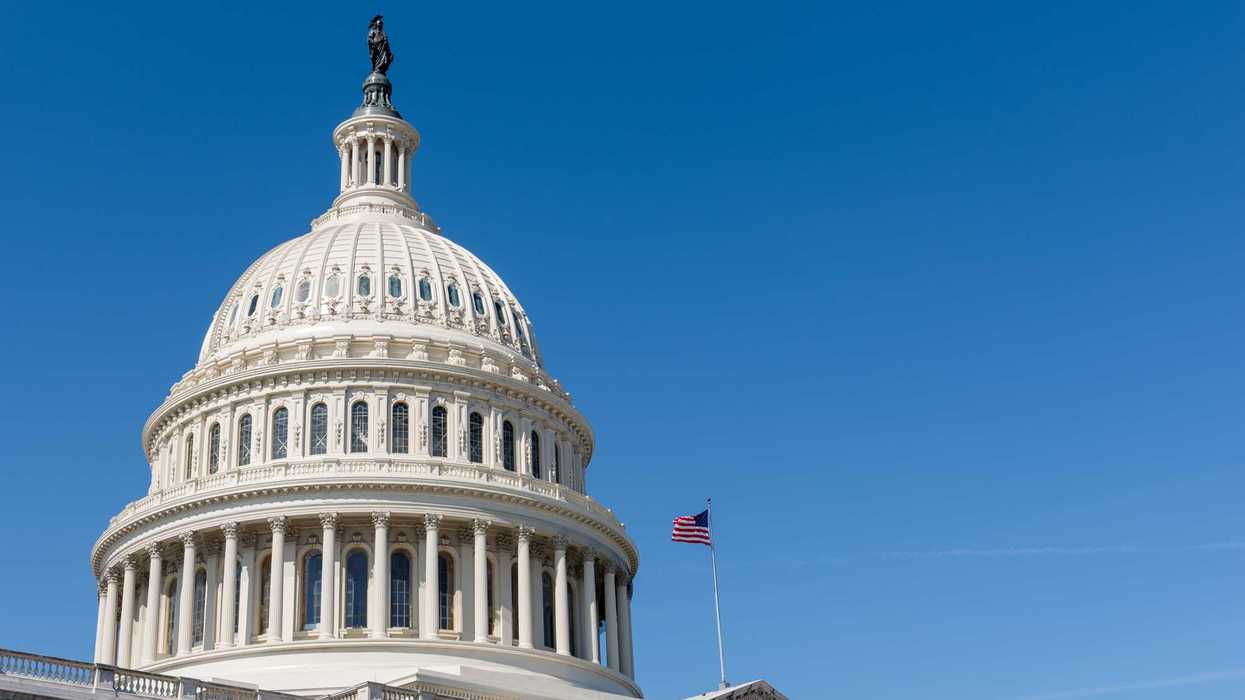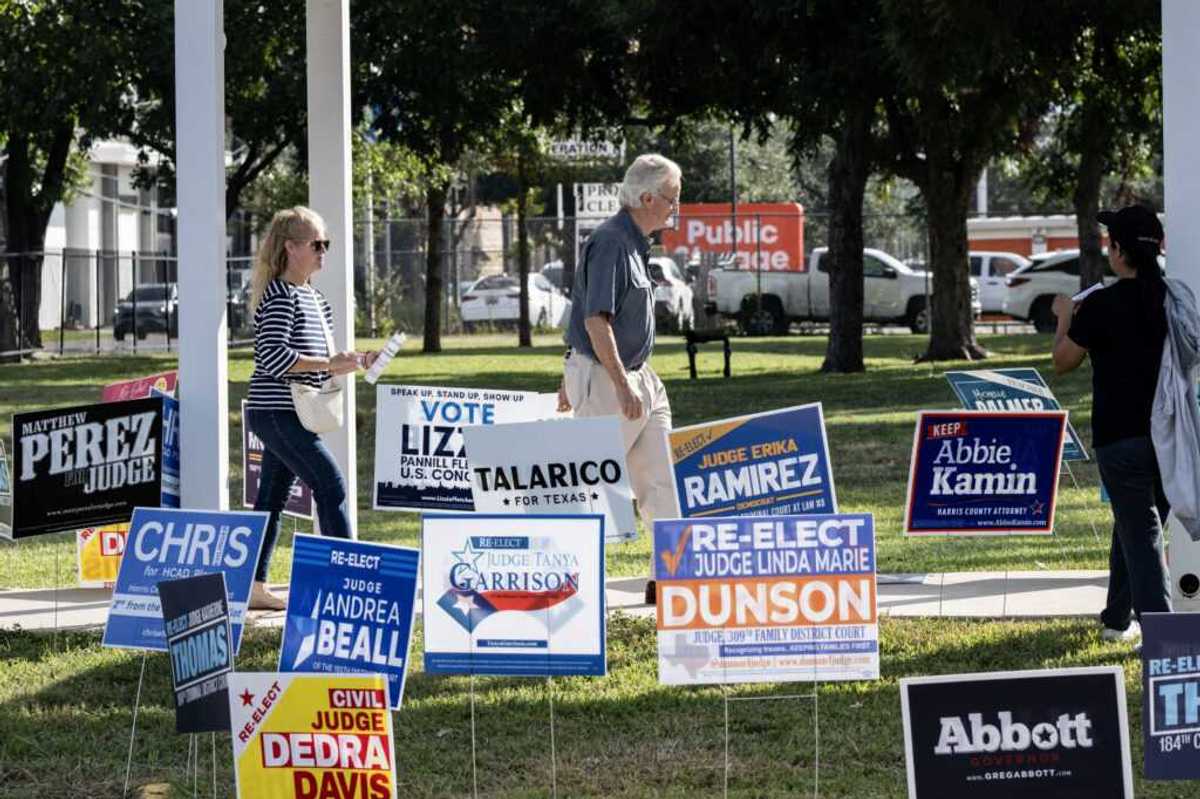


Americans expect the Supreme Court to be nonpartisan, but was that always the case? In this episode of You Don't Have to Yell, historian Rachel Shelden discusses how Lincoln appointed his campaign manager to the Court, later expanded it for a pro-Union justice, and how voters thought this was all normal.
Site Navigation
Search
Latest Stories
Start your day right!
Get latest updates and insights delivered to your inbox.
Top Stories
Latest news
Read More
Workshops, Street Promotions and Alleged Covert Operations: Russian Propaganda in Latin America
Dec 10, 2025
Amid political unrest ahead of Mexico’s 2024 presidential election —between late 2023 and early 2024—, Russian state media outlet Russia Today (RT) launched a street-level promotional campaign in Mexico City. Posters appeared in Metro and Metrobús stations, encouraging commuters to scan a QR code to watch the channel’s newscasts.


The host of RT’s program Ahí les va also mocked accusations that the channel spreads propaganda on his YouTube show.Photos from the Telegram account “¡Ahí les va!”
The promotion drew scrutiny in Mexican media, which noted that the European Union and companies such as Google had blocked RT for spreading pro-Putin narratives and disinformation about Russia’s invasion of Ukraine, which began Feb. 22, 2022. No similar restrictions were imposed in Mexico. Then-President Andrés Manuel López Obrador publicly opposed limiting access to RT or Sputnik content for Mexican audiences, both owned by the Russian state.
In January 2024, RT held a communications workshop in Mexico City as part of its RT CompaRTe initiative. According to the channel, over the past three years, the program has held training events in at least eight Latin American countries: Mexico, Argentina, Colombia, Venezuela, Nicaragua, Cuba, Guatemala, and Panama.


The Club de Periodistas de México, which hosted the workshop, told Factchequeado that “the spaces for RT were completely free,” that the courses were free for participants, and that panelists received no compensation. “No fees were charged to participants. In fact, we provided coffee and a modest buffet, covered by the Club de Periodistas de México,” the organization said.

The Mexico City workshop covered topics including source management, “broad perspective topic research,” artificial intelligence, and even fact-checking. RT says more than 1,000 journalists and media workers from Latin America have participated in its workshops and exchange programs since RT CompaRTe began.
Venezuelan fact-checking outlet Cazadores de Fake News, a member of the LatamChequea network like Factchequeado, reported that at a workshop in Venezuela attended by journalists sympathetic to the government, participants shouted “¡Viva Rusia!” and “¡Viva Putin!” at the end of the sessions. This took place in the presence of channel executives and the Russian ambassador in Caracas, Sergey Melik-Bagdasarov.
In Mexico City, the RT workshop was held at the Club de Periodistas, led by Celeste Sáenz de Miera, a communications professional who promotes pro-Russian narratives online and coordinates the annual Certamen Nacional e Internacional de Periodismo. RT in Spanish and its journalists have been recurring winners of the award. When Izzi, a major Mexican cable network owned by Televisa, began broadcasting RT in 2016, the channel celebrated receiving the “prestigious international award from the Club de Periodistas de México” for the third consecutive year.
Factchequeado reached out to RT for comment but did not receive a response before publication.
RT’s Reach in the Region
RT says its Spanish-language content currently airs in 18 Latin American countries, including Brazil, Argentina, Bolivia, Ecuador, Paraguay, Honduras, Venezuela, and Cuba. Sputnik, another outlet affiliated with Rossiya Segodnya, Russia’s state-controlled international news agency, also targets Latin American audiences.
In Mexico, at least 81 cable providers carry RT, according to the channel. Izzi removed the channel from its package, but TotalPlay still offers it. Telsusa or Albavisión network broadcasts RT over open digital television, claiming coverage in 15 of 32 Mexican states and a potential audience of 11 million households. In 2024, Telsusa obtained a contract from the Mexican Social Security Institute (IMSS) for 1 million pesos, with reference number 050GYR019N05824-008-00, to broadcast institutional campaigns, and in 2023 signed a 2 million-peso contract with the Fondo Mixto de Promoción Turística de la Ciudad de México.
“Personally, I don’t feel any opposition to RT in any Latin American country. RT has faced challenges in the U.S., Europe, and England, but we are happy, our audience is loyal, and it keeps growing,” said Victoria Vorontsova, RT en Español director, in January during the channel’s Mexico courses. “We are always accused of propaganda, but what we try to do is not propaganda, it’s to tell stories that interest all the peoples of Latin America,” she added.
When critics raised concerns in late 2023 and early 2024 about RT’s street promotions in Mexico City, columnist Mirko Casale, host of Ahí les va, argued that such campaigns were logical in a Spanish-speaking country where the channel’s content had been censored or ignored elsewhere. “RT en Español does not seek to misinform or create chaos, nor to install or remove presidents in the countries where it broadcasts or advertises. Not in Mexico either. Its goal is to provide an alternative perspective on international events and, occasionally, present the Russian state’s viewpoint, which, like any nation’s, matters and has a right to be shared,” Casale said.
“México No Perdona”
The broadcasts and workshops are the public face of Russia’s propaganda efforts. Separately, multiple reports and legal actions allege covert Russian operations aimed at disinformation and polarization in several countries.
In September 2024, the U.S. Department of Justice seized 32 internet domains linked to the “Doppelgänger” operation, in which Russian companies Social Design Agency (SDA) and Structura National Technology (Structura) allegedly cloned government and media websites in multiple countries to spread anti-Ukraine narratives, justify the invasion, and influence voters in events such as the 2024 U.S. presidential election.
“As alleged in our court filings, President Vladimir Putin’s inner circle, including Sergei Kiriyenko, directed Russian public relations companies to promote disinformation and state-sponsored narratives as part of a campaign to influence the 2024 U.S. Presidential Election,” said then-Attorney General Merrick B. Garland.
“An internal planning document created by the Kremlin states that a goal of the campaign is to secure Russia’s preferred outcome in the election. The sites we are seizing today were filled with Russian government propaganda that had been created by the Kremlin to reduce international support for Ukraine, bolster pro-Russian policies and interests, and influence voters in the United States and other countries,” the official document said.
One seized document indicates that SDA included Mexico in its disinformation plans under “Operation México No Perdona” (“Mexico Does Not Forgive”). “The campaign intended to encourage “anti-American sentiment” as well as to exacerbate confrontation between the United States and Mexico. Although the campaign would target Mexico, the campaign’s goal also intended to influence the U.S. Presidential Election,” U.S. authorities said.
Although a direct link to the operation has not been confirmed, Factchequeado and El Sabueso of Animal Político have observed a surge in disinformation about Mexico-U.S. relations since early 2025, including fake accounts impersonating news outlets and journalists using AI-generated identities.
One disinformation post warned, “If the U.S. army sets foot in Mexico, we go to war.” Another falsely attributed statements to President Claudia Sheinbaum and former President Donald Trump regarding U.S. control of southern Mexico’s airspace.
Factchequeado documented how RT and Sputnik spread conflicting narratives in Spanish and English about protests in Los Angeles against migrant raids in June 2025. Spanish coverage criticized Trump’s immigration policies, while English posts suggested the protests were orchestrated by NGOs or George Soros as part of a plot against Trump.
In November 2023, the U.S. State Department warned of a Russian operation exploiting media contacts in Argentina, Bolivia, Chile, Colombia, Cuba, Mexico, Venezuela, Brazil, Ecuador, Panama, Paraguay, Peru, and Uruguay to promote “Russia’s strategic interests in the region.” Russian agencies SDA and Structura and pro-Kremlin journalist Oleg Yasinsky were cited as participants.
In response, Yasinsky published a column on Mexican site desinformemonos.org defending his independence as a Ukrainian and calling the U.S. “the true global propaganda machine,” adding that only a military defeat of Ukraine could “end NATO’s experiment in the heart of Europe.”
Workshops, Street Promotions and Alleged Covert Operations: Russian Propaganda in Latin America was first published on Factchequeado and was republished with permission.
This article is part of our investigation “Putin’s Laundromat.”
Factchequeado is a fact-checking outlet that builds a Spanish-speaking community to counter disinformation in the United States. Want to join? Send the content you receive to our WhatsApp +1 (646) 873 6087 or visit factchequeado.com/whatsapp.
Keep Reading
Show less
Recommended
A Lasting Solution to the Gerrymandering War
Dec 09, 2025
Perhaps the late Rep. Sheila Jackson Lee knew what was coming. As an early proponent of a federal bill banning mid-decade gerrymandering, she now appears to have been ahead of her time. Indeed, today, no fewer than seven bills in Congress bear her legacy of concern for fair representation in redistricting. That’s more than any other time in modern congressional history.
The story of the current gerrymandering war flows through her home state of Texas. The legal fight over congressional maps after the 2010 census was complicated; the U.S. Supreme Court struck down several sets of maps as racial gerrymanders.
As a Black member of Congress from Houston, Jackson Lee understood the importance of sponsoring legislation to counteract partisan and racial gerrymanders more than a decade ago. Not long after the U.S. Supreme Court ended preclearance protections in 2013’s Shelby County v. Holder decision, Rep. Jackson Lee introduced the Coretta Scott King Mid-Decade Redistricting Prohibition Act of 2013. The act would have banned states from engaging in congressional redistricting mid-decade, rather than the traditional timeline of redistricting only when new census data is available at the start of each decade.
With that bill, Rep. Jackson Lee sought to prevent the vote dilution of Black and Latino voters who, before the Shelby County decision, had been protected by Sections 4 and 5 of the Voting Rights Act. Those provisions required many jurisdictions with a history of discrimination to obtain federal approval before their new district maps would take effect.
The Jackson Lee bill surely drew inspiration from the Fairness and Independence in Redistricting Act of 2005, introduced by Rep. John Tanner of Tennessee. Unfortunately, the legal playing field regarding redistricting would only get worse: In the 2019 case Rucho v. Common Cause, the Supreme Court removed the federal judiciary from striking down political gerrymanders.
Jackson Lee reintroduced her bill each Congress until she passed away in office last year. A mere 13 months after her death, however, the Texas Legislature passed a new congressional map in the middle of the decade with the explicit intent to engage in racial gerrymandering. This set off a domino effect across the country: Nearly half a dozen states have either passed or taken official steps toward mid-decade redistricting in response.
Both Democrats and Republicans in Congress have taken note of this spiraling mess: To date, at least Rep. Marc Veasey, Rep. Kevin Kiley, Rep. Steve Cohen, Rep. Zoe Lofgren, Rep. Donald Davis, Rep. Vicente Gonzalez, and Rep. Deborah Ross have introduced bills in reaction to, and aiming to control, this year’s unprecedented mid-decade gerrymandering war.
While all these efforts deserve to be commended and supported, they cannot get past the reality that gerrymandering – whether racial or partisan – will continue to blight our democracy so long as we use single-member districts to elect members of Congress. The efforts may constrain or temporarily pause the gerrymandering war, but they won’t solve it.
In contrast, Rep. Don Beyer’s Fair Representation Act – which would enact ranked choice voting with multi-member districts for the U.S. House – would be a lasting solution to our historic spiral of partisan dysfunction. In addition to delivering a more proportional House that would be nearly impossible to gerrymander, the Fair Representation Act includes a ban on mid-decade redistricting.
As we get closer to the 2026 midterm elections, there is no clear end to the gerrymandering wars; rather, they have spilled back into the courts. Texas’s opening move has been ruled a racial gerrymander by a federal district court, in violation of the Voting Rights Act. The Department of Justice has sued California over its proposed new map, alleging that it is a racial gerrymander. The Supreme Court will soon adjudicate these cases in some fashion.
And while no one can predict how the Court will rule, it is hard to see a resolution that delivers fairer and better representation for We the People. As Rep. Sheila Jackson Lee knew, along with those following in her footsteps on both sides of the aisle, It doesn’t have to be this way.
Ryan J. Suto is the Senior Policy Advisor at FairVote, a nonpartisan organization seeking better elections for all.
Keep Reading
Show less
Nonprofit Offers $25,000 Financial Relief As over 6,000 Undocumented Students Lose In-State Tuition
Dec 06, 2025
Tiffany is one of over 6,000 undocumented students in Florida, affected by the elimination of a 2014 law when the FL Legislature passed SB 2-C, which ended in-state tuition for undocumented students in July.
As a result, the TheDream.US scholarship that she relied on was terminated – making finishing college at the University of Central Florida nearly unattainable. It was initially designed to aid students who arrived in the U.S. as children, such as Tiffany, who came to the U.S. from Honduras with her family at age 11.
“I just felt an overwhelming sense of helplessness,” she said, when the programs designed to support her ended. “It felt like my dreams were crumbling away.”
This September, Tiffany was awarded a $25,000 scholarship thanks to the nonprofit Corporate Pero Latinos (CPL). The fund is designed for undocumented students and recipients of the Deferred Action for Childhood Arrivals (DACA) program, which provides temporary protection from deportation to individuals who came to the U.S. as children. The nonprofit focuses on providing resources to the immigrant community - with four local chapters nationwide in South Florida, New York City, Seattle, and Chicago.
“I felt an immense sense of relief,” Tiffany, a junior in college, said it helped cover the remaining part of her tuition she was unable to afford. She said her father, who works in construction, and her mother, as a cook, tried to collect extra funds to support her. “Getting this degree, I know I will have a better future,” Tiffany said.
Source: Corporate Pero Latinos
Uncertainty for Undocumented Students
Undocumented FL students who previously paid $26.7 million with an out-of-state tuition waiver now pay over $40 million more for their postsecondary education tuition, according to the Florida Policy Institute. Thousands, like Tiffany, now face a financial hurdle to finish school, and FL colleges would reportedly lose about $15 million annually without those very students.
Professor Susan Strum, Director of the Center for Institutional and Social Change at Columbia Law School, says the future of everybody depends upon building the capacities of undocumented students.
She describes the legislation to be “driven by fear, by misinformation, and by a scarcity mindset.” Professor Strum says there “is an assumption that if you include people who haven't been included before, that's going to mean the exclusion of people who are currently struggling to stay supported. I think we have to change our ideas of that kind of power and the way we're allocating our resources.”
Culture, Career, and Community
As a Mexican-American woman, with roots from Laredo, Texas, Sophia Zarate founded the CPL program in 2021 when she moved to New York and noticed a lack of Latinos in corporate America. “I was seeking a community,” she said, “to meet people that could relate to me, both professionally and culturally.”
Now, because of the new legislation, she is committed to growing the scholarship for undocumented young people and creating a pipeline for higher education.
Zarate says she wants to inspire hope for students to “believe in themselves and in humanity, knowing that there are organizations out there trying to create these opportunities for them.”
Source: Corporate Pero Latinos
Bridging Language Barriers
Language barriers and broken pipelines are challenges many immigrants reportedly face. According to a 2024 study, More than a Monolith: The Advancement of Hispanic and Latino/a Talent, “some Spanish speakers said they are discouraged from communicating in Spanish at work, many are tapped for their language skills when it is convenient for their employer.”
Zarate’s program offers free English-language classes and basic computer skills to native Spanish speakers with the help of volunteers. Santiago Gomez Manuel, who is taking the class on weekends at a Mexican restaurant called La Contenta Oeste, where he works, says it's empowered him.
“It changed my life, “ Manuel said. He originally speaks both Spanish and the indigenous language of Tutunaku from Veracruz, Mexico. Manuel says his goal is to return to Veracruz one day to teach the town’s children English.
Professor Strum says people who have experienced marginalization in the past are “who understand the value of education and who are deeply committed to contributing to our democracy.”
Source: Corporate Pero Latinos
A Pipeline for Opportunity
Tiffany says she aims to become a mechanical engineer focused on sustainability to serve vulnerable communities. “We're just trying to contribute to the economy and help the community that has given us a home,” she said. “We're just students, we're just kids.”
Professor Strum says there is a need for “providing more financing for students coming into the school, building leadership opportunities and cohorts that would both push and pull students to succeed.”
Corporate Pero Latinos is becoming a pipeline toward opportunity for many immigrants, “it takes a village.” Zarate says she wants “to create impact - it's so much more powerful.”
Tiffany says the scholarship has served as “a reminder that I need to keep pushing forward, no matter how hard the circumstances are.” she said. “I can do this.”
Clarisa Melendez is a bilingual multimedia storyteller who has produced stories for NBC News and Telemundo. Her work often amplifies the voices of underserved communities, from Indigenous youth using AI to preserve native languages to programs supporting children of farmworkers.
Keep Reading
Show less
Democracy 2.0 Requires a Commitment to the Common Good
Dec 06, 2025
From the sustained community organizing that followed Mozambique's 2024 elections to the student-led civic protests in Serbia, the world is full of reminders that the future of democracy is ours to shape.
The world is at a critical juncture. People everywhere are facing multiple, concurrent threats including extreme wealth concentration, attacks on democratic freedoms, and various humanitarian crises.
Instead of a world characterized by exploitation, eradication, and diminishment of political expression, we need a bold new social contract in which democracy evolves into a lived expression of political values that are centered on a relentless commitment to the collective well-being of our societies and the planet.
Reining in Extreme Wealth
The staggering concentration of wealth in the hands of a select few casts a long shadow over democracy. Not only does it create wealth inequality but it also it produces and exacerbates other inequalities like race and gender.
In 2024, the richest 1% of people worldwide owned more than the bottom 95% combined. And it's not just global inequality that has grown; inequality within countries has also become worse. This level of inequality is eroding trust in institutions, which in turn is weakening democracies. In Indonesia, for example, people "who believe socio-economic inequality is unjust, are more likely to hold negative attitudes toward democracy."
Beyond breaking public trust, extreme wealth has been used to sway the political landscape, often at the expense of the common good. While the relationship between President Donald Trump and Elon Musk received much scrutiny, relationships between the ultra-wealthy and anti-democratic leaders are not unique to the US. In India, billionaires like Mukesh Ambani and Gautam Andani have been longtime supporters of Prime Minister Narendra Modi and his party. Billionaire Eduardo Eurnekian's backing of Javier Milei in Argentina and Lajos Simicska's role in the rise of Prime Minister Viktor Orbán in Hungary are other examples.
This corrosive impact of extreme wealth on democracy is undeniable and must be reined in. One way of doing this is through the effective taxation of wealth. According to the Tax Justice Network, a well-implemented wealth tax that is "flanked by globally coordinated measures to disallow tax abuse" could raise more than US $2 trillion. This would provide a stable source of revenue for countries and would also contribute toward the redistribution of wealth and security.
Redistribution alone, however, will not solve inequality. In South Africa, for instance, the wealthiest 1% have seen their pretax incomes soar by nearly 80%, while the poorest 20% have watched theirs shrink. This stark contrast reveals that any redistribution must be paired with policies that shape how pretax incomes are distributed in the first place. Tackling the deep-rooted imbalances of power and opportunity that stem from unequal ownership is crucial alongside enforcing robust antitrust measures to break up corporate dominance and stop unfair business practices.
Restitching the Unravelling Social Safety Net
Public institutions that provide public services are on the decline. Social spending has decreased worldwide, especially health care. From South Africa to Britain, people's struggle to access essential services like health care has resulted in a distrust of the political system. Anxiety over the perception that immigrants are overwhelming public resources is also rising. Using data from across 30 European countries, scholars have traced how ill health translates into anti-immigrant sentiment.
The unravelling social safety net has created an environment where exclusionary ideologies easily spread. Declining public services play a role in the surge of right-wing populist and nativist sentiment. Unscrupulous politicians use the tension to distract from their failures by scapegoating immigrants.
The chainsaws being taken to social spending that have now been popularized by figures like Milei and Musk must be rejected. Public services, which have been key in reducing global poverty and redistributing wealth and security, are an essential investment in communities and society.
Of course, reining in extreme wealth and increasing social spending are not silver bullet solutions for revitalizing democracy. More is needed, including dismantling corporate power, providing material security, global and countrywide wealth redistribution, and reparations. Each of these options reflects a commitment to the common good.
It is time for us to acknowledge the depth of inequality that exists and act in ways that benefit the needs of all and the planet, rather than the narrow self-interests of the few. Working toward collective freedom, shared prosperity, justice, and dignity is the only meaningful way forward.
This article was originally published as part of Resilience & Resistance, a Charles F. Kettering Foundation blog series that features the insights of thought leaders and practitioners who are working to expand and support inclusive democracies around the globe.Koketso Moeti has a long background in civic activism and has over the years worked at the intersection of governance, communication, and people power. In 2025, she was announced as a Charles F. Kettering Global Fellow.
Resilience & Resistance is a Charles F. Kettering Foundation blog series that features the insights of thought leaders and practitioners who are working to expand and support inclusive democracies around the globe. Direct any queries to globalteam@kettering.org.
Keep Reading
Show less
Load More