



Skip to content
Search

Latest Stories

Follow Us:
Top Stories

Read More

Sheet music in front of an American flag

An exploration of American patriotic songs and how their ideals of liberty, dignity, and belonging clash with today’s ICE immigration policies.

merrymoonmary/Getty Images

Patriotic Songs Reveal the America ICE Is Betraying

For over two hundred years, Americans have used songs to express who we are and who we want to be. Before political parties became so divided and before social media made arguments public, our national identity grew from songs sung in schools, ballparks, churches, and public spaces.

Our patriotic songs are more than just music. They describe a country built on dignity, equality, and belonging. Today, as ICE enforces harsh and fearful policies, these songs remind us how far we have moved from the nation we say we are.

Keep ReadingShow less
Varying speech bubbles.​ Dialogue. Conversations.
Examining the 2025 episodes that challenged democratic institutions and highlighted the stakes for truth, accountability, and responsible public leadership.
Getty Images, DrAfter123

At Long Last...We Must Begin.

As much as I wish this were an article announcing the ninth episode we all deserve of Stranger Things, it’s not.

A week ago, this was a story about a twelve-minute Uber ride with a Trump-loving driver on a crisp Saturday morning in Nashville, TN. It was a good story. It made a neat point: if this conversation can happen here, it can happen anywhere.

Keep ReadingShow less
Building a Stronger “We”: How to Talk About Immigrant Youth

Person standing next to a "We Are The Future" sign

Photo provided

Building a Stronger “We”: How to Talk About Immigrant Youth

The speed and severity with which the Trump administration has enacted anti-immigrant policies have surpassed many of our expectations. It’s created upheaval not just among immigrant communities but across our society. This upheaval is not incidental; it is part of a deliberate and consistent strategy to activate anti-immigrant sentiment and deeply entrenched, xenophobic Us vs. Them mindsets. With everything from rhetoric to policy decisions, the Trump administration has employed messaging aimed at marking immigrants as “dangerously other,” fueling division, harmful policies, and the deployment of ICE in our communities.

For those working to support immigrant adolescents and youth, the challenges are compounded by another pervasive mindset: the tendency to view adolescents as inherently “other.” FrameWorks Institute’s past research has shown that Americans often perceive adolescents as wild, out of control, or fundamentally different from adults. This lens of otherness, when combined with anti-immigrant sentiment, creates a double burden for immigrant youth, painting them as doubly removed from societal norms and belonging.

Keep ReadingShow less
Our Doomsday Machine

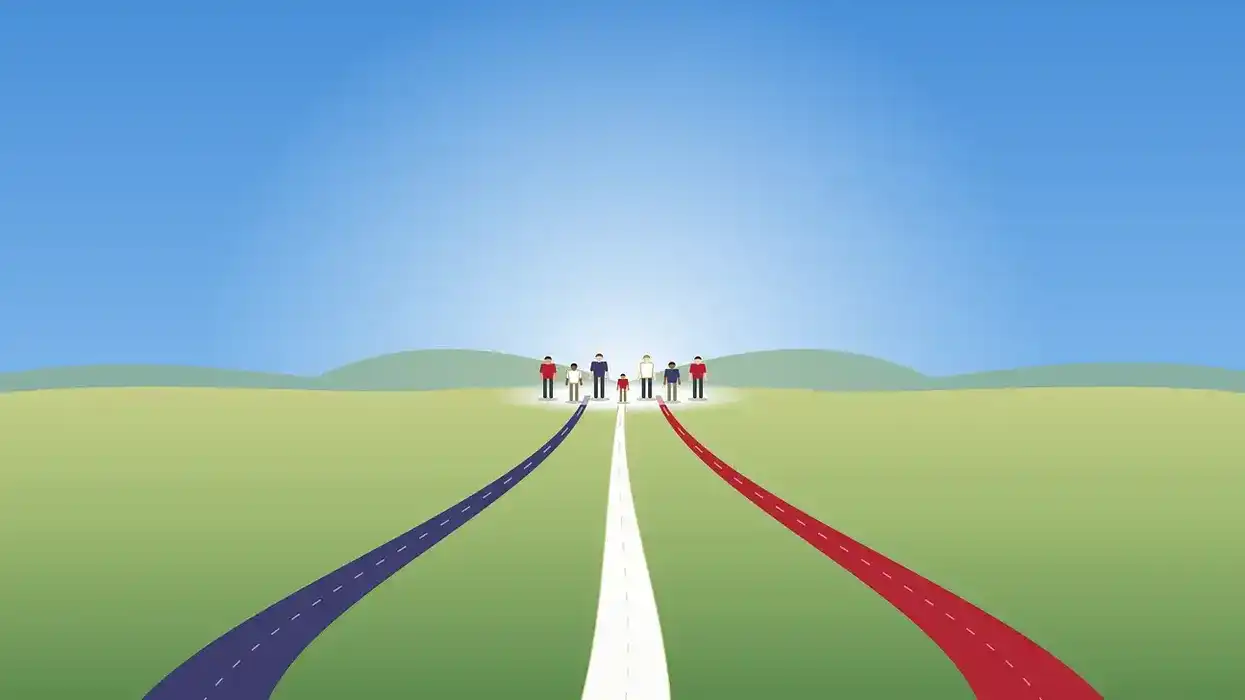
Two sides stand rigidly opposed, divided by a chasm of hardened positions and non-relationship.

AI generated illustration

Our Doomsday Machine

Political polarization is only one symptom of the national disease that afflicts us. From obesity to heart disease to chronic stress, we live with the consequences of the failure to relate to each other authentically, even to perceive and understand what an authentic encounter might be. Can we see the organic causes of the physiological ailments as arising from a single organ system – the organ of relationship?

Without actual evidence of a relationship between the physiological ailments and the failure of personal encounter, this writer (myself in 2012) is lunging, like a fencer with his sword, to puncture a delusion. He wants to interrupt a conversation running in the background like an almost-silent electric motor, asking us to notice the hum, to question it. He wants to open to our inspection the matter of what it is to credit evidence. For believing—especially with the coming of artificial intelligence, which can manufacture apparently flawless pictures of the real, and with the seething of the mob crying havoc online and then out in the streets—even believing in evidence may not ground us in truth.

Keep ReadingShow less