



Meyers, president of DBM Content Solutions, is the former Executive Editor of The Fulcrum. Before launching The Fulcrum, David spent more than two decades at CQ Roll Call, a leading publisher of political news and information.
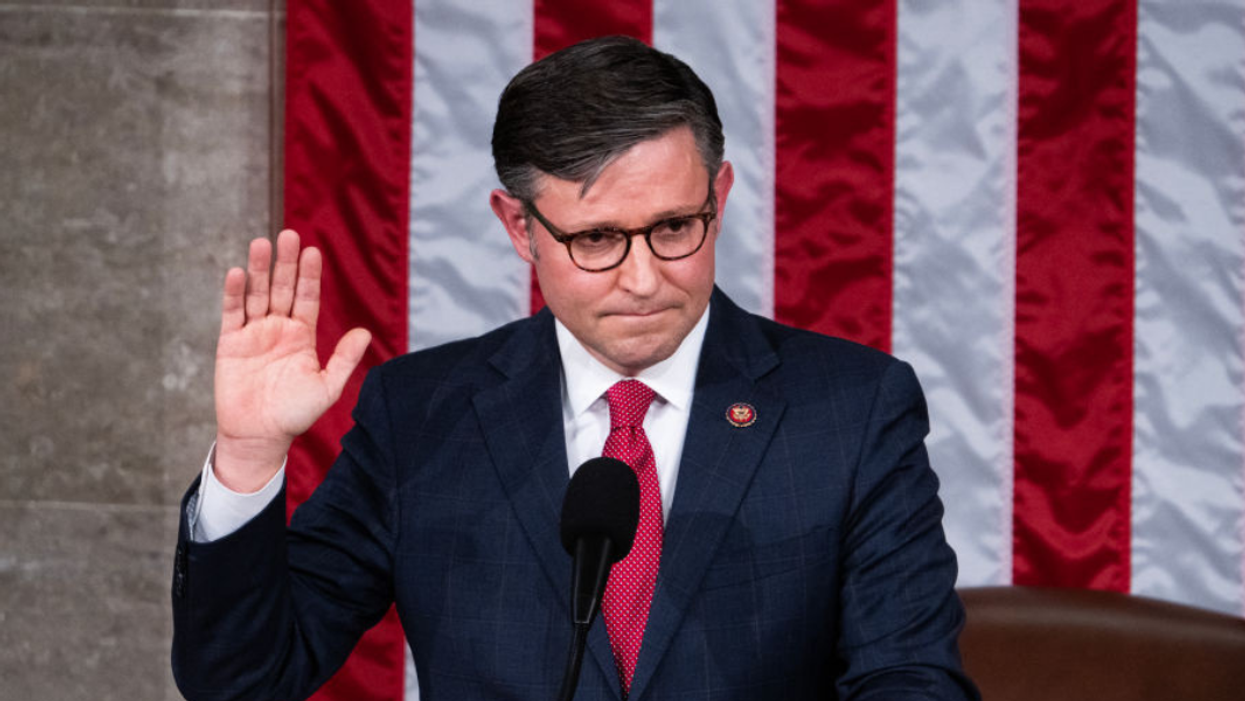
After weeks of political chaos, Republicans selected Rep. Mike Johnson (La.) as the new speaker of the House of Representatives. Johnson holds far-right positions on a number of contentious issues and was heavily involved in Donald Trump’s efforts to overturn the 2020 election.
But by one measure, at least, Johnson may be better positioned to find common ground with Democrats than any of the other would-be speakers.
The Common Ground Scorecard rates officials on their efforts to work across the aisle, to listen to the other side, and to lead in a civil manner. It was developed by the nonpartisan and nonprofit Common Ground Committee, which seeks to overcome government gridlock by helping leaders set aside incivility and find ways to work together on policy issues without abandoning their core values.
And according to the scorecard, Johnson is the best example of a “common grounder” among all the Republicans who sought to become speaker.
With a total score of 40, Johnson rates as “somewhat above average,” edging out his predecessor, Rep. Kevin McCarthy (Calif.), by 3 points. A number of other candidates, including two who won the party nomination (Steve Scalise of Louisiana and Tom Emmer of Minnesota) scored in the “average” range. Others, including Rep. Jim Jordan (Ohio), received zero points.
 “Some measure of bipartisanship in the form of common ground is an important element of the speakership,” said Erik Olsen, co-founder and CFO of the Common Ground Committee. “[Johnson]’s demonstrated better than many that he's willing to work across the aisle.”
Both Johnson and McCarthy won the added label of “Common Ground Maverick” because their efforts at civility and cross-aisle relations far outpace the partisanship of their home states.
Scores are based on five categories: official performance (such as sponsoring bipartisan bills), personal actions (working in public with someone from the opposite party), communications (promoting the idea of common ground), (signing CGC’s Common Grounder Commitments, and being an “outstanding common grounder.”
Johnson earned points for founding the Honor and Civility Caucus and for being a member of the Civility and Respect Caucus.
“We can be stalwarts of our respective policy positions without tearing one another down,” he said when announcing the Honor and Civility Caucus. “Although the members of this caucus will represent both political parties and a wide range of individual views across the political spectrum, our belief is that we can disagree in an agreeable manner and maintain collegiality and the honor of our office.”
He received additional points for launching the Commitment to Civility Pledge, signed by every member of his election class, and co-sponsoring legislation designating a National Day of Civility.
However, Johnson does not have a strong record of bipartisan legislating. He regularly scores below average on the Lugar Center’s Bipartisan Index, which measures lawmakers sponsorship and cosponsorship of bipartisan bills. This is not surprising, given Johnson’s views on abortion, LGBTQ issues and other policy areas.
And according to CQ Roll Call’s Vote Studies, which analyze partisanship in voting patterns, Johnson is nearly a lock to side with his party on the House floor. Since 2017, Johnson has voted with a majority of Republicans against a majority of Democrats (what CQ Roll Call refers to as “party unity votes”) 98.3 percent of the time, including 100 percent this year. Nearly half of the 40 cases in which he broke with the party were situations in which he voted for spending bills. Both Scalise and Jordan voted with the party on most of those bills.
And while aligned with the MAGA wing of the GOP, Johnson did not always side with Donald Trump during the Republican’s administration, nor does he always vote against Joe Biden. He sided with Trump on 92.5 percent of votes in 2017-2020, and with Biden on 8 percent so far, according to CQ Roll Call’s data.
He has, on occasion, been involved with bipartisan legislation. In 2017, he introduced a bill to increase transparency of lobbyists acting on behalf of foreign entities. That bill had bipartisan support and made it through the Judiciary Committee before stalling in the House.
CGC’s calculations do not include efforts to overturn Joe Biden’s 2020 presidential victory. (Johnson was intimately involved in multiple efforts to change the outcome.)
“People with higher scores have been election deniers,” Olsen said.
Rep. Nancy Pelosi (D-Calif.) had earned a score of 40 during her time as speaker, but that temporarily dropped to zero after she called McCarthy a “moron” in 2021.
“Some measure of bipartisanship in the form of common ground is an important element of the speakership. Bruce and I thought this of McCarthy,” said Olsen, referencing his co-founder, Bruce Bond. “We viewed him as a more bipartisan speaker than Pelosi had been. When we went down to Washington during the past year to meet with people and talk about the scorecard several Democrats didn’t give glowing reports of McCarthy but they did find evidence of him trying to be bipartisan.”