

Democracy was once America’s proudest legacy — the last best hope on earth, a torch that lit the path for nations worldwide. Today, dysfunction grips all three branches of government: Congress abandons its duty to the people, the President exploits power for retribution, and the Supreme Court fails to enforce accountability. This betrayal of trust places our republic at risk. Americans must reclaim democracy from dysfunction and abuse of power.
The United States is both a participatory democracy — by the people, for the people — and a constitutional republic. Power lies with the people, and elected officials are entrusted to serve them. The President enforces the laws, Congress checks executive power, and the Supreme Court interprets the Constitution. These checks and balances are designed to prevent abuse of power, yet Congress and the Court have abandoned their duty (U.S. Constitution).
Instead of working for the people, Republicans in Congress pledge allegiance not to the Constitution but to the President. They ignore checks and balances, enabling his abuses. The Supreme Court, plagued by partisan politics and ethical lapses, shields him rather than checks him. The Trump v. United States decision grants immunity, paving the way for continued abuse (Supreme Court opinions). Justices fly upside‑down flags outside their homes, accept lavish gifts from wealthy donors (ProPublica), and allow spouses to support the January 6 insurrection openly. These actions erode public trust and reveal a failure of accountability.
The Court has also ignored the voices of the people on fundamental rights. In Dobbs v. Jackson Women’s Health Organization, it overturned Roe v. Wade, ending nearly 50 years of constitutional protections for reproductive freedom (Dobbs ruling PDF). Polls show that a majority of Americans opposed overturning Roe (Pew Research). Yet, the Court disregarded public will, silencing millions of voices and eroding trust in its role as guardian of liberty.
Meanwhile, dysfunction in Congress is on full display. Shutdowns, budget gridlocks, failure to pass bills for the good of the people, attempts to repeal the Affordable Care Act (KFF), and passage of the so‑called “Big Beautiful Bill” are glaring examples. Instead of helping citizens with healthcare, housing, and food, Congress ignores their cries. Sessions devolve into censures, profanity, and personal attacks on the House floor — total dysfunction. Together, these failures reveal a government unmoored from its constitutional duty.
At the same time, the President continues to disrespect the Constitution. He refuses to divest his interests, uses his office as a tool for retribution, and openly expresses his desire to be a dictator (Washington Post). Voters elected a man with a documented record of corruption and abuse: his charitable Trump Foundation was dissolved for misuse of funds (NY Attorney General), he was found liable for sexually abusing and defaming E. Jean Carroll (BBC), his Trump University defrauded students (FTC), and he manipulated tax laws to enrich himself (NY Times). Congress and the Supreme Court have given him a pass, enabling dysfunction instead of protecting the people.
Accountability has collapsed. Remember the attack on the Capitol, encouraged by the President (House Select Committee Report). Republicans ignored his wrongdoing and refused to check him. Leaders like Liz Cheney and Mitt Romney tried to do the right thing, but they were ostracized. Senator Susan Collins excused his abuse of power after the first impeachment, saying, “He learned his lesson and won’t do it again.” That remark betrayed the people. He abused power again, pardoned criminals from the January 6 insurrection, and victimized the victims yet again.
I was outraged when Representative Paul Gosar formally objected to Arizona’s certification on January 6, 2021, with support from Senator Ted Cruz of Texas. Cruz was not even from my state, yet he tried to silence my vote, my voice, and the voices of millions of Arizonans. Representative Andy Biggs also promoted efforts to overturn Arizona’s results (Arizona Republic). These leaders failed to honor Article II, Section 1, and the 12th, 20th, and 25th Amendments. How can Congress be functional when its Speaker ignores the Constitution?
Millions of voters lost respect for leaders who tried to silence the voices of Americans — our votes.
Yet history shows dysfunction is not destiny. Citizens have reclaimed democracy before. Abraham Lincoln’s Gettysburg Address defined democracy as government “of the people, by the people, for the people.” The civil rights movement proved that citizens, through courage and peaceful protest, could bend the arc of history toward justice (King Institute). The women’s suffrage movement showed that persistence at the ballot box could expand freedom (National Archives). These examples prove that dysfunction can be overcome when people act with courage.
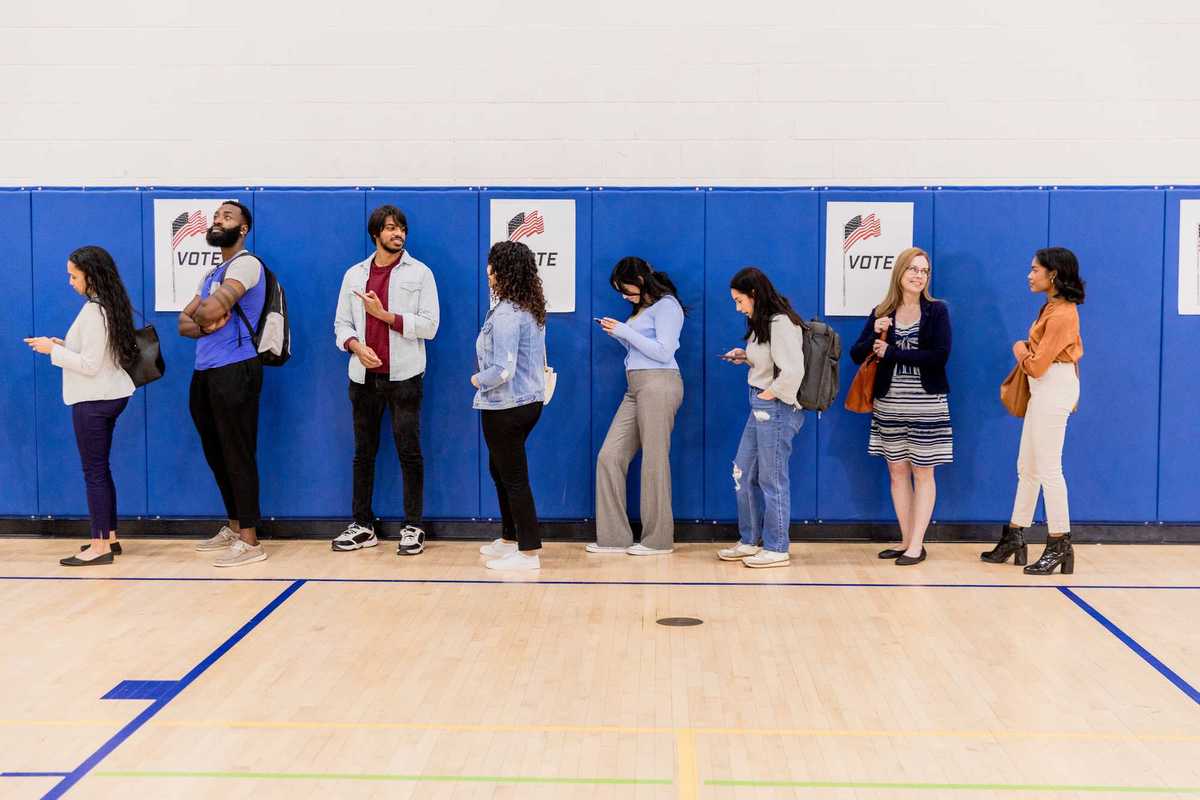
Solutions must therefore focus on accountability and courage at every level of government. Members of Congress must enforce ethics rules and refuse to enable abuse. The Supreme Court must adopt binding ethics codes, recuse itself when conflicts arise, and respect the voices of the people rather than silence them. Presidents must be held to the same standards as ordinary citizens, with stronger conflict-of-interest laws, enforced divestment requirements, and a clear principle that no one is above the law. Citizens must reclaim their role as the ultimate guardians of democracy — registering and voting, speaking out, writing letters, signing petitions, attending town halls, and participating in peaceful protests.
Democracy requires vigilance every day, not just at election time.
Ultimately, there is power in the people, and we must not allow leaders to suppress it. Democracy cannot survive on silence or complacency; it demands vigilance, courage, and accountability. Congress must enforce its oath, the Supreme Court must respect the people’s voices, and the President must be held to the same laws as every citizen. History shows that when citizens act with courage — from Lincoln’s Gettysburg Address to the civil rights and suffrage movements — democracy can be reclaimed. The republic will endure only if the people insist that government once again serve for the people, by the people. That is our responsibility. That is our power. That is our promise.
C. Goode is a retired educational leader and advocate for ethical leadership and health care justice.