


The Trump administration has always treated truth as an inconvenience. Nearly a decade ago, Kellyanne Conway gave the country a phrase that instantly became shorthand for the administration’s worldview: “alternative facts.” She used it to defend false claims about the size of Donald Trump’s inauguration crowd, insisting that the White House was simply offering a different version of reality despite clear photographic evidence to the contrary.
That moment was a blueprint.
It signaled that this administration would not merely spin or shade the truth—it would replace it. And today, as the country reels from the killing of Renee Nicole Good by ICE agent Jonathan Ross in Minneapolis, we are watching the full evolution of that blueprint in action.
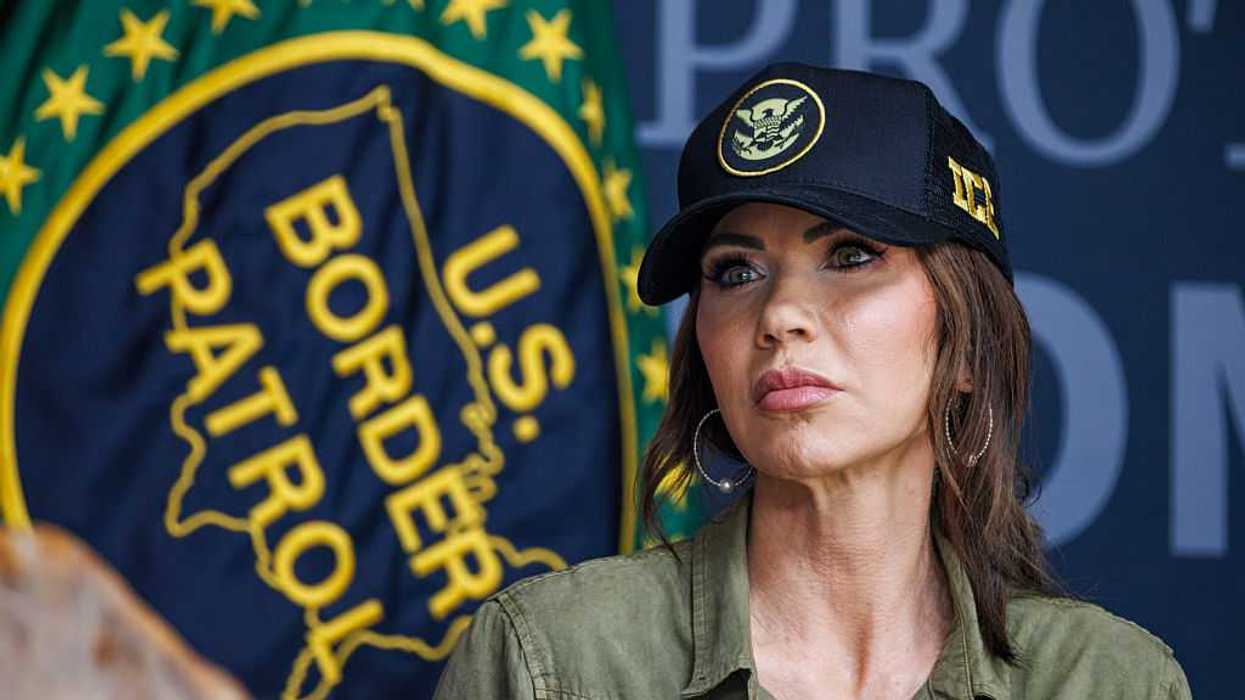
Just over two hours after Good was shot, the Department of Homeland Security—under Secretary Kristi Noem—issued a statement defending the agent and labeling Good a “domestic terrorist.” This was before any independent investigation, before the release of full footage, and before the public had any verified facts.
In a tense, nearly 20‑minute interview on CNN, Jake Tapper pressed Noem repeatedly on how she could justify such a definitive accusation so quickly. Noem doubled down, claiming DHS had “unpublished video evidence” and insisting, “We all saw what happened,” even though the available footage raised more questions than answers.
Ross’s own cell phone video captured him calling Good a “f***ing b****” moments after firing into her vehicle as it appeared to turn away. Whether he was struck by the car remains unclear. Yet the administration’s narrative was locked in place within hours.
This is not fact‑finding. This is fact‑dictating.
Conway’s “alternative facts” were widely mocked at the time, but they were also a warning. The phrase normalized the idea that truth is optional—something a government can curate, edit, or discard. It was an early form of political gaslighting, a strategy that critics noted was designed to control public discussion by blurring the line between fact and fiction.
That strategy has hardened into something more dangerous: a government willing to prejudge a dead woman within hours of her killing, while demanding patience and deference for the armed agent who shot her.
Noem’s insistence that Good’s death was “absolutely” what DHS claimed it to be—despite the absence of an independent investigation—shows how deeply the administration’s contempt for factual rigor has become embedded in its governing style.
When a government decides that truth is negotiable, accountability becomes impossible.
Labeling Good a “domestic terrorist” before investigators have even reconstructed the scene is not just reckless—it is a message. It tells federal agents that the administration will protect them before knowing what happened. It tells grieving families that their loved ones’ reputations are expendable. And it tells the public that the government’s version of events will always outrank the evidence.
This is the logical endpoint of “alternative facts”: a state that does not wait for the truth because it does not need the truth.
Why This Moment Matters
The protests erupting across the country are not only about the shooting itself. They are about a government that has abandoned the basic democratic expectation that facts come before conclusions. They are about a pattern that began with something as seemingly trivial as lying about crowd size and has now escalated into preemptively criminalizing a dead woman to justify a shooting.
The Trump administration has spent years eroding the public’s ability to trust what it sees, hears, and knows. Conway gave the country the vocabulary. Noem is giving it the consequences.
A democracy cannot function when its leaders treat truth as a political tool. And the American public should not accept a government that decides guilt or innocence before the facts are known—especially when a life has been taken.
If the Trump administration wants to restore trust, it must start with something radical: telling the truth, the whole truth, and nothing but the truth. But that would require abandoning the very strategy that has defined it from the beginning.
Hugo Balta is the executive editor of the Fulcrum and the publisher of the Latino News Network







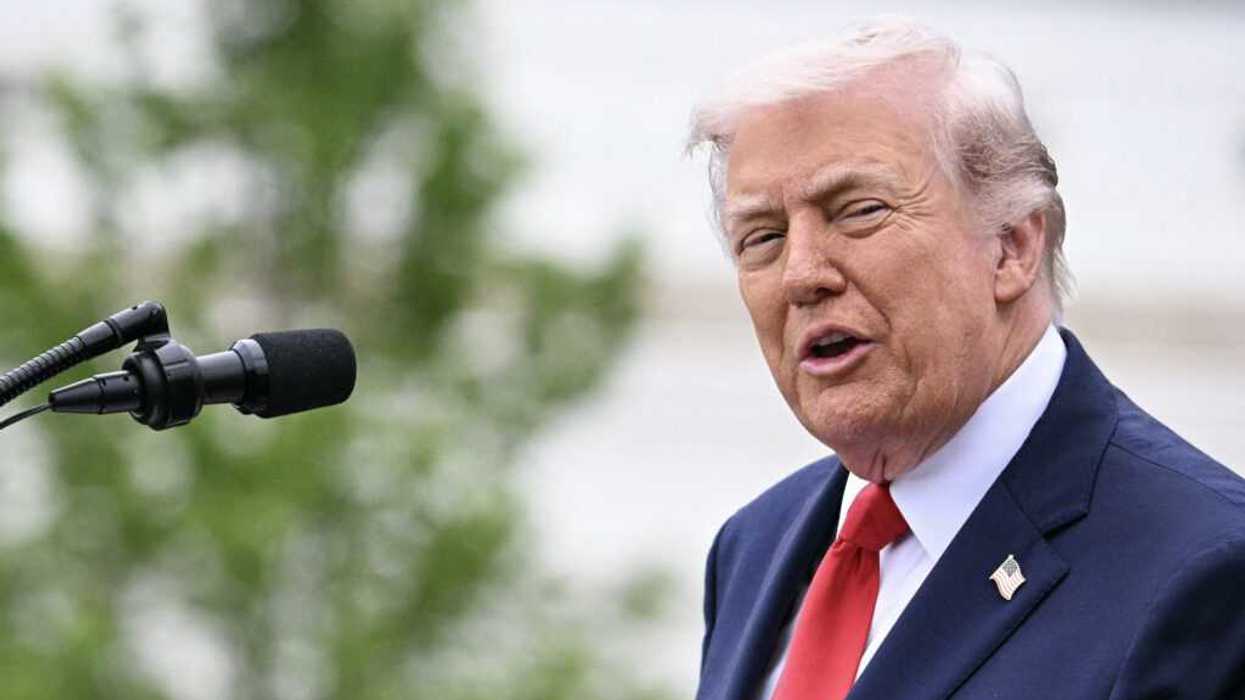

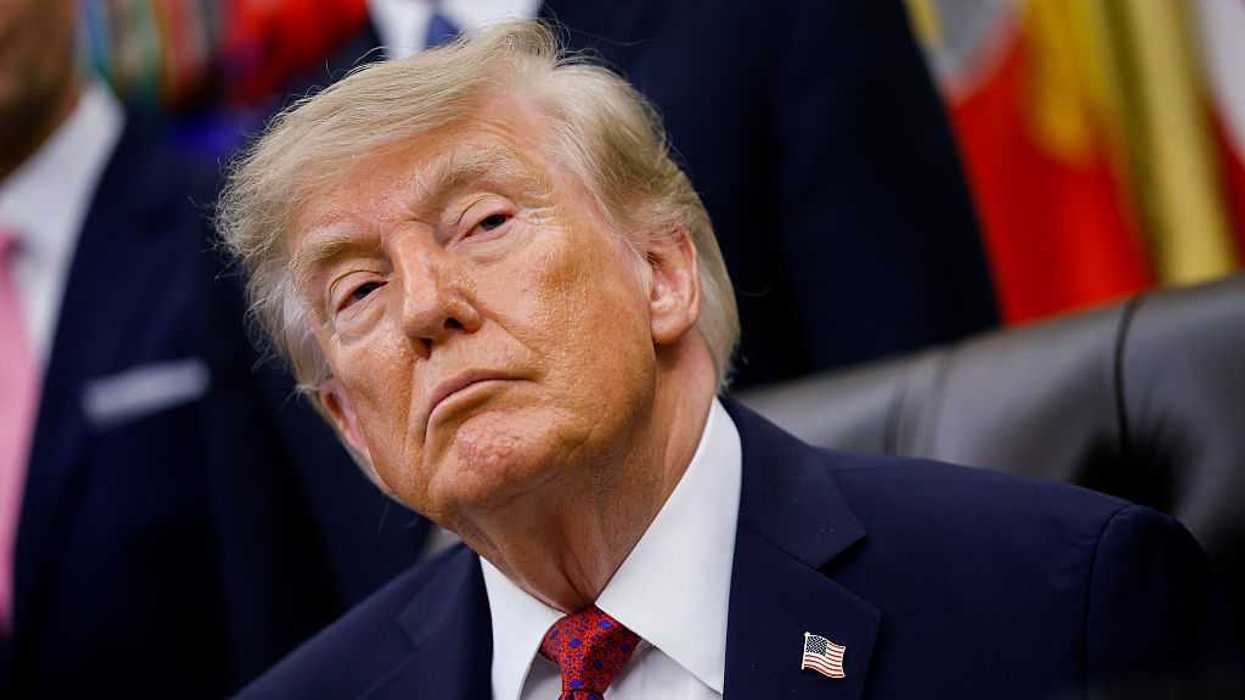
U.S. President Donald Trump speaks during a“ Steel Across America” event ahead of the 25th anniversary of the Sept. 11th attacks on the Ellipse near the White House on Sept. 8, 2026 in Washington, D.C. President Trump welcomed 9/ 11 first responders to the Tunnel to Towers Foundation’ s“ Steel Across America” event featuring a 16,900- pound, 21- foot steel beam recovered.
For Trump, even 9/11 is an opportunity
There was a reason organizers of the 9/11 ceremony in Manhattan told President Trump he could not speak at this year’s memorial service.
A good one, it turns out.
Because in a speech he gave on Tuesday in Washington, he did exactly what they were presumably worried about — he made it about himself.
According to The New York Times, Trump had wanted a speaking role at the service, but the National Sept. 11 Memorial and Museum, which oversees the site, said no, as they’ve maintained for the past decade-plus that the venue and event should be nonpartisan.
Trump has long used awful tragedies to either puff himself up, trash political opponents, or sell lies to the American people.
He blamed a deadly plane crash at Washington National Airport last year on diversity, equity and inclusion policies. He blamed Puerto Ricans for the devastation they endured after Hurricane Maria in 2017. He reportedly considered withholding disaster relief after the California wildfires based on the way affected regions voted. In an interview on Fox News meant to commemorate the 75th anniversary of D-Day in Normandy, he used the occasion to slam former House Speaker Nancy Pelosi…with graves of the dead behind him.
And now, as we approach the 25th anniversary of what many New Yorkers consider the darkest day in modern history, Trump has done it again.
He told a rambling, nonsensical story — one he’s told before — about going to Ground Zero just after terrorists flew two commercial jets into the twin towers. In the story, which no one has been able to verify, despite multiple attempts, he says firefighters had to carry him out of One Liberty Plaza, also known as the U.S. Steel Building, because they thought it was about to collapse.
As CNN fact checker Daniel Dale notes, there’s no evidence Trump went into this building, especially at a time when NYPD and NYFD had locked down the area. There’s no evidence that building was collapsing — in fact, it was deemed structurally sound and reopened within two months of the attacks. There’s no evidence he was carried out of it by firefighters.
But the lie isn’t even the worst part. Pretend it was all true — why would the leader of our country, and a New Yorker, decide to make that tragic day about himself?
Because that’s who Donald Trump is. He’s a malignant narcissist.
He’s also, incidentally, a terrible and ineffectual president, who’s made ill-fated decisions that he has to keep defending, and there’s nothing he won’t do to make himself look and feel better.
Within the first two minutes of his speech, he was cravenly using 9/11 to justify and promote his dumb war in Iran — two events separated by 25 years and 6,000 miles.
“And I will tell you, we’re right now fighting because we have a certain nation that wanted a nuclear weapon, they were very close to getting it, and now they have no chance at getting it. They will never have a nuclear weapon. Iran will not have a nuclear weapon. And they’ve been punished greatly. As you know, we’ve really taken it to them.”
As a New Yorker who lived through 9/11, still one of the worst days of my life, I’m utterly sickened by Trump’s crass, political, and self-promotional framing of that awful day.
And I’m relieved he won’t be given a platform to do it again on Friday’s anniversary in lower Manhattan.
Because for Trump, everything is his for the taking, and absolutely nothing is sacred.
S.E. Cupp is the host of "S.E. Cupp Unfiltered" on CNN.