



When did America replace “for the people, by the people” with “for the wealthy, by the wealthy”? Wealthy donors are increasingly shaping our policies, institutions, and even the balance of power, while the American people are left as spectators, watching democracy erode before their eyes. The question is not why billionaires need wealth — they already have it. The question is why they insist on owning and controlling government — and the people.
Back in 1968, my Government teacher never spoke of powerful think tanks like the Heritage Foundation, now funded by billionaires determined to avoid paying their fair share of taxes. Yet here in 2025, these forces openly work to control the Presidency, Congress, and the Supreme Court through Project 2025. The corruption is visible everywhere. Quid pro quo and pay for play are not abstractions — they are evident in the gifts showered on Supreme Court justices.
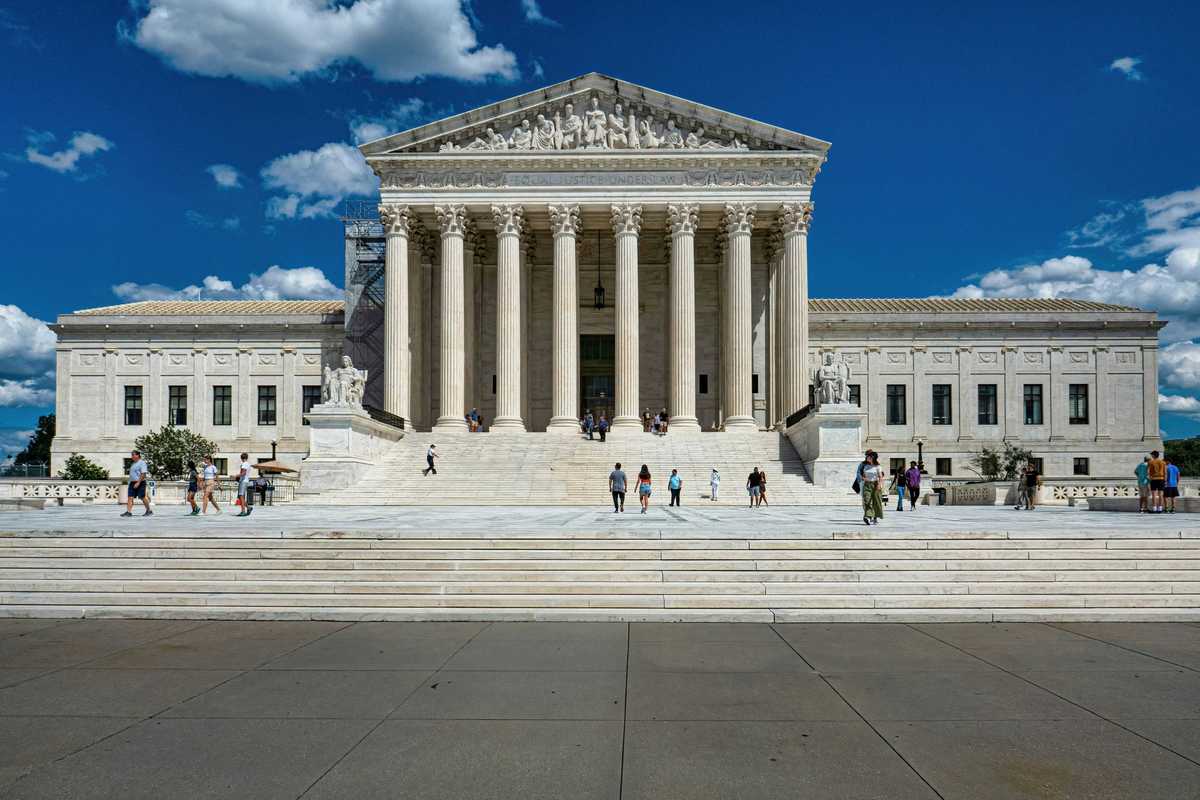
Billionaire Harlan Crow purchased and renovated Clarence Thomas’s mother’s home, allowing her to remain rent-free. Justice Samuel Alito accepted a luxury fishing trip from hedge fund billionaire Paul Singer, whose firm later had cases before the Court. These were not harmless tokens; they were violations of ethics and moral conscience, exposing how billionaire money bends justice to privilege.
Billionaire influence seeps even into prisons, creating a pattern of billionaire privilege. The rule of law collapses when billionaires and their allies receive leniency while ordinary citizens face harsher realities. In prison, the late Jeffrey Epstein secured perks and delays unavailable to ordinary inmates. Ghislaine Maxwell, convicted of aiding his crimes, likewise received privileges that ordinary prisoners could never expect. Money and influence bend the rules of justice for the rich, while ordinary prisoners live under rigid, standardized conditions — yet we are supposed to believe that no one is above the law.
Meanwhile, across Congress, billionaire influence may be silent, but it is bold in the policies and laws they shape — and in the campaign funds that sustain leaders. The billionaire‑driven, Big Beautiful Bill is proof: it slashed Medicaid, SNAP, and student aid while delivering billions in tax breaks to the wealthy. Families in every state pay their fair share while billionaires avoid theirs.
In this current system, the rich get richer, and the poor get poorer — Republican, Democrat, or Independent, in red, blue, and purple states. The damage done by billionaires affects the well‑being of all Americans, regardless of party. Politicians in Congress do not appear to empathize with their own constituents crying out for food, housing, and healthcare relief — begging for a piece of the American dream, hanging on the promises made in the Constitution’s principles. Instead of listening, too many leaders bend to donors, leaving families desperate while billionaire interests thrive.
Trump claims to serve the forgotten men and women of America, yet he openly embraces quid pro quo. His presidency itself left a money trail — donations in, favors out — and Americans watched as it happened. He refused to divest from his businesses, allowing foreign governments and lobbyists to funnel money through his hotels. He staffed his properties with immigrant workers on temporary visas, even as he railed against immigration. His golf courses abroad carried heavy debts, yet he used taxpayer-funded trips to promote them. And now, he seeks to reacquire his former Washington, D.C. hotel, once a hub for foreign dignitaries and lobbyists, to again profit from public office. Transparency is undermined, and hypocrisy is glaring, as citizens cannot see where public duty ends and private profit begins.
At the same time, Elon Musk illustrates another dimension of billionaire privilege. The trail of money to Elon Musk is visible and cannot be overlooked. His billions are fueled not only by private ventures but also by taxpayer-funded government contracts. Musk’s billions also influenced the 2024 election, as his platforms and contracts amplified billionaire voices while ordinary citizens were drowned out. His wealth was not just private fortune — it became political leverage. In the billionaires’ world, ordinary citizens have no place. Families struggle to keep health care, while billionaires use their power to strip protections away. Equality is shattered, as billionaire money bends institutions while ordinary citizens are excluded.
By contrast, Presidents Barack Obama and Joe Biden demonstrated what it means to work for the people, by the people. Obama expanded health care through the Affordable Care Act, created jobs with the Recovery Act, and protected families with the Consumer Financial Protection Bureau. Biden lowered prescription drug prices through the Inflation Reduction Act, capped insulin costs, and defended voting rights. These policies lifted ordinary Americans. Yet Project 2025 proved to be a blueprint for wealthy conservatives to control government — expanding tax cuts for billionaires, dismantling social programs, and silencing diversity.
The people elect leaders to serve us, yet too many ignore their oaths and work instead for billionaires. The Constitution they swore to uphold becomes secondary to donor checks, luxury gifts, and promises of power. Their allegiance is not to the citizens who trusted them, but to the wealthy interests that fund their campaigns and shape their votes. This betrayal is the money trail in action — democracy bent to serve the powerful, not the people. Thus, the principles of democracy — popular sovereignty, equality, justice, accountability, transparency, representation, and rule of law — are compromised when billionaire money dominates.
The money trail runs long and spreads wide. In silence, billionaire money and influence in our country are taking over our Republic. Yet silence is complicity, and when the people stay silent, they surrender to billionaire power.
To refocus on the people, to reclaim government for the people, by the people, citizens must demand campaign finance reform; insist on transparency in Congress and the Supreme Court; hold leaders accountable to their oaths; and press for binding ethics laws that prohibit donor‑driven policymaking and protect social programs from cuts designed to enrich the wealthy.
The Supreme Court must adopt enforceable ethics codes; end acceptance of gifts; strengthen recusal rules; and reaffirm equal justice under law. Citizens must also demand transparency laws requiring full disclosure of donations, lobbying contracts, and government perks; dismantle dark money networks; end gerrymandering through independent redistricting commissions; and protect election integrity with stronger safeguards.
Above all, I demand that Congress and the Supreme Court honor their oaths, hold themselves accountable, and have the courage to act ethically, make moral decisions, exercise the checks and balances, and the separation of powers. I demand that our country return to a sense of normalcy.
The money trail must be broken — and democracy restored.
Carolyn Goode is a retired educational leader and advocate for ethical leadership and healthcare justice.









The President Invited Iran to Bomb My Home