

Skip to content
Search

Latest Stories

Follow Us:
Top Stories

How do you solve a problem like Candace Owens?

Opinion

How do you solve a problem like Candace Owens?

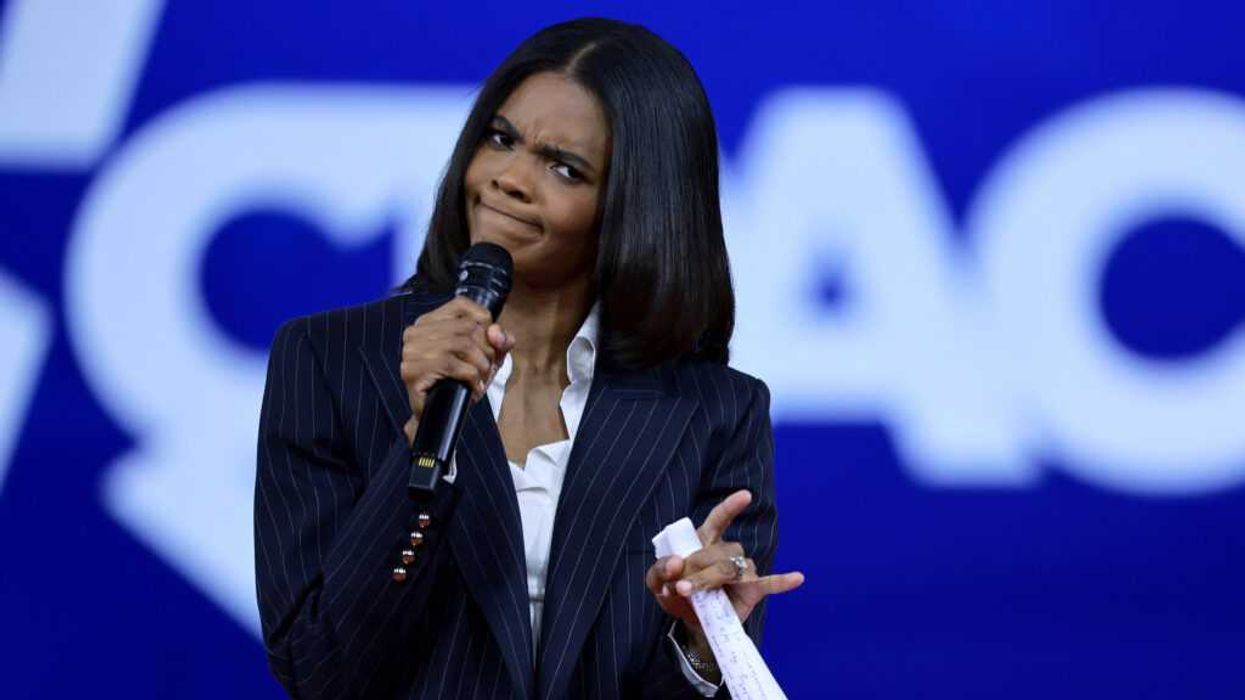
Candace Owens speaks during the Conservative Political Action Conference (CPAC) at The Rosen Shingle Creek on Feb. 25, 2022, in Orlando, Fla.

(Joe Raedle/Getty Images/Tribune Content Agency)

Candace Owens has a very popular internet show in which she trots out deranged conspiracies about, among other things, the demonic nature of Jews, the murder of conservative activist Charlie Kirk (probably by Jews and their pawns, in her estimation) and the allegation that French President Emmanuel Macron’s wife is really a man.

Owens is hardly alone. There’s an entire ecosystem of right-wing “influencers” who peddle conspiracy theories brimming with racism, antisemitism, demonology, pseudoscience and general crackpottery in regular installments. There’s an even larger constellation of media outlets and personalities who feed on controversy without ever quite condemning the outrages that cause it.


It’s appalling and reprehensible. But this isn’t really a column about all of that.

A foundational small-c conservative insight is, “there’s nothing new under the sun” (Ecclesiastes 1:9). In a time of relentless technological change, it’s understandable to think the utility of biblical wisdom has expired. But the point wasn’t about new things. It’s that human nature doesn’t change.

In 1909, the Philadelphia Inquirer helped launch a regional panic with a “news” series on the New Jersey Devil. The Jan. 21 front-page headline blared, “WHAT-IS-IT VISITS ALL SOUTH JERSEY” alongside a photo of “actual proof-prints of the strange creature.” The Inquirer and competing papers hyped the bogus story relentlessly, with reports of sightings, animal mutilations, etc. Decades later, former newspaperman Norman Jeffries admitted to being the mastermind of the hoax.

In a sense, Tucker Carlson — demon attack survivor and journalistic sleuth of cattle mutilations— is part of a long American tradition.

In 1910, newspapers floated the theory that the tail of the then-returning Halley’s Comet might release a kind of cyanide that, as French sci-fi writer and astronomer Camille Flammarion told the New York Times, could “impregnate the atmosphere and possibly snuff out all life on the planet.”

The ensuing Comet Panic of 1910 sold a lot of newspapers, snake oil “comet pills” and even “comet insurance.”

The parallels with pandemic era cure-alls, phobias about “chemtrails” — which may destroy the cloud-seeding industry — and even the Y2K panic a quarter century ago should be fairly obvious.

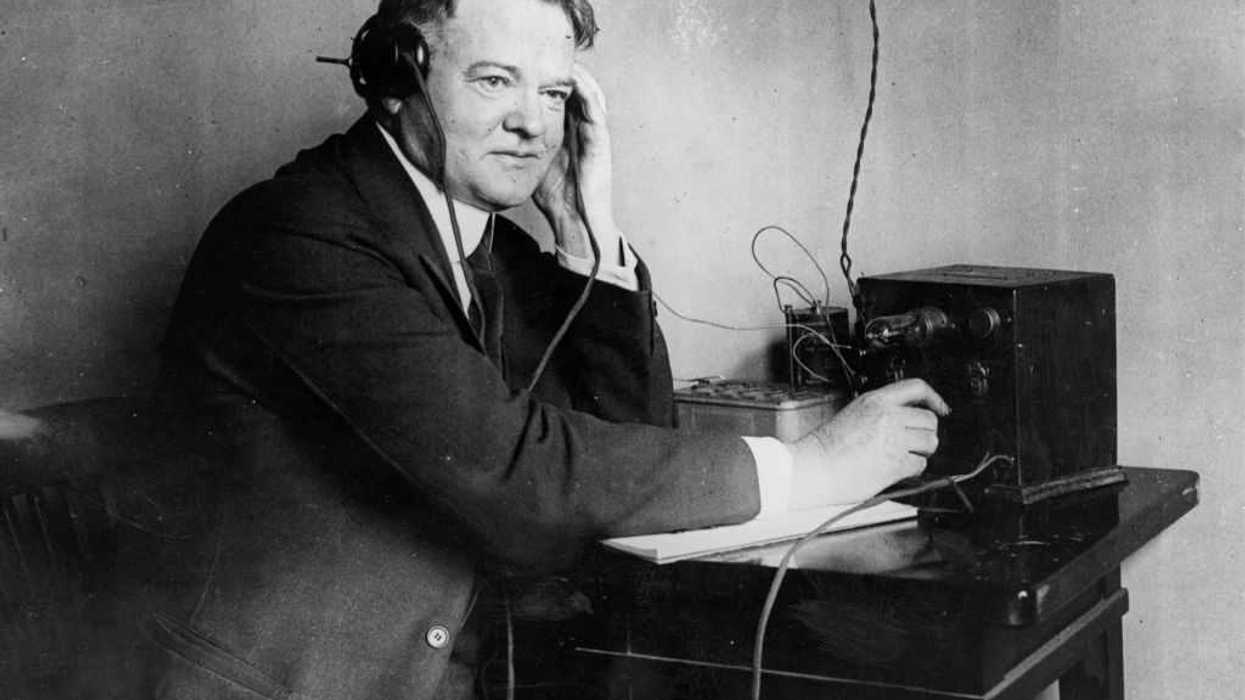
In 1920, Henry Ford’s newspaper (nationally distributed through his car dealerships), the Dearborn Independent, launched its series on “the International Jew.” Ford adapted “The Protocols of the Elders of Zion,” forgeries first published in 1903 in a Russian newspaper. In 1936, Father Charles Coughlin launched his magazine Social Justice, picking up where Ford left off. It rehashed “The Protocols” and other bogus propaganda, including the work of deranged Jew-hater August Rohling, the intellectual lodestar for Julius Streicher, the first Nazi to be hanged at Nuremberg for inciting genocide.

Owens, like Streicher, considers Rohling a primary scholarly source.

This stuff seems unprecedented thanks to a cocktail of historical ignorance, recency bias and widespread distrust of elite media. But it’s also a function of technological change.

Monster sightings, baseless gossip, silly or sinister speculation and, of course, antisemitism never disappeared. The more harmless versions of this fare could be found in the checkout aisles of supermarkets for generations. The nastier stuff was relegated to obscure newsletters, AM radio and hard-to-find magazines.

The internet and social media changed all that.

In the 19th century, when newspapers and mass literacy converged, the “media” was an anything goes Wild West, with even respectable publications feeding readers sheer nonsense and literal fake news. (The Rest is History podcast has a wonderful series partly dedicated to how the British press helped fuel the panic over, and the legend of, “Jack the Ripper.”)

It took decades for professional standards and consumer expectations to reach a consensus about what was respectable and legitimate and what wasn’t. The new media landscape is a new Wild West.

A century ago, a primary journalistic-marketing technique was to seduce readers by releasing information — and baseless allegations — piecemeal, in installments. Come back tomorrow for the next shocking development.

This is the modern podcasters’ M.O. Sometimes it’s straightforward and episodic “true crime” style stuff. Other times it’s deranged hogwash, promising the real evidence (about Kirk, Jeffrey Epstein, Mrs. Macron, etc.) is coming — if the Deep State or the Jews don’t get to them first.

They feed the audience just enough to get hooked in pursuit of the big reveal that is never quite revealed. Mixed in is relentless gossip about how other personalities are responding to the allegation du jour or each other. It’s equal parts soap opera, conspiracy, gossip, taboo violation and fearmongering.

The market for such titillation and tripe never went away. What vanished were the post-WWII technological and institutional roadblocks to providing it at scale. Also vanished: the willingness of enough responsible people to condemn it.

Jonah Goldberg is editor-in-chief of The Dispatch and the host of The Remnant podcast. His Twitter handle is @JonahDispatch.


Read More

After the Ceasefire, the Violence Continues – and Cries for New Words

An Israeli army vehicle moves on the Israeli side, near the border with the Gaza Strip on November 18, 2025 in Southern Israel, Israel.

(Photo by Amir Levy/Getty Images)

After the Ceasefire, the Violence Continues – and Cries for New Words

Since October 10, 2025, the day when the US-brokered ceasefire between Israel and Hamas was announced, Israel has killed at least 401 civilians, including at least 148 children. This has led Palestinian scholar Saree Makdisi to decry a “continuing genocide, albeit one that has shifted gears and has—for now—moved into the slow lane. Rather than hundreds at a time, it is killing by twos and threes” or by twenties and thirties as on November 19 and November 23 – “an obscenity that has coalesced into a new normal.” The Guardian columnist Nesrine Malik describes the post-ceasefire period as nothing more than a “reducefire,” quoting the warning issued by Amnesty International’s secretary general Agnès Callamard that the ”world must not be fooled” into believing that Israel’s genocide is over.

A visual analysis of satellite images conducted by the BBC has established that since the declared ceasefire, “the destruction of buildings in Gaza by the Israeli military has been continuing on a huge scale,” entire neighborhoods “levelled” through “demolitions,” including large swaths of farmland and orchards. The Guardian reported already in March of 2024, that satellite imagery proved the “destruction of about 38-48% of tree cover and farmland” and 23% of Gaza’s greenhouses “completely destroyed.” Writing about the “colossal violence” Israel has wrought on Gaza, Palestinian legal scholar Rabea Eghbariah lists “several variations” on the term “genocide” which researchers found the need to introduce, such as “urbicide” (the systematic destruction of cities), “domicide” (systematic destruction of housing), “sociocide,” “politicide,” and “memoricide.” Others have added the concepts “ecocide,” “scholasticide” (the systematic destruction of Gaza’s schools, universities, libraries), and “medicide” (the deliberate attacks on all aspects of Gaza’s healthcare with the intent to “wipe out” all medical care). It is only the combination of all these “-cides,” all amounting to massive war crimes, that adequately manages to describe the Palestinian condition. Constantine Zurayk introduced the term “Nakba” (“catastrophe” in Arabic) in 1948 to name the unparalleled “magnitude and ramifications of the Zionist conquest of Palestine” and its historical “rupture.” When Eghbariah argues for “Nakba” as a “new legal concept,” he underlines, however, that to understand its magnitude, one needs to go back to the 1917 Balfour Declaration, in which the British colonial power promised “a national home for the Jewish people” in Palestine, even though just 6 % of its population were Jewish. From Nakba as the “constitutive violence of 1948,” we need today to conceptualize “Nakba as a structure,” an “overarching frame.”

Keep Reading Show less
Ukraine, Russia, and the Dangerous Metaphor of Holding the Cards
a hand holding a deck of cards in front of a christmas tree
Photo by Luca Volpe on Unsplash

Ukraine, Russia, and the Dangerous Metaphor of Holding the Cards

Donald Trump has repeatedly used the phrase “holding the cards” during his tenure as President to signal that he, or sometimes an opponent, has the upper hand. The metaphor projects bravado, leverage, and the inevitability of success or failure, depending on who claims control.

Unfortunately, Trump’s repeated invocation of “holding the cards” embodies a worldview where leverage, bluff, and dominance matter more than duty, morality, or responsibility. In contrast, leadership grounded in duty emphasizes ethical obligations to allies, citizens, and democratic principles—elements strikingly absent from this metaphor.

Keep Reading Show less
Beyond Apologies: Corporate Contempt and the Call for Real Accountability
campbells chicken noodle soup can

Beyond Apologies: Corporate Contempt and the Call for Real Accountability

Most customers carry a particular image of Campbell's Soup: the red-and-white label stacked on a pantry shelf, a touch of nostalgia, and the promise of a dependable bargain. It's food for snow days, tight budgets, and the middle of the week. For generations, the brand has positioned itself as a companion to working families, offering "good food" for everyday people. The company cultivated that trust so thoroughly that it became almost cliché.

Campbell's episode, now the subject of national headlines and an ongoing high-profile legal complaint, is troubling not only for its blunt language but for what it reveals about the hidden injuries that erode the social contract linking institutions to citizens, workers to workplaces, and brands to buyers. If the response ends with the usual PR maneuvers—rapid firings and the well-rehearsed "this does not reflect our values" statement. Then both the lesson and the opportunity for genuine reform by a company or individual are lost. To grasp what this controversy means for the broader corporate landscape, we first have to examine how leadership reveals its actual beliefs.

Keep Reading Show less