

I. The GOP’s Mob Mindset
“Don’t ever take sides with anyone against the Family again. Ever.”
Michael Corleone delivers that line quietly in The Godfather, a warning about power that doesn’t answer to rules and instead demands total loyalty. The restraint is what makes it so frightening. Francis Coppola’s film shows how authority, detached from law and accountability, becomes personal, coercive, and absolute. I never expected to see that mindset migrate from fiction and become a major element in American politics. It isn’t something Americans should recognize as normal.
That is exactly what has happened as Donald Trump has transformed the Republican Party into something closer to a mob family. He isn’t leading an organization grounded in persuasion, debate, and institutional loyalty. He is enforcing obedience, punishing dissent, and overseeing a GOP where loyalty is mandatory, and betrayal is met with swift retribution.
II. From Political Party to Organized Crime Family
Political parties are supposed to be messy. They are more like busy assembly plants full of noise and friction than tidy showrooms. That friction is not a bug; it is what makes democracy work. It’s competing interests colliding, ideas being tested, and compromises being hammered into policies that can actually govern. A party incapable of tolerating internal debate isn’t disciplined; it is hollowed out and structurally weak. It stops learning and slowly drifts away from the people it claims to represent.
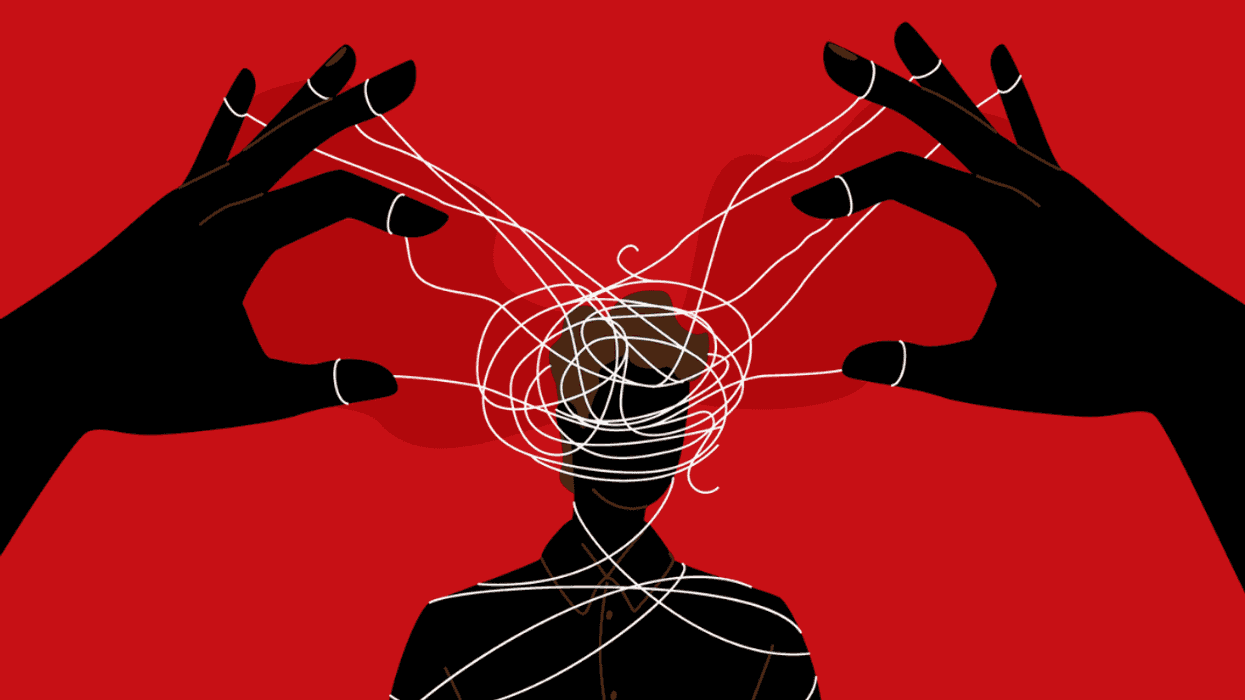
An organized crime family runs on the opposite logic. It is rigidly hierarchical, intensely personal, and, above all, unforgiving of dissent. Authority flows downward. Loyalty to the boss overrides loyalty to any rule, morality, institution, or principle. Disputes are not resolved through reasoned arguments but through punishment. Independence is not a virtue; it is a liability. Obedience is not merely expected; it is constantly demanded.
Trump has steadily shifted the Republican Party from the first model toward the second. His language is no longer about persuasion; it is about enforcement. When he speaks of “betrayal,” he isn’t talking about disagreement over policy. He is talking about personal disobedience. The party is no longer a coalition of lawmakers with different views. It is a hierarchy that demands loyalty, with Trump at the center.
That shift matters because it profoundly changes what politics is for. A party built around persuasion tries to win arguments over policies and prioritizes deliberation. A party built around fear tries to silence them. The former can govern. The latter can only dominate.
This approach appeals to some voters, particularly within the MAGA base, because it promises certainty, speed, and the visceral satisfaction of seeing enemies humiliated. The tough‑guy style, the promise of order without compromise, and the pleasure of watching opponents be punished feel like a welcome change from the slow give‑and‑take of democratic politics. It is a vision of politics that prizes force over process and loyalty over law. Those drawn to it would feel more at home in Vladimir Putin’s Russia, where power flows from the top, dissent is treated as betrayal, and politics is less about representation than submission.
III. Enforcement in Action: Bray, Massie, and Greene
You can see this logic at work in how Trump treats Republicans who step out of line. The circumstances differ, but the message is consistent: obey or else. The goal isn’t to resolve policy disputes; it’s to make an example.
When Trump publicly threatened Indiana State Senate leader Rodric Bray over redistricting, the issue was not maps but authority. Bray’s refusal to bend turned the dispute into a loyalty test, answered with a public warning aimed well beyond Bray himself. Thomas Massie’s case sharpens the point further. Massie is a conservative whose offense is not ideology but independence. He insists on treating Congress as an institution with constitutional responsibilities, and in Trump’s system, that judgment is intolerable. That is why he is targeted.
Marjorie Taylor Greene completes the picture by underscoring disposability. Once useful as an enforcer, she became expendable once she stopped obeying orders. Her break and eventual resignation from Congress show that even the loudest allies are disposable. Loyalty is conditional, enforcement is public, and fear replaces persuasion. That is how discipline is maintained in a party run on intimidation rather than internal debate over differences.
IV. What This Does to Congress and to American Politics More Broadly
Run this way, Congress stops functioning as a legislature and starts functioning as a stage, a role it isn’t built to survive for long. Members quickly learn that performing loyalty is safer than legislating. Compliance is rewarded; independence is punished. The result is not unity but paralysis. The consequences are visible: the current Congress ranks among the least productive in modern history, with historically low numbers of major bills enacted, as documented by the Congressional Research Service and Brookings.
That same logic now reaches well beyond Congress. Courts, career civil servants, state officials, universities, journalists, and even private actors who rely on federal approval all find themselves subject to pressure and intimidation. Foreign policy follows the same pattern. Trump’s threats toward Denmark over Greenland and his bullying posture toward Venezuela reflect impatience with negotiation and a preference for coercion over diplomacy. Institutions or actors that claim independent authority instantly become suspect. A refusal to bend is treated as defiance.
When a political party accepts this arrangement, it abandons its democratic purpose and helps normalize the erosion of institutional boundaries. Parties exist to aggregate interests, test ideas, and negotiate compromise within a constitutional system of divided authority. When fear replaces deliberation, governance comes to rely on coercion. That may secure short‑term compliance, but the long‑term costs are steep as information dries up, errors compound, legitimacy erodes, and the party becomes less a vehicle for representation than a personal instrument of power.
V. Conclusion: Party or Family
A political party can survive disagreement. In fact, it depends on it. A mob boss cannot. He demands submission, punishes independence, and confuses silence with unity. Donald Trump has made clear which model he prefers. The harder question is what citizens do with that knowledge.
If voters want the GOP to function like a real political party again, they will have to reward independence rather than punish it, demand policy arguments instead of loyalty rituals, and treat intimidation as disqualifying rather than impressive. In many states, that work does not stop at the general election. Independents, and even Democrats, can use Republican primaries to favor candidates willing to break from this mold and reassert institutional norms. Parties change when incentives change. Until that happens, the mob logic will remain not an aberration, but the operating system.
There is, however, a far better manual for democratic governance, and citizens can insist that parties return to it. The Federalist Papers assume conflict and ambition are permanent features of political life and design institutions to channel them rather than suppress them. That model is slower and noisier than intimidation, but it is also far more durable, and history suggests it is the only one that actually works.
Robert Cropf is a Professor of Political Science at Saint Louis University.