In November, eight Senate Democrats voted with Republicans to end the longest government shutdown in history, with little to show for the 43-day closure.
Senator Sheldon Whitehouse (D-RI), who was not one of the eight, told discouraged Democrats, “We need to remember the battle we’re in….[We need to continue the fight] to defend our country from Trump and MAGA. Two things coming up that are really important,” Whitehouse said, “1) In December, there will be a vote on extending the Affordable Care credits we fought for. That gives us…weeks to hammer the Republicans so hard that we actually get a good Affordable Care credits bill.
“The second,” Whitehouse continued, “this gets a little bit boring, so I won’t go into it in detail, but as the appropriations bill moves forward, we can bake in increases above Trump’s budget, to the agencies we care about, guardrails against Trump’s mischief, and assurances and even hooks to make sure that the funding that we’ve appropriated actually gets spent and not blockaded by [Office of Management and Budget Director] Russ Vought. That we have until January 31st to do, when the current continuing resolution would expire. And then if they haven’t done those things we can go right back to insisting that they have to do them or face another government shutdown.”
The process that Whitehouse called “a little boring” provided an unexpected victory a few days later. Jeremy Lewin, the undersecretary of state for foreign assistance, humanitarian affairs, and religious freedom at the State Department, announced that the United States would provide $4.6 billion to the Global Fund to Fight AIDS, Tuberculosis, and Malaria over three years. The Global Fund and its partners have saved 70 million lives since 2002. Lewin, a former Elon Musk lieutenant at the Department of Government Efficiency (DOGE), helped oversee the dismantling of the U.S. Agency for International Development (USAID,) which was our nation’s primary international aid agency.
The $4.6 billion was smaller than the previous Biden-era pledge. But it represented something important: a reversal by the Trump Administration.
In Trump’s budget for fiscal year 2026 (FY26), the President proposed slashing the Global Fund from the $1.65 billion enacted in FY25 to $800 million for FY26, a cut of more than 50%. Over three years, that would total just $2.4 billion. Instead, the administration nearly doubled that to $4.6 billion. Why?
Because Congress had already begun “baking in” increases above Trump’s proposed cuts, as Sen. Whitehouse called for.
On April 28, 160 House members—led by two Republicans and three Democrats—signed a bipartisan letter urging appropriators to maintain robust FY26 funding for the Global Fund and PEPFAR. They were rejecting the President’s proposed $850 million cut and signaling a clear expectation: hold the line.
The House Appropriations Committee followed through, allocating $1.5 billion for FY26 instead of Trump’s $800 million. Over three years, that totals $4.5 billion—almost exactly the size of the administration’s eventual pledge.
The matter moves next to the Senate, where appropriators often increase the House’s number in global health.
A few days before Lewin’s public announcement, a journalist asked him whether the United States would make a pledge to the Global Fund. Lewin’s answer was revealing: “We are in the midst of active consultations with Congress… we will be making a pledge… in the coming days, after our consultations with Congress.”
There it is—the quiet power Whitehouse was pointing to. The appropriations process may look boring, but it forces administrations to respond to Congress's will. And Congress often responds to its constituents' will.
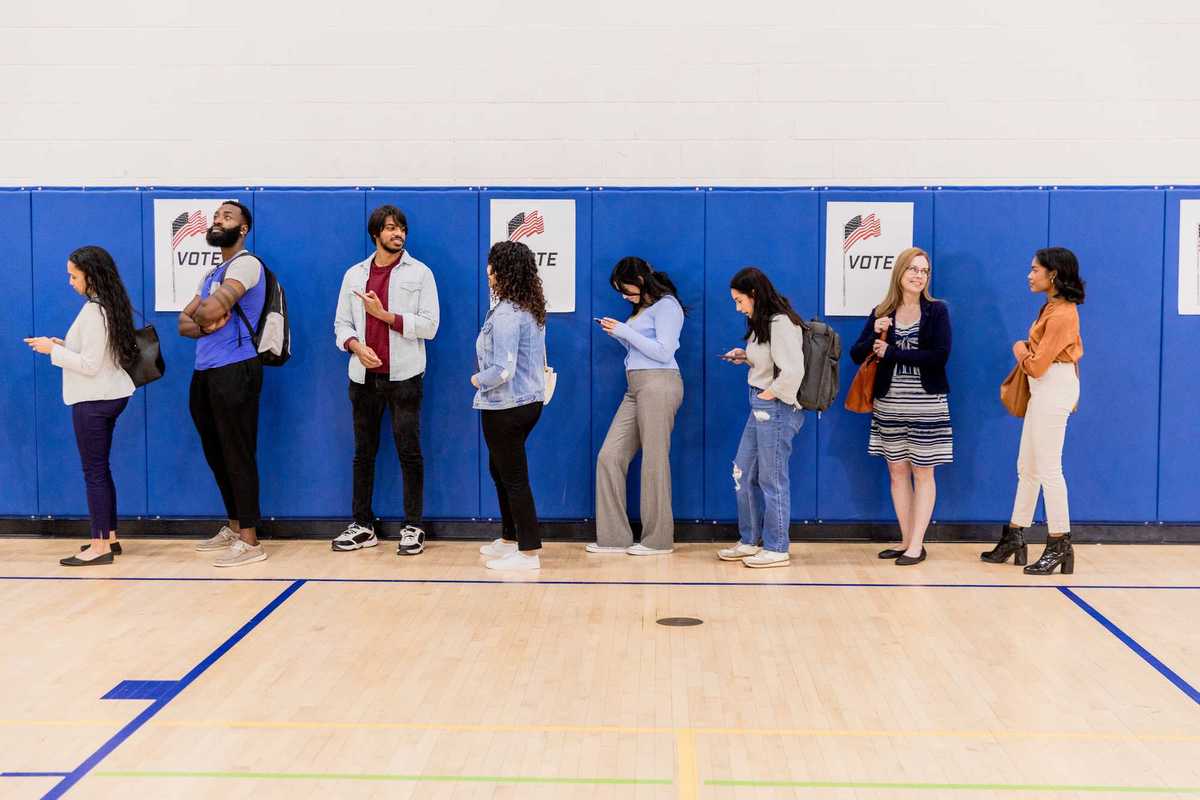
Because here’s a truth that rarely makes headlines: the baking isn’t done only by elected officials. Citizens do it.
I know volunteers who have spent years and even decades bringing their members of Congress into the kitchen and over to the oven on issues like the Global Fund to Fight AIDS, Tuberculosis, and Malaria. Most of the 160 House signers entered Congress, never having heard of the Global Fund. It was engaged constituents, doing their homework and getting training, who taught them.
That is transformational advocacy, citizens awakening to their power. And you can join them.
Sam Daley-Harris is the author of “Reclaiming Our Democracy: Every Citizen’s Guide to Transformational Advocacy” and the founder of RESULTS and Civic Courage. This is part of a series focused on better understanding transformational advocacy: citizens awakening to their power.