

WASHINGTON — Rep. Pete Sessions, R-Texas, introduced a bill Wednesday morning that would create a permanent U.S. Treasury Inspector General position for fraud accountability as part of a broader effort to crack down on the misuse of federal benefits.
The bill would offer an alternative, bipartisan way to prevent federal benefits fraud, after several months of politically charged congressional hearings.
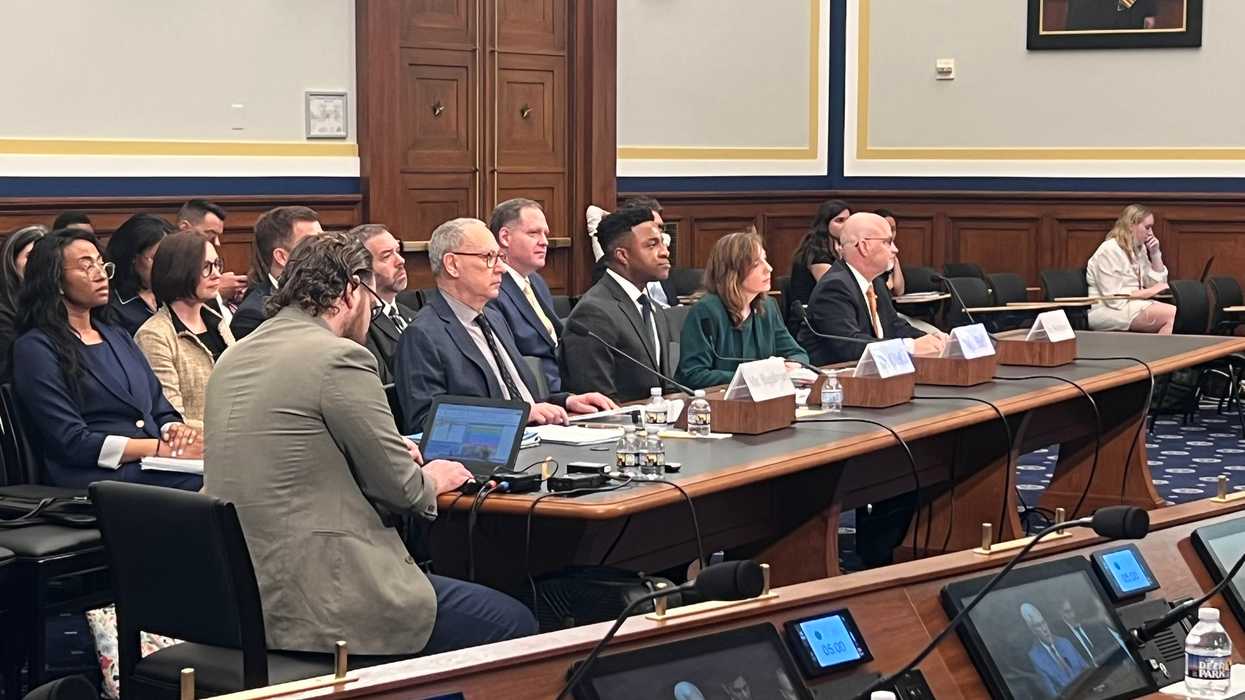
The bill, titled the “Fraud Prevention and Accountability Act,” was introduced at a House Subcommittee on Government Operations hearing. This hearing follows larger, committee-wide hearings investigating the misuse of federal funds in Minnesota after a scandal involving Somali immigrants, which broke late last year. However, Sessions stressed that his bill addresses a nationwide problem that isn’t limited to immigration.
“While we are fresh off the heels of the full committee’s investigation and hearings into fraud, this isn’t about one state,” he said. “This is not about Minnesota, it is not about any one particular area.”
In 2025, the government estimated nearly $29 billion in improper Medicaid payments, but it was unclear how much of that was fraud rather than paperwork errors and administrative mistakes. For similar reasons, the government does not have clear estimates of fraud in other benefit programs.
But Rep. Emily Randall, D-W.A., worried that the crackdown on fraud could result in eligible people receiving delayed or missing benefits.
“I had a sister with really complex disabilities who relied on Washington State's Medicaid program, and I can think of a number of times where my mom didn't submit paperwork in time,” she said. “Maybe Olivia was in the hospital, or had any number of health complications that meant her stack of paperwork kept getting bigger and bigger. Those improper payments sometimes are just a struggling family trying to keep their kid or family member alive and healthy.”
Subcommittee member Rep. Eleanor Norton, D-D.C., criticized President Trump for contributing to the fraud problem by firing or demoting over 20 inspectors general since the beginning of his term.
“Inspectors general are a key part of detecting and preventing fraud,” she said.
The bill focused on the many issues plaguing Medicaid, the Supplemental Nutrition Assistance Program, and Temporary Assistance for Needy Families disbursements at the state level. For instance, states often do not share eligibility data across assistance programs or with the federal government. States also use outdated user interface systems to track eligibility.
To combat this, the bill would make the Pandemic Response Accountability Committee's operations a permanent part of the Treasury. The committee was created in 2020 to track how states were spending pandemic relief funds, but Sessions’ bill would expand its responsibilities to all federal awards over $50,000.
Sessions’ legislation marks a shift away from previous fraud accountability efforts focused on immigration. Last month, an executive order created a Task Force to Eliminate Fraud led by Vice President J.D. Vance. The order blamed many of the benefits issues on “lax immigration policy and immigration fraud.” Soon after, the House passed “Deporting Fraudsters Act,” which would make benefits fraud a deportable offense. While Sessions voted for the Deporting Fraudsters Act, he said his new bill would be a separate, preventive effort.
“What we're trying to do is to take the mechanisms of data and information and make them permanent,” Sessions said. “[The Deporting Fraudsters Act] deals with when you're caught, and you've committed fraud, that you can be deported.”
O.J. Oleka, a witness from the State Financial Officers Foundation, suggested an “instant verification system” that would cross-check applicants’ income, residency, and citizenship status before payments are issued. However, experts said this would not be feasible, at least for Medicaid, given the current distribution of those funds.
“It’s completely infeasible to implement,” Andy Schneider, a Georgetown professor who has written extensively on Medicaid policy, said in an interview. “The data systems are not in place, and the effect of a rule like that would be to disenfranchise millions of Americans from access to health insurance coverage.”
The bill would add the responsibility of negotiating data-sharing agreements with states to the Treasury Secretary’s role. However, this raised concerns about privacy, especially in the current political climate.
“When it comes to providing information to the federal government, in an ideal world, you would want sharing of information to make systems flow better,” said Valerie Lacarte, a senior policy analyst at the Migration Policy Institute, in an interview.
Non-citizens do not qualify for many benefits, and those who do use benefits do so at lower rates than citizens. Unfortunately, she said, many immigrants fear that if they provide their personal information to states, the federal government will use that information for immigration enforcement.
“Because of the use of federal agencies basically using information from different agencies for the purposes of immigration enforcement, that is now putting a lot of states and local governments in an awkward position with their communities,” she said.
Naisha Roy is a graduate journalism student at Northwestern University reporting on the immigration beat on Capitol Hill.