


Skip to content
Search

Latest Stories

Top Stories

In Parkersburg, Neighbors Cross Divides to Confront a Crisis Together

In Parkersburg, West Virginia, a yearlong experiment in civic courage has been unfolding — one that asks a deceptively simple question: Can a community heal itself by listening to one another? The Parkersburg Engagement Project (PEP), a pilot initiative launched in 2025, set out to test that idea. What emerged is a portrait of a small city wrestling with one of the nation’s most painful challenges — substance use — and choosing to face it not through politics, but through people.

Residents began by naming the problem. Nearly 700 Parkersburg community members responded to a citywide survey, and the answer was unmistakable: substance use disorder was the issue most urgently affecting daily life. According to reporting from the News and Sentinel, it topped concerns like housing, transportation, and wages. But the survey did more than identify a crisis — it revealed a willingness to talk about it openly.


PEP organizers invited residents into “solution sessions,” where people with lived experience sat beside medical providers, legal advocates, faith leaders, and city officials. Hundreds of ideas poured in. The steering committee — nine Parkersburg residents representing different backgrounds and political identities — distilled those ideas into a four‑part plan: a council of recovery professionals, a peer‑led council of people in recovery, an AmeriCorps volunteer to support both groups, and a public‑awareness campaign to shift how the community understands addiction and recovery.

The work was slow, deliberate, and deeply human. More than 600 residents participated across surveys, listening sessions, and community gatherings. Organizers told the National Civic League that the project’s purpose wasn’t just to solve a problem — it was to test whether people who disagree politically could still build something together. The answer, at least in Parkersburg, appears to be yes.

The project was selected as the pilot site for the SHIFT Action Lab, a national effort exploring how bridging, organizing, and participatory democracy can be combined to create durable civic action. SHIFT leaders said Parkersburg stood out because residents were already showing a hunger for connection — and a readiness to lead.

That leadership was on full display at the “Community Celebration and Solution Reveal,” where partners from 18 states and even Germany joined local residents to hear the final plan. Attendees weren’t just asked to listen; they were asked to sign up, step in, and help carry the work forward. The next phase will measure whether the project has changed how people feel about working across differences — and whether the solutions themselves can take root.

For Parkersburg, the Engagement Project is more than a policy exercise. It is a story about a community deciding that the people closest to the problem should be closest to the solution. It is about neighbors choosing to sit together, argue respectfully, and imagine a future where recovery is not a private struggle but a shared commitment.

And it is a reminder — the kind The 50 seeks to elevate — that democracy is not only found in elections or institutions. Sometimes, it begins in a room where people show up, speak honestly, and decide to build something better than what they inherited.

Parkersburg is still writing that story. But the first chapter is clear: when residents lead, communities change.


Read More

A male senior stands in the shadow of a Social Security card with bite missing.

Social Security faces automatic cuts in 2032 and Medicare in 2033. New polling suggests that gives Democrats a powerful election issue. Here’s the case.

DNY59 / Getty Images

Will the Debt Crisis Engineered by Republicans Succeed in Cutting Social Security and Medicare?

Overview

The Republican Party’s long game to reduce administrative state entitlement spending centers on creating a debt crisis to provide an excuse for limiting such spending. It may soon pay off. That strategy involved a quarter-century of engineered tax cuts responsible for the stunning rise in sovereign U.S. debt, threatening an eventual economic crisis.

Social Security benefits are projected under current law to be automatically cut in 2032. And Medicare benefits are projected to be automatically cut in 2033. Congressional Republicans intend for those automatic cuts to occur, opposing new taxes to prevent cuts. And they are using the ballooning national debt as an excuse to also oppose new general revenue spending to prevent benefit cuts.

Keep Reading Show less
​Chinese President Xi Jinping (L) and U.S. President Donald Trump followed by Chinese first lady Peng Liyuan and U.S. first lady Melania Trump arrive for a state dinner at the White House.

Chinese President Xi Jinping (L) and U.S. President Donald Trump followed by Chinese first lady Peng Liyuan and U.S. first lady Melania Trump arrive for a state dinner in the East Room of the White House on September 24, 2026 in Washington, DC.

Kevin Dietsch/Getty Images

When Leaders Disagree, Ceremony Plays an Important Role

When Chinese President Xi Jinping arrived at the White House on 24 September, the U.S. welcomed him with an elaborate display of ceremony. The Army Herald Trumpets sounded a fanfare, the Chinese and American national anthems were played, and the Old Guard Fife and Drum Corps performed. A military review was followed by a flyover involving a B-2 bomber and four F-22 fighter jets, according to the White House. It was an extraordinary production for two countries that still disagree on some of the most important issues in international politics.

Talks between President Donald Trump and Xi touched on trade, artificial intelligence and Taiwan. The visit was marked by warm words and some signs of cooperation, but it did not erase the fundamental competition between the United States and China. So why was all this ceremony staged? It is tempting to dismiss political pomp as mere window dressing: an expensive historical relic surrounding the serious business taking place behind closed doors. As a music historian, however, I think this misunderstands what ceremony does. Ceremony can become particularly valuable when words alone are not enough.

Keep Reading Show less
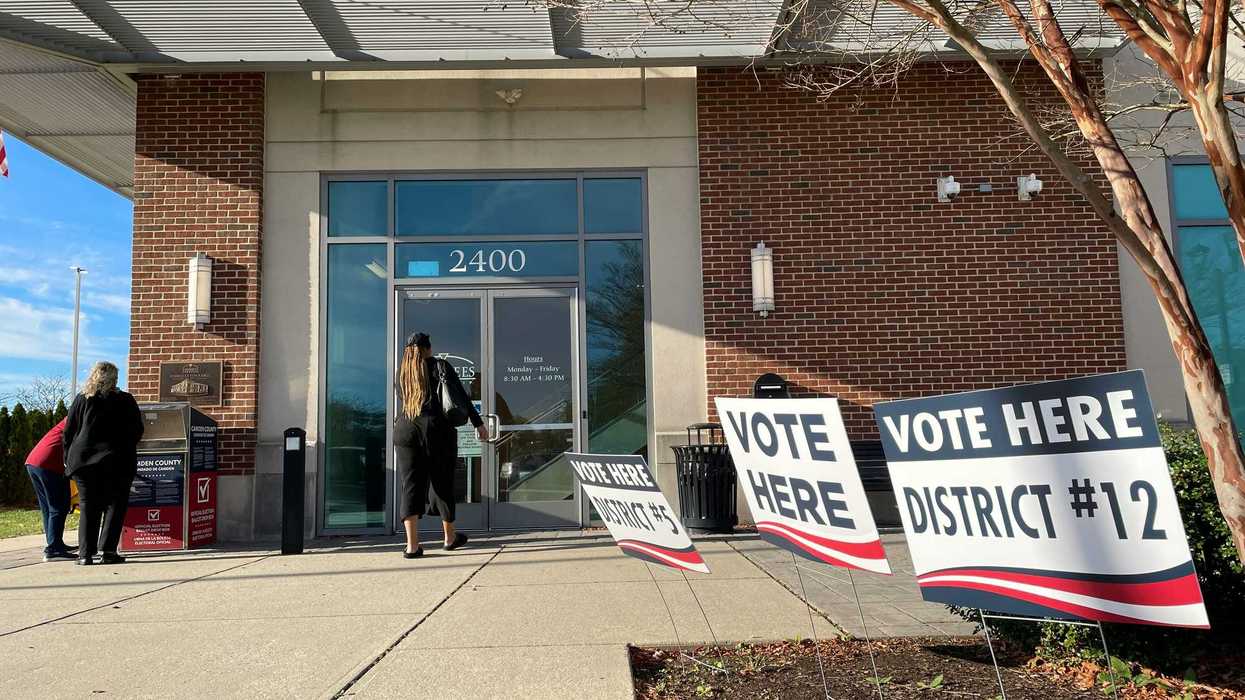
Americans Voting in an Election

Americans Voting in an Election

Getty Images

Voting Is Not Just a Privilege It Is Every Citizens’ Responsibility

Despite the consistent determinations that US elections are secure across the country and there is virtually no evidence of non-citizens voting, in reports released as recently as September 2026; President Trump has doubled down on his claims that voter fraud is a major problem in America and on October 20th, he announced a new $25 Million Fraud Whistleblower program to be administered by the Department of Justice.

This announcement achieves a variety of the president’s goals: (i) It intentionally perpetuates the misinformation, that voter fraud is a serious problem in the United States; (ii) it undermines the trust in the voting systems, as well as in the states administering the elections; (iii) it fosters distrust amongst neighbors, who are more likely to suspect people of color and report them for a reward. This has the concomitant benefit of (iv) intimidating people who are in fear of going to the polls and (v) It gives the illusion that the federal government is prepared to give away more free money (along with the Tariff rebate checks, the Trump Accounts, the DOGE dividend, the direct payments for healthcare and the $5,000 for supporting GOP midterm candidates.)

Keep Reading Show less
Capitol building with American flag behind it

Political Polarization and Extremism

Getty Images

Both Parties Have Forgotten How to Lose: It’s Time for Guardrails

On November 3 Americans vote in the midterm elections, and the most important question may be whether the losers accept the result. A Pew survey this summer found that just 55 percent of Americans are confident the midterms will be run fairly and accurately, down from 64 percent in 2022. The partisan detail is more revealing. Since 2024, Republican confidence has risen and Democratic confidence has fallen from 77 percent to 58 percent. Trust in the referee now depends on who holds power.

Democracy rests on a kind of sportsmanship agreement. The theologian Reinhold Niebuhr put it well: man’s capacity for justice makes democracy possible, but his inclination to injustice makes it necessary. B. R. Ambedkar, the chief architect of India’s constitution, called democracy a method of bringing revolutionary change without bloodshed. Both understood that the system works only if the losing side agrees to try again next time instead of burning down the field. Americans in both parties are forgetting how to do that.

Keep Reading Show less