



Skip to content
Search

Latest Stories

Top Stories

Louisiana v. Callais: The Supreme Court’s Next Test for Voting Rights

News

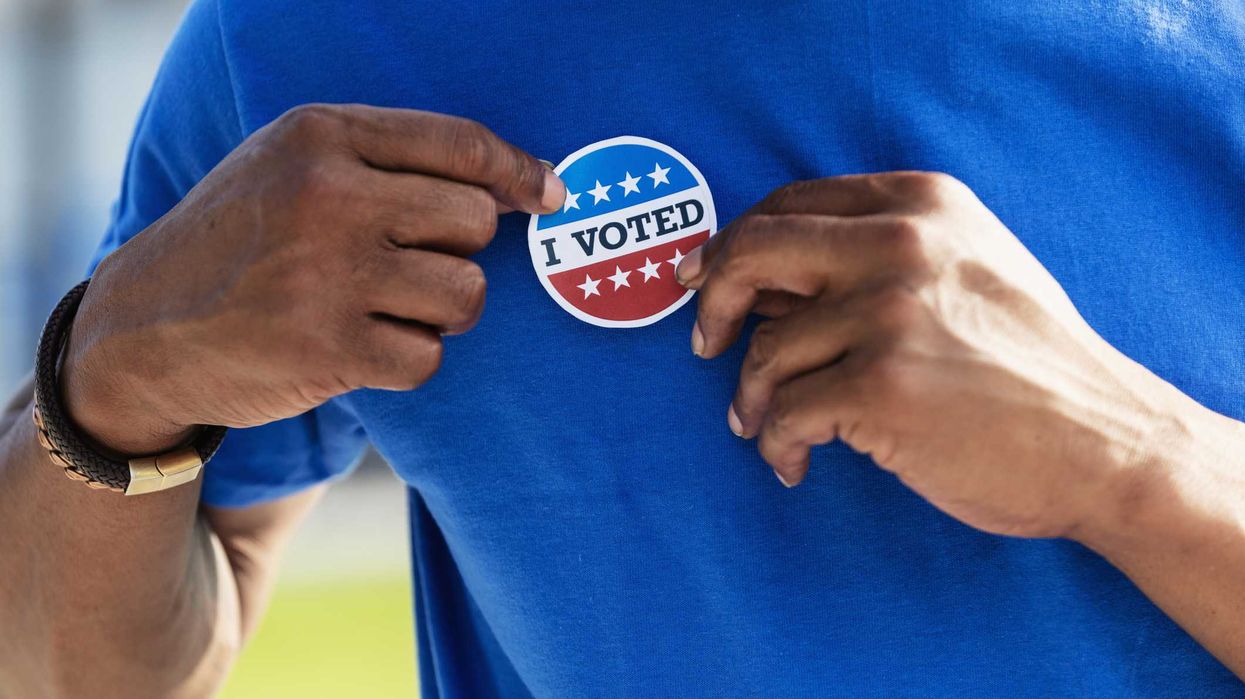
A person putting on an "I Voted" sticker.

The Supreme Court’s review of Louisiana v. Callais could narrow Section 2 of the Voting Rights Act and limit challenges to racially discriminatory voting maps.

Getty Images, kali9

Background and Legal Landscape

Section 2 of the Voting Rights Act of 1965 is one of the most powerful tools for combatting racial discrimination in voting. It prohibits any voting law, district map, or electoral process that results in a denial of the right to vote based on race. Crucially, Section 2 allows for private citizens and civil rights groups to challenge discriminatory electoral systems, a protection that has ensured fairer representation for communities of color. However, the Supreme Court is now considering whether to narrow Section 2’s reach in a high profile court case, Louisiana v. Callais. The case focuses on whether Louisiana’s congressional map—which only contains one majority Black district despite Black residents making up almost one-third of the population—violates Section 2 by diluting Black voting power. The Court’s decision to hear the case marks the latest chapter in the recent trend of judicial decisions around the scope and applications of the Voting Rights Act.


The Louisiana Case and Its Broader Context

In 2022, a federal district court found that Louisiana’s congressional map violated Section 2 by packing and cracking, essentially separating into districts, Black voters in a way that undermined their electoral influence. The court then ordered the creation of a second majority Black district, which would likely lead to another Black Democratic representative. Louisiana officials appealed to the Supreme Court, arguing that redrawing maps based on race violates the Equal Protection Clause of the 14th Amendment. The Court initially paused the lower court’s ruling, allowing the disputed map to remain in place for the 2022 midterms. But after a similar case from Alabama, Allen v Milligan (2023), reaffirmed Section 2 protections, the justices sent Louisiana’s case back to the lower courts for reconsideration.

However, now the Court has decided to revisit the case, this time focusing on not just the congressional map, but also on whether private citizens and civil rights groups should even be allowed to sue under Section 2. This question is pivotal; for decades, nearly all Section 2 lawsuits have been brought by private plaintiffs, rather than the Department of Justice. If the Court ruled that only the federal government could bring these lawsuits, enforcement of Section 2 would effectively stop, leaving many discriminatory maps uncontested.

Implications

The implications of Louisiana v. Callais extend far beyond Louisiana. Curtailing Section 2 would fundamentally reshape the balance of power between federal civil-rights enforcement and state election control. It would also make it significantly more difficult to challenge racially gerrymandered congressional maps in many states where rapid demographic shifts are already altering political representation. Critics of the Court’s decision to hear the case warn that weakening Section 2 could allow states to adopt maps that entrench racial disparities under the guise of race-neutral redistricting, resulting in minority communities having no way to fight systemic discrimination in elections. Proponents of the case however, argue that Section 2 gives the federal government too much control over state redistricting, forcing states to prioritize race in map drawing, undermining both race-neutral principles and state sovereignty.

Conclusion

The Supreme Court’s reconsideration of Louisiana v. Callais places the future of the Voting Rights Act at a crucial inflection point. Section 2 has long served as concrete legislation to help minority voters seeking fair representation when state legislatures fail to uphold equality. Now, its survival may hinge on how the justices interpret who can enforce it, and how far the federal government can go in protecting the right to vote. The Court’s decision here could determine whether voting rights enforcement remains a national guarantee, or becomes a fragmented system defined by state politics.


Shailee Sinha is a second-year undergraduate at the University of California, San Diego, majoring in Political Science with a concentration in American Politics.

Louisiana v. Callais: The Supreme Court’s Next Test for Voting Rights was originally published by the Alliance for Civic Engagement and is republished with permission.

Read More

Beyond the Protests: How To Support Immigrant Communities Amidst ICE Raids

A small flower wall, with information and signs, sits on the left side of the specified “free speech zone,” or the grassy area outside the Broadview ICE Detention Center, where law enforcement has allowed protestors to gather. The biggest sign, surrounded by flowers, says “THE PEOPLE UNITED WILL NEVER BE DEFEATED.”

Credit: Britton Struthers-Lugo, Oct. 30, 2025

Beyond the Protests: How To Support Immigrant Communities Amidst ICE Raids

The ongoing U.S. Immigration and Customs Enforcement raids have created widespread panic and confusion across Chicago. Many of the city’s immigrant communities are hurting, and if you’ve found yourself asking “how can I help?”, you’re far from the only one.

“Every single one [U.S. resident] has constitutional rights regardless of their immigration status. And the community needs to know that. And when we allow those rights to be taken away from some, we risk that they're going to take all those rights from everyone. So we all need to feel compelled and concerned when we see that these rights are being stripped away from, right now, a group of people, because it will be just a matter of time for one of us to be the next target,” said Enrique Espinoza, an immigrant attorney at Chicago Kent College of Law.

Keep Reading Show less
Beyond the Protests: How To Support Immigrant Communities Amidst ICE Raids

A small flower wall, with information and signs, sits on the left side of the specified “free speech zone,” or the grassy area outside the Broadview ICE Detention Center, where law enforcement has allowed protestors to gather. The biggest sign, surrounded by flowers, says “THE PEOPLE UNITED WILL NEVER BE DEFEATED.”

Credit: Britton Struthers-Lugo, Oct. 30, 2025

Beyond the Protests: How To Support Immigrant Communities Amidst ICE Raids

The ongoing U.S. Immigration and Customs Enforcement raids have created widespread panic and confusion across Chicago. Many of the city’s immigrant communities are hurting, and if you’ve found yourself asking “how can I help?”, you’re far from the only one.

“Every single one [U.S. resident] has constitutional rights regardless of their immigration status. And the community needs to know that. And when we allow those rights to be taken away from some, we risk that they're going to take all those rights from everyone. So we all need to feel compelled and concerned when we see that these rights are being stripped away from, right now, a group of people, because it will be just a matter of time for one of us to be the next target,” said Enrique Espinoza, an immigrant attorney at Chicago Kent College of Law.

Keep Reading Show less
Voting Rights Are Back on Trial...Again

Vote here sign

Caitlin Wilson/AFP via Getty Images

Voting Rights Are Back on Trial...Again

Last month, one of the most consequential cases before the Supreme Court began. Six white Justices, two Black and one Latina took the bench for arguments in Louisiana v. Callais. Addressing a core principle of the Voting Rights Act of 1965: representation. The Court is asked to consider if prohibiting the creation of voting districts that intentionally dilute Black and Brown voting power in turn violates the Equal Protection Clause of the 14th and 15th Amendments.

For some, it may be difficult to believe that we’re revisiting this question in 2025. But in truth, the path to voting has been complex since the founding of this country; especially when you template race over the ballot box. America has grappled with the voting question since the end of the Civil War. Through amendments, Congress dropped the term “property” when describing millions of Black Americans now freed from their plantation; then later clarified that we were not only human beings but also Americans before realizing the right to vote could not be assumed in this country. Still, nearly a century would pass before President Lyndon B Johnson signed the Voting Rights Act of 1965 ensuring voting was accessible, free and fair.

Keep Reading Show less
Trump Administration Faces Record 530 Lawsuits in 2025 — Far Exceeding Biden, Obama, and Bush

An analysis of the 530 lawsuits filed against the Trump administration in 2025, how they compare to past presidents, key Supreme Court rulings, and what unresolved cases could mean for constitutional checks and balances.

Getty Images, Roberto Schmidt

Trump Administration Faces Record 530 Lawsuits in 2025 — Far Exceeding Biden, Obama, and Bush

The Fulcrum strives to approach news stories with an open mind and skepticism, striving to present our readers with a broad spectrum of viewpoints through diligent research and critical thinking. As best we can, we remove personal bias from our reporting and seek a variety of perspectives in both our news gathering and selection of opinion pieces. However, before our readers can analyze varying viewpoints, they must have the facts.


On April 22 of this year, I wrote a column in The Fulcrum entitled Just the Facts: Courts’ Actions Against the Trump Administration when there were over 186 legal actions filed against the Trump administration. At the time, these lawsuits challenged various executive orders and actions, including immigration policies and the use of the Alien Enemies Act.

Keep Reading Show less