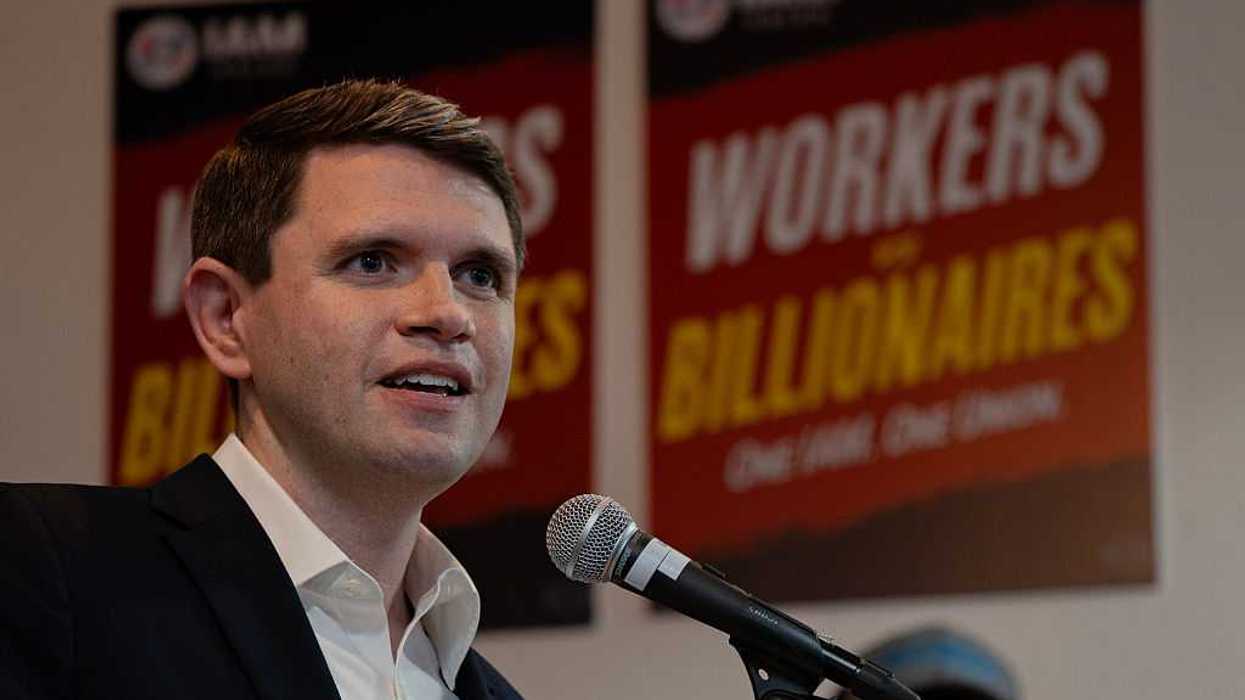

Hill is director of operations for Take Back Our Republic, which advocates for returning political power to individuals.
Hyper-partisanship is not a phenomenon unique to the last several years of American politics. While the presidencies of Barack Obama and Donald Trump have fueled increasingly polarized extremes, our nation has survived intense division before.
Yet, there is something that feels different about the wave of absurd claims that could shake the foundation of our democracy.
Beginning with Trump's shocking victory in 2016, the political left has clearly struggled to come to grips with the fact that the issues the president ran on actually resonate with the American people. Unfortunately, rather than evaluate their messaging, candidates or positions, many have chosen to opt for unproven calls of cheating.
With the Mueller Report now concluded, there is still political fallout and likely further investigations. But, barring further evidence, it is impossible to avoid the simple conclusion: There was no cheating by the Trump campaign that accounts for his 2016 victory.
In other words, Donald Trump won the presidency because the American voters put him into office. Not nefarious deeds. Not the Russians. The American people.
Despite the lack of evidence, Democrats are struggling to let go of this phony investigation that has hindered more than two years of the duly elected presidency. Moreover, there continue to be blatantly false assertions that seek to ascribe the blame of a loss to cheating.
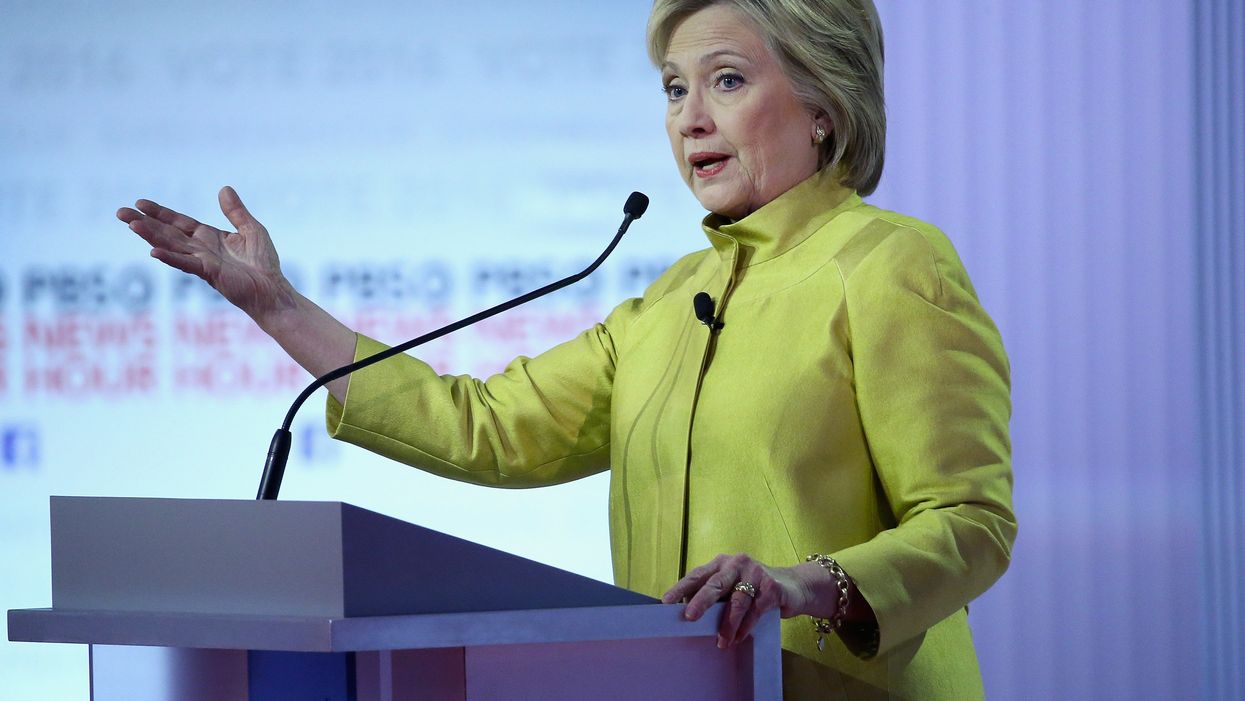
Consider Hillary Clinton's assertion earlier this year that 40,000-80,000 voters in Wisconsin were turned away because of the color of their skin or their age. No evidence was offered. There has been no widespread reporting or claims of racism or ageism at Wisconsin polling places. But, it makes for a good applause line and places the blame of defeat at the feet of "the system."
She also made the claim that Georgia had fewer registered voters in 2016 than in previous years. Again, this is provably false. In fact, recent studies have shown that Georgia has actually led the way in registering new voters under Republican leadership.
It doesn't stop with Hillary Clinton, though.
Sen. Elizabeth Warren is among those to pick up on the allegation of "massive voter suppression" in Georgia and elsewhere, saying that "if all the votes are counted" her side would win every time. Therefore, any Democrat's loss is the fault of "the system."
Another presidential hopeful, Sen. Kamala Harris, has similarly promoted the false narrative that Stacey Abrams and Andrew Gillum are the legitimate governors of Georgia and Florida respectively, again with no evidence of voter suppression to substantiate her claim. It's the fault of "the system."
And, then there's Abrams herself. Her campaign and her nonprofit are now under numerous investigations for misuse of funds and improper coordination. Yet, she is the one who alleges cheating by the other side. Among her examples of voter suppression, she has cited "long lines."
On that, she has a point ... to a degree. In many cases, lines were, in fact, long across Georgia. That's because a record number of voters, including a historic number of minorities, turned out to vote. The 2018 gubernatorial race featured 3.9 million voters, a nearly 50 percent increase over the 2014 turnout. Long lines, yes. Voter suppression, no.
Yet, to anyone who will listen, Abrams insists that she won, is the rightful governor and the only reason she isn't is, well, "the system" (a claim she has successfully utilized to vault her into the national spotlight, giving the response to the State of the Union and being seen as a possible presidential candidate).
This false narrative is fueling increasing anger among the liberal base and leading to drastic calls to fundamentally change the system – with proposals like eliminating the Electoral College or stacking the Supreme Court gaining intense support among Democratic primary voters.
A fundamental faith in democracy has been shaken – without evidence, without rationale, and without clear, thoughtful debate. "The system" has been blamed for the sake of political convenience.
But, let's be clear: The system does have problems. Our organization, Take Back Our Republic, exists to call attention to many of those problems and to secure a government that better represents the people it's supposed to serve. This mission, however, is hindered by this barrage of false allegations.
First, the current "voter suppression myth" or cheating accusations undermine the very real and terrible history of voting in seasons of our nation's history. Recently, 20 secretaries of state (eight Democrats, 12 Republicans) gathered in Alabama for a "voting rights history" tour to learn more about the suppression that occurred.
We applaud this trip as it is imperative that we never forget where we have come from. However, this recent push to equate non-suppression issues like "long lines" with the problems of our history does a disservice to those who fought for the rights now fully enjoyed.
Second, false attacks against "the system" may excite a segment of the active voter base, but it actually discourages many from participating at all. Why bother voting if your vote doesn't count? Why get involved if your action leads to nowhere?
Accepting a loss and committing to a redoubling of efforts can encourage people to stay involved. Claiming a false win that cannot be enjoyed because of an unbreakable, all-powerful "system" leads most to disengage entirely, believing their voice will never matter.
Third, false narratives about problems with the system put many in a defensive posture and hinder addressing real issues. Addressing Russian and Chinese interference, campaign finance problems and lobbying reform need to be on the agenda in our nation's capital. Yet, because of the increased partisanship and falsehoods, little progress can be made on these areas that have bipartisan support.
It's time for those who seek to lead to step up and use responsible rhetoric. It's time for real solutions about real problems. As the campaign season heats up, candidates for president and down ballot should eschew cheap applause lines that undermine democracy and instead opt for solutions that can empower American voters.
This is our hope for 2020 and beyond, and, if such candidates are elected, we can achieve real gains for the future.