

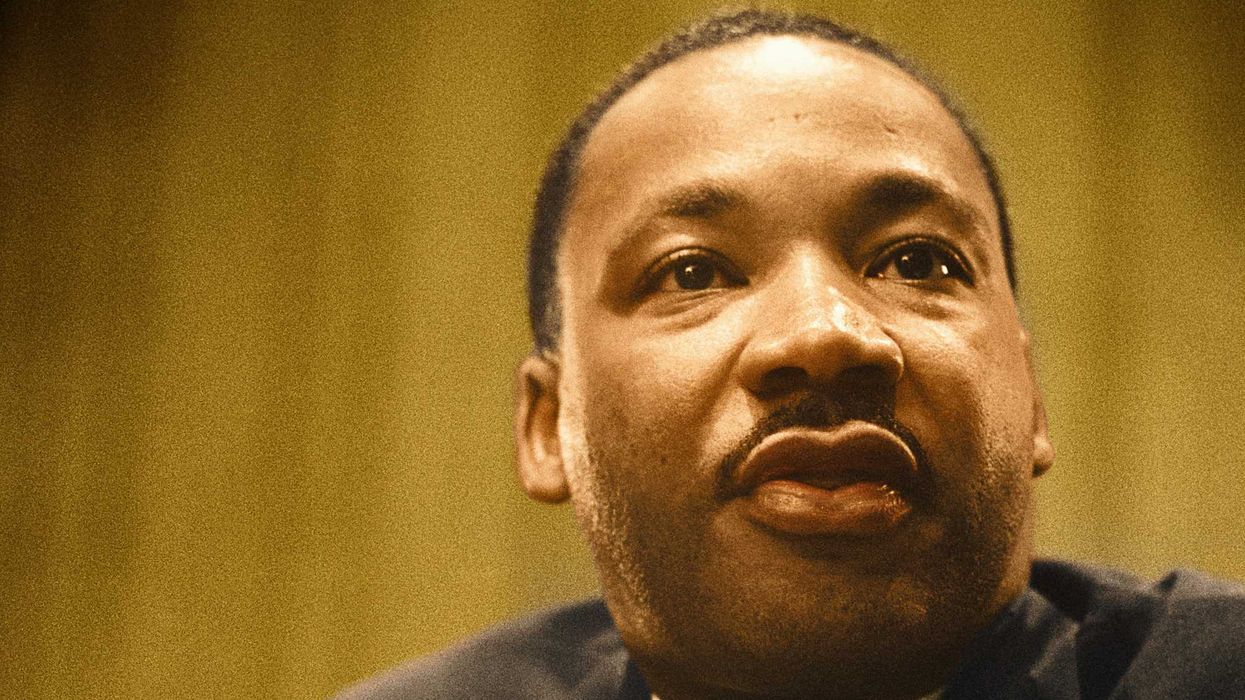

The floorboards of American democracy creak under the weight of our collective amnesia. Every January, the image of Martin Luther King Jr. is polished and presented, made to appear harmless and easily shared. This is no more than another federal holiday, with his famous dream reduced to a recurring line or two and an oft-repeated photograph, both stripped of their original challenge. But in 2026, this custom feels different. The air feels tighter. There is a sense that something threatening lies beneath the commemorations—a growing worry that the democracy King strove to protect is not just vulnerable but on the verge of failing, struggling to survive during Trump’s second presidency.
America has always lived in urgent tension with itself. King understood this better than most. His moral and spiritual imagination pierced patriotic veneers, exposing the greed and violence woven into American life, the ways whiteness functioned as inheritance for some and dispossession for many others. Even amid technological marvels and global ambition, the questions King posed half a century ago remain not just unanswered, but pressing: Who belongs? Who bears the cost of our prosperity? Can a genuine moral community exist without truth-telling and repair?
To invoke King now is an act of urgent necessity. He was never a comforting figure, despite how often he is portrayed as one. King compelled America to look at itself without myth or nostalgia. He practiced a double vision that was both tender and unrelenting, able to grieve what had been while demanding the courage to imagine something more just. That task is even more urgent today, in a moment when history itself is under organized assault. Not only Black history, but the plural, untidy story of anyone who has struggled to breathe at the margins is being narrowed, edited, or erased altogether.
From the pulpit, King called this tension 'the fierce urgency of now.' For him, it was never a catchphrase but a demand for immediate attention, both a warning and an invitation. He believed that democracy was more than running elections or following laws—it depended on a shared agreement built on memory, repentance, and hope. Democracy lasted only if people insisted that it include and protect those who were most likely to be overlooked. Without that continual insistence, democracy became empty at its core.
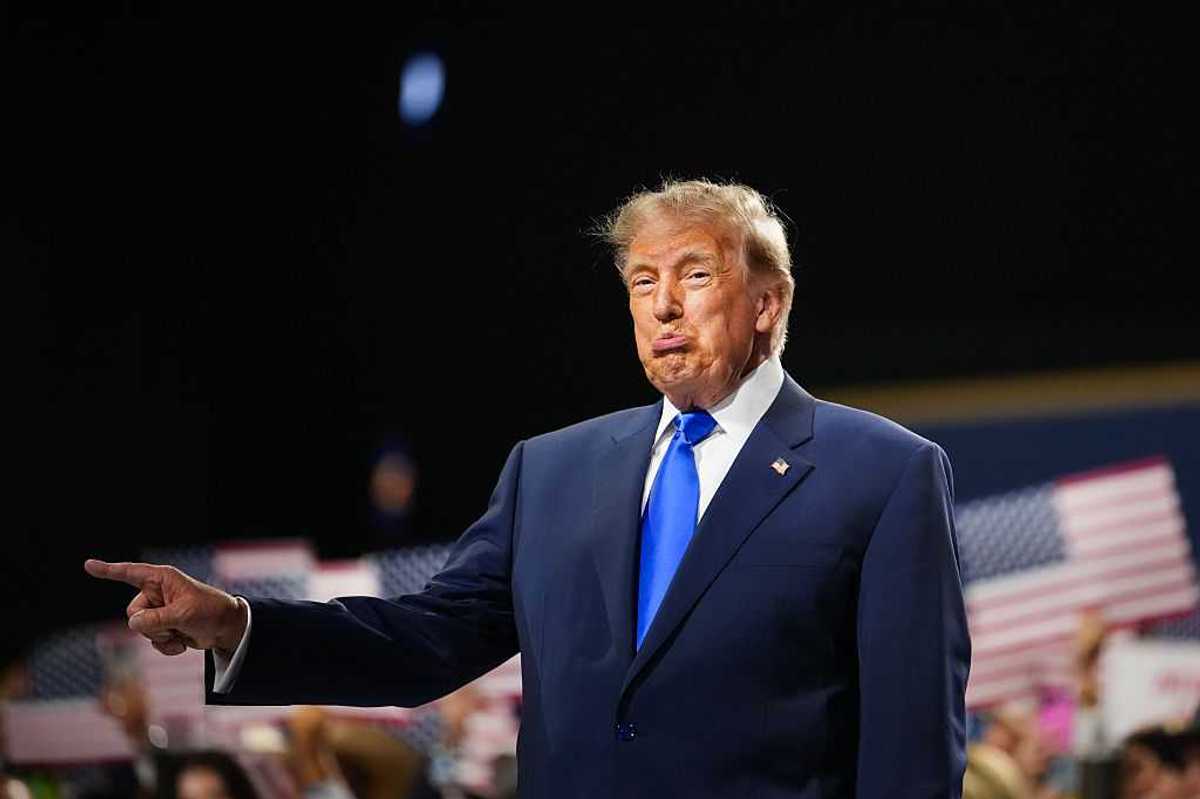
Today, we are governed again by a politics hostile to that vision. Trump’s return to the presidency represents more than policy reversals or rhetorical cruelty. It signals something deeper and more corrosive: an aggressive form of forgetting. Painful truths about who we have been are treated as inconveniences to be discarded. The record of protest and sacrifice is relegated to banned books, defunded programs, and shuttered classrooms. Across the country, attempts to tell a fuller American story are attacked, histories are censored, and ethnic identity is flattened into something manageable and nonthreatening. This is not merely a partisan struggle. It is a spiritual crisis.
King’s theology, radical as it was, was profoundly democratic. He believed the nation’s wounds required what Reinhold Niebuhr called a spiritual discipline against resentment, a discipline that did not deny injustice but refused to let bitterness have the final word. Democracy, for King, became real only when it was saturated with love, when the son of a tenant farmer and the daughter of a sharecropper could recognize themselves in the promises of the Constitution. This was not idealism divorced from reality. It was forged in the Black church, where hymns doubled as political declarations, and testimony became an act of resistance, where hope was cultivated in the shadow of humiliation.
Where is that practice now, when “We the People” seems to shrink by the day? Its erosion demands our immediate attention. It is happening in the marrow of public life. Voting rights are weakened. Protest is criminalized. Citizenship is rendered transactional, offering security and belonging to some while withholding it from others. This is not accidental drift. It is the systematic unraveling of the civil and moral compact that once made democracy imaginable.
What King offers us still is a politics of memory, a disciplined refusal to let lies harden into permanence. Not for the sake of shame, but because truth, he believed, had the power to liberate. In the current political moment, memory has been weaponized. It is reduced to slogans and fantasies of a greatness that never belonged to everyone. The histories of Black, brown, Asian, Indigenous, and queer communities are either trimmed to serve a narrow nostalgia or erased altogether.
The struggle over history is, at its core, a struggle over the soul. Efforts to ban books, dismantle ethnic studies, and intimidate educators are not simply about curriculum. They are about shaping the moral imagination of the future. They declare that only certain people are entitled to full personhood, that only some stories matter, and that the image of God itself can be selectively honored. This is the theological crisis beneath our political one.
King never mistook unity for conformity. His vision of beloved community did not depend on the absence of conflict, but on the presence of justice amid difference. Democracy, in this sense, demands more than tolerance. It requires the discipline of living with one another, not over or against or in spite of one another. It asks us to endure ethical discomfort and to resist the temptation to simplify ourselves or our neighbors.
That demand helps explain what Trumpist politics fears most. Authoritarianism relies on oversimplifying things. It works by erasing complexity, numbing empathy, and training people to see others' suffering as either exaggerated or deserved. It takes away everything that gives democracy its essential humanity: our shared memory, moral restlessness, remorse, and the patient work of rebuilding what is broken. It restricts our sense of right and wrong until fear becomes the norm.
King refused to shrink. His faith in the arc of the moral universe was not passive optimism. It was a hard-earned conviction born of organizing, prayer, and sacrifice. He understood how much labor it took to bend that arc, how many bodies and broken hearts were required. He confronted America’s failures without treating them as an excuse for despair. The work, he knew, would grow more difficult, not less. “The greatest tragedy of this period of social transition,” he warned, “is not the glaring noisiness of bad people, but the appalling silence of good people.”
That silence is now unmistakable. It echoes in the platitudes of politicians who praise King’s dream while rejecting his moral urgency. It resonates in calls for unity that demand forgiveness before wounds are acknowledged, much less healed. It lingers in the quiet fear of communities told repeatedly that they do not count, that their histories are disposable, that their presence is conditional.
How should we answer such a moment? We do what King did. We theologize in the presence of despair. We place our bodies where our memories are. We fight for public policies that honor the fullness of human dignity, not out of sentimentality, but because democracy collapses when people are stripped of their stories. We organize for repair even when institutions resist or retreat.
And we tell the truth, especially when it is unwelcome. We tell it from pulpits and picket lines, in classrooms and living rooms, at school board meetings and city halls. We read the banned books. We sing the freedom songs. We enter spaces where our very presence unsettles the lie that only some belong.
King’s radical witness was that democracy, if it is to survive, must honor voices long silenced or shouted down. To commemorate him in 2026 is not to lay a wreath, but to accept responsibility for unfinished work. The fierce urgency of now confronts us again, not as a slogan, but as a choice. Memory or erasure. Personhood or theft. Democracy or its slow extinction. The King holiday is not a eulogy. It is a summons to the moral and civic renewal of our battered, beloved community.
Rev. Dr. F. Willis Johnson is a spiritual entrepreneur, author, scholar-practioner whose leadership and strategies around social and racial justice issues are nationally recognized and applied.

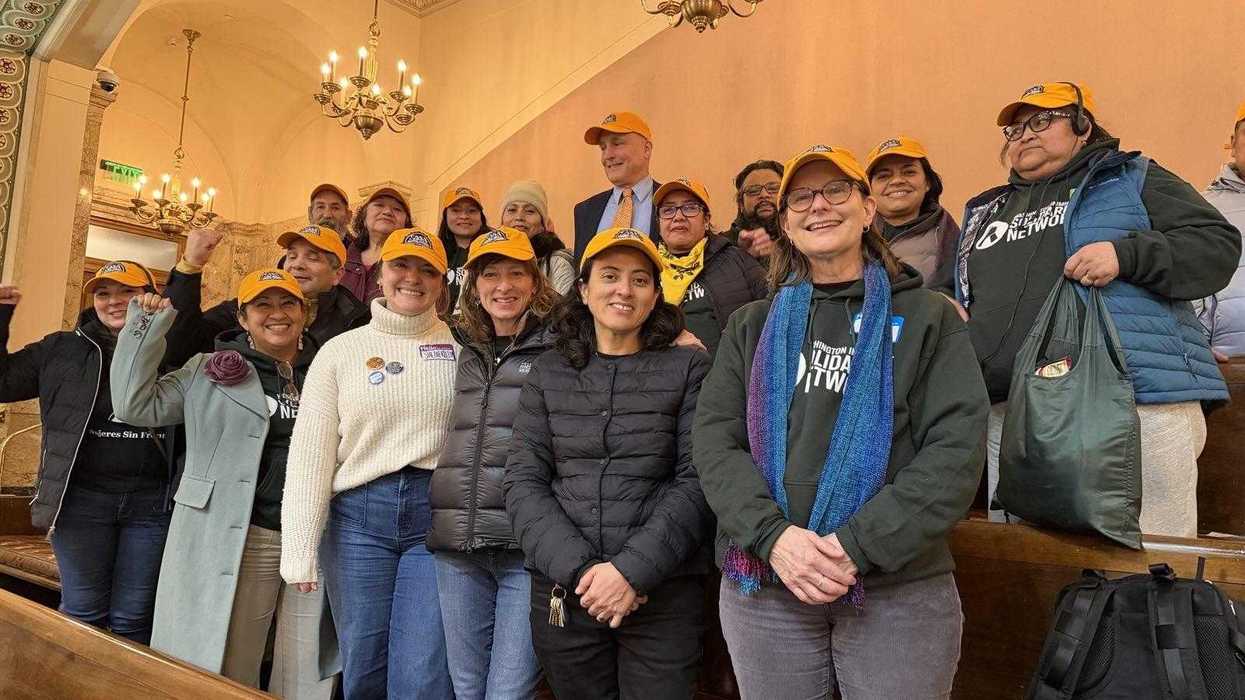
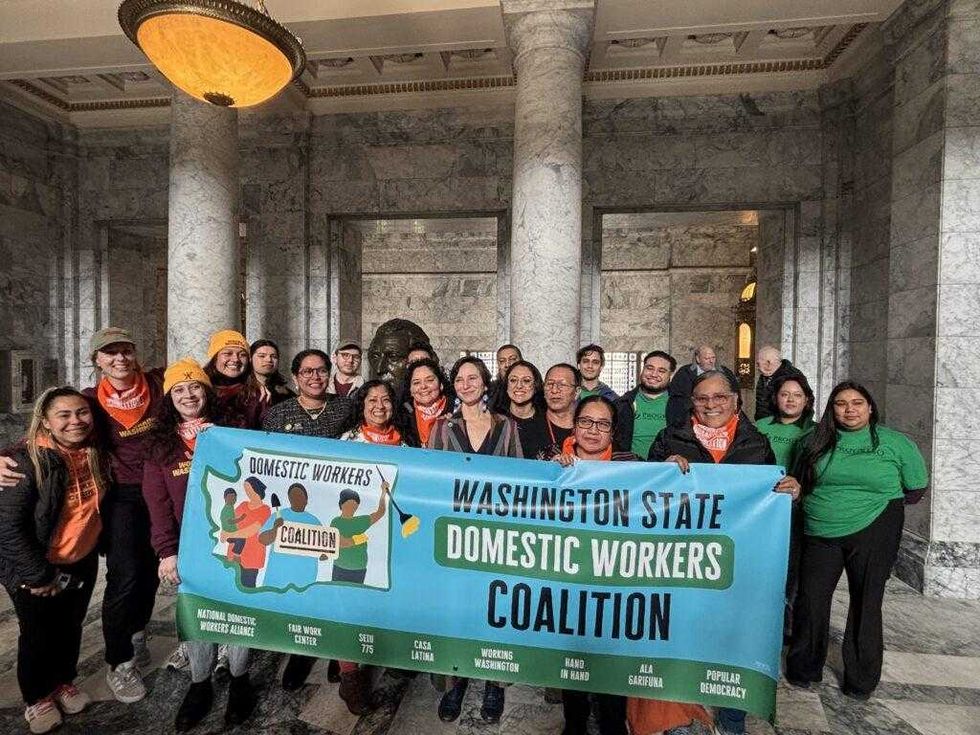 State Sen. Rebecca Saldaña, center, stands with members of the Washington State Domestic Workers Coalition at the state Capitol on Feb. 28, 2026. The Domestic Workers Bill of Rights passed in the House that day, before being signed into law in March. (Photo courtesy of Casa Latina)