





As a formerly incarcerated person, Second Chance Month is personal. For generations, folks directly impacted by our criminal justice system have driven movements for reform in America. Our determination has pushed this country closer to its ideals of a free and fair democracy, even when its systems have failed us. From a ballot measure campaign in Florida that restored voting rights to nearly 1.4 million people with felony convictions to a national “Ban the Box” movement that encouraged employers to remove arrest history questions from job applications for fair employment practices, formerly incarcerated people have proven that we can make history. But far too often, people like me are excluded from conversations on public safety policies. All of us want to live in safe, just, and prosperous communities—but that’s only possible if we center the leadership of those most impacted by our criminal justice system, and advance policies that prioritize redemption over retribution.
My incarceration became a turning point in my life, forcing me to reimagine my purpose and the kind of man I wanted to become. Today, I lead a Community Healing Resource Center in Morgan Park, where I convene a men’s group for people affected by gun violence and trauma. My work is rooted in a truth I’ve lived, and it’s why leaders like me matter: when we are given the chance to lead, we don’t just rebuild our own lives—we strengthen entire neighborhoods.
Recent legislation passed in my home state of Illinois provides a roadmap for what is possible when formerly incarcerated people are given the opportunity to lead. Last year, after years of lobbying, the state legislature passed the passage of the Clean Slate Act, which automatically clears old criminal records and removes barriers to jobs, housing, and education. At the heart of the campaign for Clean Slate were leaders whose lives had been touched by the injustices of our criminal justice system.
Organizations like my own, Live Free Illinois, brought both formerly incarcerated people and organizers whose family members had faced incarceration together for near-daily strategy sessions, organized listening sessions, expanded coalitions, and engaged directly with those whose lives would be changed by this policy. We hosted teach-ins, organized canvasses, led peace pop-ups, and mobilized hundreds to take action through witness slips and outreach efforts. We featured stories like mine every step of the way, ensuring lawmakers understood the real human cost of outdated record‑keeping laws. It was the perspectives of formerly incarcerated people that shaped and protected the storytelling of this movement, ensuring that system-impacted leaders spoke from an authentic place of truth, dignity, and power—not surface-level, feel-good narratives.
What we achieved in Illinois is part of a much longer tradition. Directly impacted leaders have always been at the forefront of efforts to transform public safety and advance justice. Their expertise comes not from theory, but from navigating and surviving the very systems we seek to change. And it shows that when people like me are given a real opportunity to lead, we can implement meaningful public safety reforms like Clean Slate that benefit our economy, disrupt cycles of crime and violence, and ensure every Illinoisian can contribute to our state.
This is the deeper lesson of Second Chance Month. It’s not simply about celebrating individual transformation. It’s about recognizing that our communities are safer and more stable when people with lived experience shape the policies that govern reentry, public safety, and justice.
Yet our leadership is still routinely undervalued or underfunded. Too many decision‑making spaces exclude the very people who understand the consequences of our laws most intimately. That must change. That means funding community-rooted organizing, supporting coalitions that center the voices of those most impacted by harm, including gun violence and mass incarceration, and recognizing that directly impacted leaders are not just storytellers—they are decision makers who should shape what comes next.
If we want a justice system that actually delivers justice, we need to invest in the leaders who have been doing the work for decades. Illinois showed what’s possible when we do. The question for Second Chance Month is whether the rest of the country is ready to follow the same path.
Marvin Treadwell is a Decarceration Fellow with Live Free Illinois. He credits his love of chess for his aptitude in community organizing strategy.









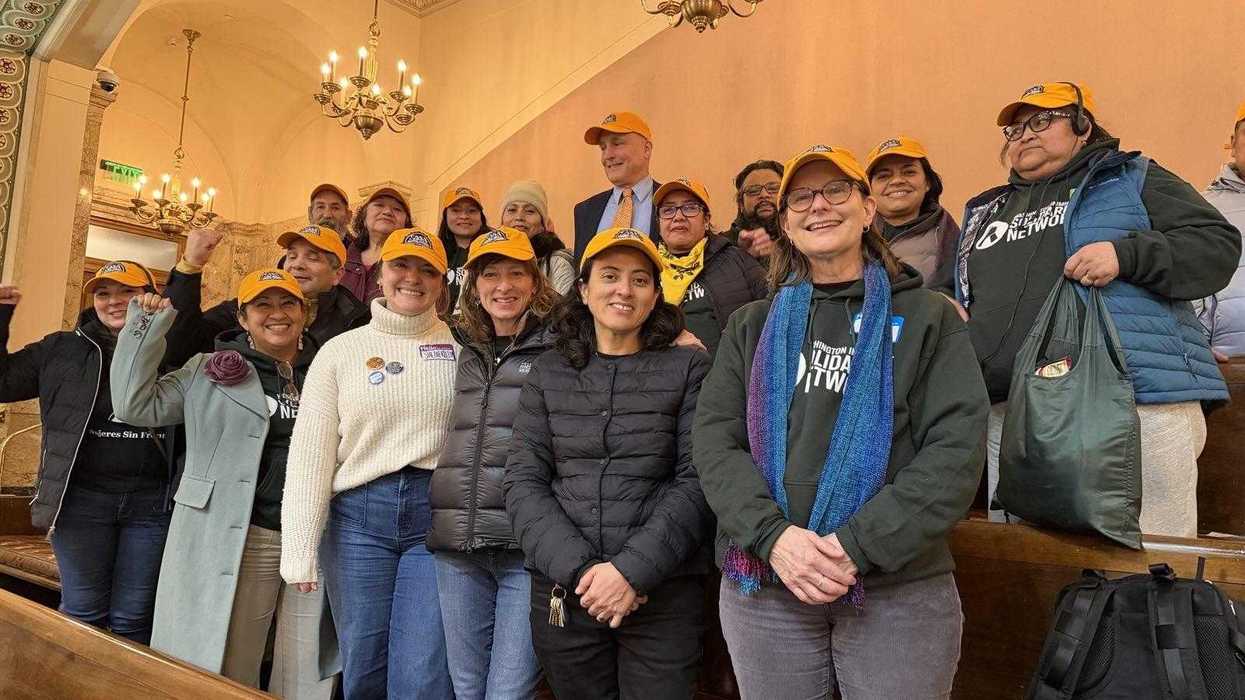
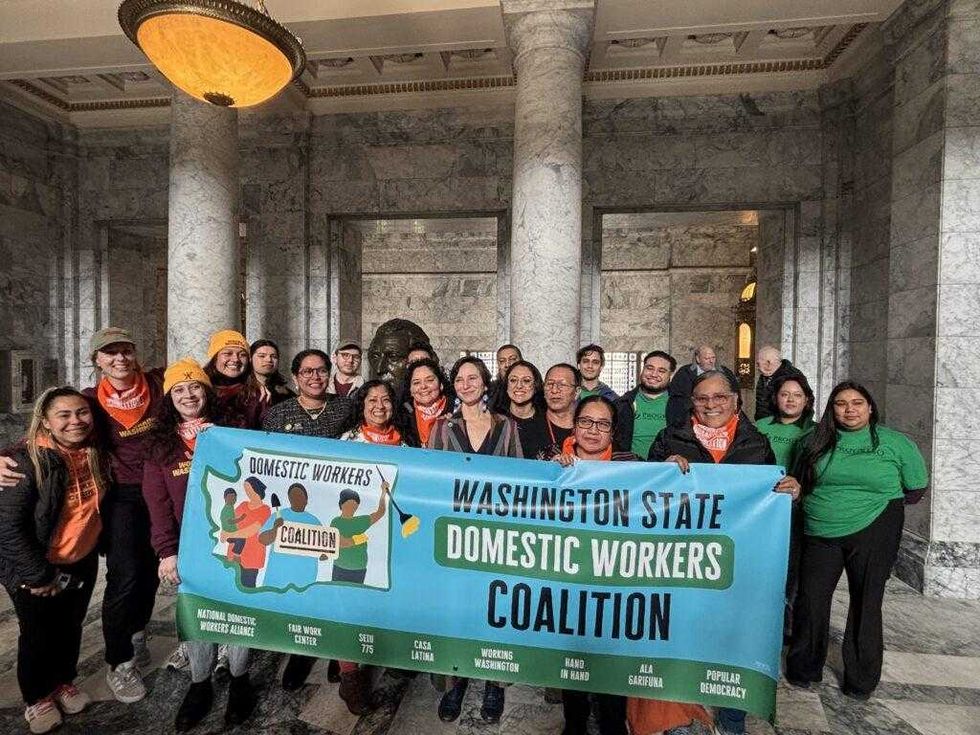 State Sen. Rebecca Saldaña, center, stands with members of the Washington State Domestic Workers Coalition at the state Capitol on Feb. 28, 2026. The Domestic Workers Bill of Rights passed in the House that day, before being signed into law in March. (Photo courtesy of Casa Latina)