



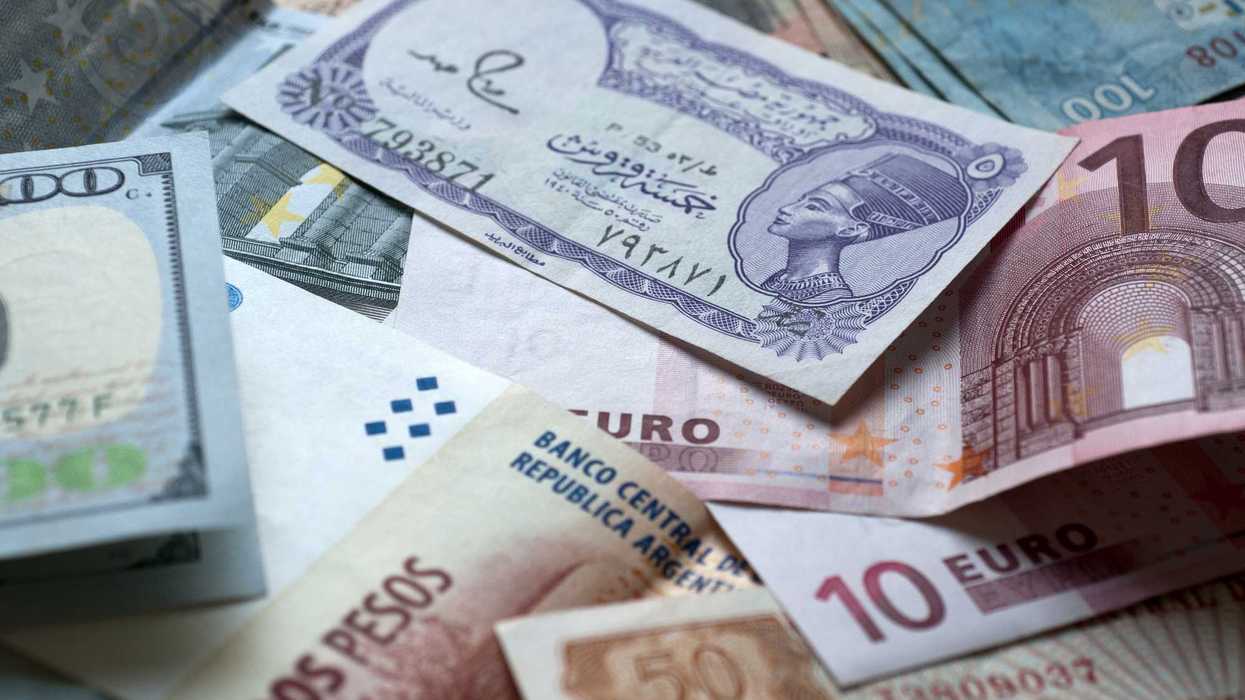

The global economy is experiencing a fundamental reallocation of capital. For more than a decade, the story of world markets centered on American technology companies and the strength of the dollar. In 2026, that dominance is fading. Investors are directing funds toward Asia and Latin America, where growth prospects appear more robust and risks more contained.
Market data this year makes the pattern clear. The S&P 500 has posted small losses year to date, while the Nasdaq has struggled. By contrast, emerging-market indices have gained ground. Asian equities have outperformed, and Brazil’s B3 index has risen sharply. An FT report in January noted emerging-market stocks, bonds, and currencies enjoying a strong start precisely as the dollar weakened.
This divergence is not cyclical. It rests on three structural forces: faster growth in the developing world, a cooler assessment of artificial intelligence in the United States, and worries about fiscal sustainability in the West. The International Monetary Fund's latest outlook projects global growth at 3.3 percent in 2026. Advanced economies are expected to expand by roughly 1.5 to 2 percent; emerging and developing economies by just above 4 percent. That gap of more than double has persisted for years but is now shaping investment decisions. Growth in emerging markets is also more evenly spread across sectors - industrials, financial services, and consumer industries - rather than concentrated in a narrow group of technology firms.
The reassessment of artificial intelligence is equally important. In the United States, the early optimism about generative tools has yielded to concern over their impact on profit margins in law, insurance, and software, as well as on employment. February’s non-farm payrolls fell by 92,000, an unexpected decline that has sharpened fears of faster labor-market disruption than societies can absorb. Recent Goldman Sachs studies highlight the risk that AI could displace tasks accounting for a significant share of work hours within a decade.
Investors have therefore shifted attention from software applications to the physical inputs of the AI economy. Semiconductor production, power infrastructure, and related hardware are concentrated in Asia, where suppliers enjoy pricing leverage. The rotation is from the creators of algorithms to the providers of the tangible components that make them run.
The dollar’s retreat adds momentum. The currency has fallen to levels not seen in four years. Persistent U.S. budget deficits and repeated political deadlocks over long-term fiscal repair have eroded confidence. The Federal Reserve’s policy rate remains around 3.75 percent, leaving real yields in many emerging markets comparatively attractive and pulling capital into local-currency debt and equities. Parallel changes in financial infrastructure are reducing reliance on traditional dollar channels. Project mBridge, the platform linking central banks in Hong Kong, Thailand, the United Arab Emirates, and Saudi Arabia, has now settled more than $55 billion in cross-border transactions - a 2,500-fold increase since its early trials. This is not ideological de-dollarization; it is a practical search for efficiency. Central banks have responded by increasing gold holdings. The metal has traded above $5,000 an ounce this year, with purchases led by China and other emerging-market authorities.
Two broad scenarios suggest themselves. In a smoother transition, U.S. markets stabilize once AI delivers measurable productivity gains and emerging economies continue their catch-up. In a rougher version, unresolved fiscal pressures in the West generate volatility that accelerates the move of capital toward jurisdictions with clearer policy frameworks. To navigate this transition, three concrete policy shifts are required.
First, the international community must move beyond viewing platforms like mBridge as "alternative" systems and instead integrate them into a global regulatory framework. By establishing unified anti-money laundering protocols for multi-CBDC platforms, we can prevent a fragmented shadow finance market. A standardized digital code of conduct would allow these efficient systems to coexist with the SWIFT network, ensuring that speed does not come at the cost of transparency.
Second, emerging economies must resist the urge to use new capital inflows for short-term consumption. Instead, governments in Southeast Asia and Latin America should establish Sovereign Infrastructure Trusts. These funds would channel speculative private credit into the "tangible AI" sector - specifically, high-capacity power grids and specialized logistics hubs. By anchoring foreign capital in physical, revenue-generating assets, these nations can create a buffer against the eventual return of Western interest rate volatility.
Third, as AI displaces labor in the West, developed economies must implement Transition Credits for corporations that reinvest AI-driven profits into human-in-the-loop reskilling. Simultaneously, emerging markets - possessing younger demographics - should prioritize STEM-based digital service export zones. This would allow a global labor equilibrium, where Western AI efficiency is balanced by the cognitive labor surplus of the Global South.
Developed economies face an obvious priority: restoring fiscal order. Reducing long-term debt burdens and overcoming legislative gridlock would remove the political-risk premium now attached to Western assets. Without credible plans for sustainability, investor caution will persist. Emerging markets, for their part, must channel the new inflows into productive uses rather than speculative excess. Stronger regulatory oversight and greater transparency in private markets matter. Private credit to emerging economies reached a record $22.3 billion last year, nearly 40 percent above the previous peak, according to the Global Private Capital Association. India and Latin America accounted for much of the total. Maintaining standards in these markets will sustain confidence.
The unipolar financial order that prevailed for decades is giving way to a more dispersed system. Growth is becoming more widely distributed, and capital is becoming more mobile. This is not a narrative of decline for the West but of rebalancing for the world. The opportunities worth pursuing now span more regions and more sectors than before. Investors and policymakers who recognize the shift early will be better placed to navigate the years ahead.
Imran Khalid is a physician, geostrategic analyst, and freelance writer.