



Molineaux is co-publisher of The Fulcrum and president/CEO of the Bridge Alliance Education Fund.
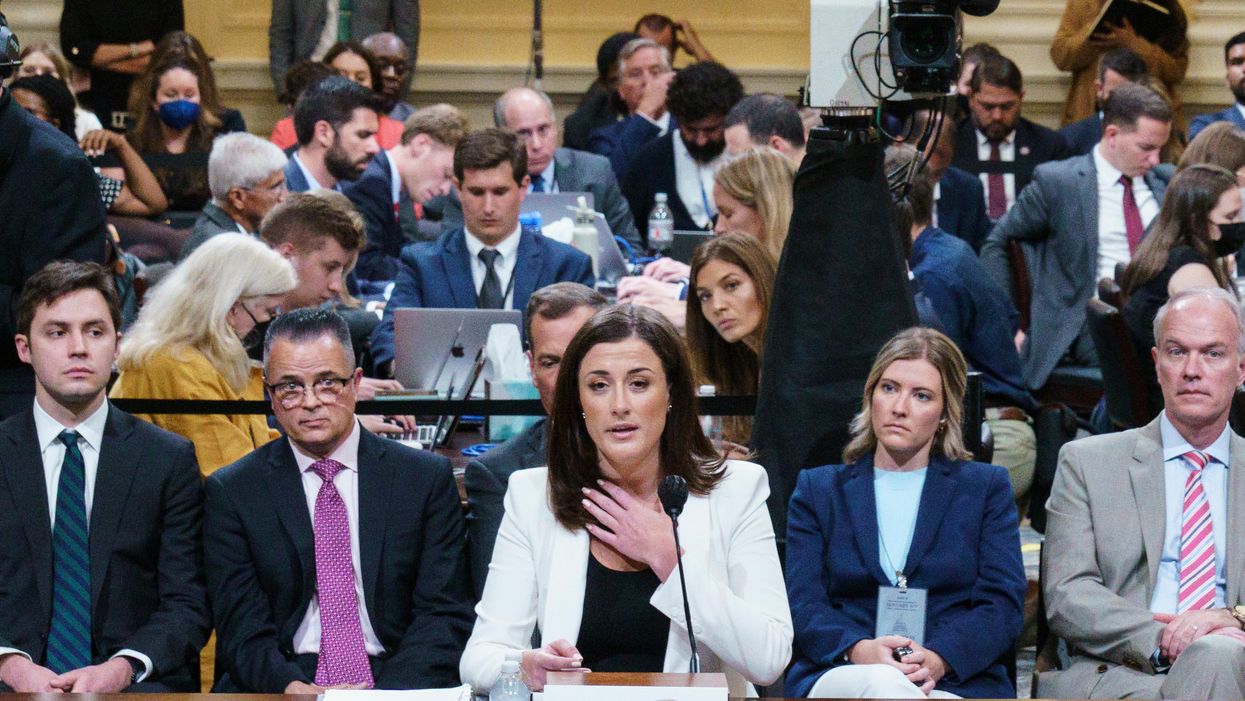
I was recently introduced to a poem that reminded me of the bravery of those testifying before the Jan 6 select committee. As Rep. Liz Cheney pointed out, especially the women. Here’s the poem:
“Courage is the measure of our heartfelt participation with life, with another, with a community, a work, a future. To be courageous, is not necessarily to go anywhere or do anything except to make conscious those things we already feel deeply and then to live through the unending vulnerabilities of those consequences.” -David Whyte
My work to improve our nation feels this way to me. As a nation, we are at a crossroads. We can continue to improve our nation. Or we can give in and give up. Will we have the courage to correct our course?
Most people think the government is something other people do. It’s not personal to most Americans – therefore they have no heartfelt participation in it. And yet, as a nation, we are terribly vulnerable to the forces of division and authoritarians.
Normally we talk about courage as acting despite our fear. This observation about courage being the conscious recognition of our vulnerability, and living with the consequences, seems more personal. In this era of likely or probable political violence, stepping forward to take a stand, to protect our institutions, to call out our institutions, etc. is an act of courage. Think of the courage required for those in the former administration to testify publicly, under oath. Without exception, they’ve recognized and accepted their vulnerability and will live with the consequences for the sake of our nation. For the sake of all of us.
If the local and federal government represents the collective of us and our social contract, what do the actions of our municipal bodies, state legislatures and Congress say about who we are? At best, our governance shows how dysfunctional we are – stuck in a bad marriage and unable to divorce. At worst, it shows a cruel heart that disparages those who need help, because they are not self-reliant.
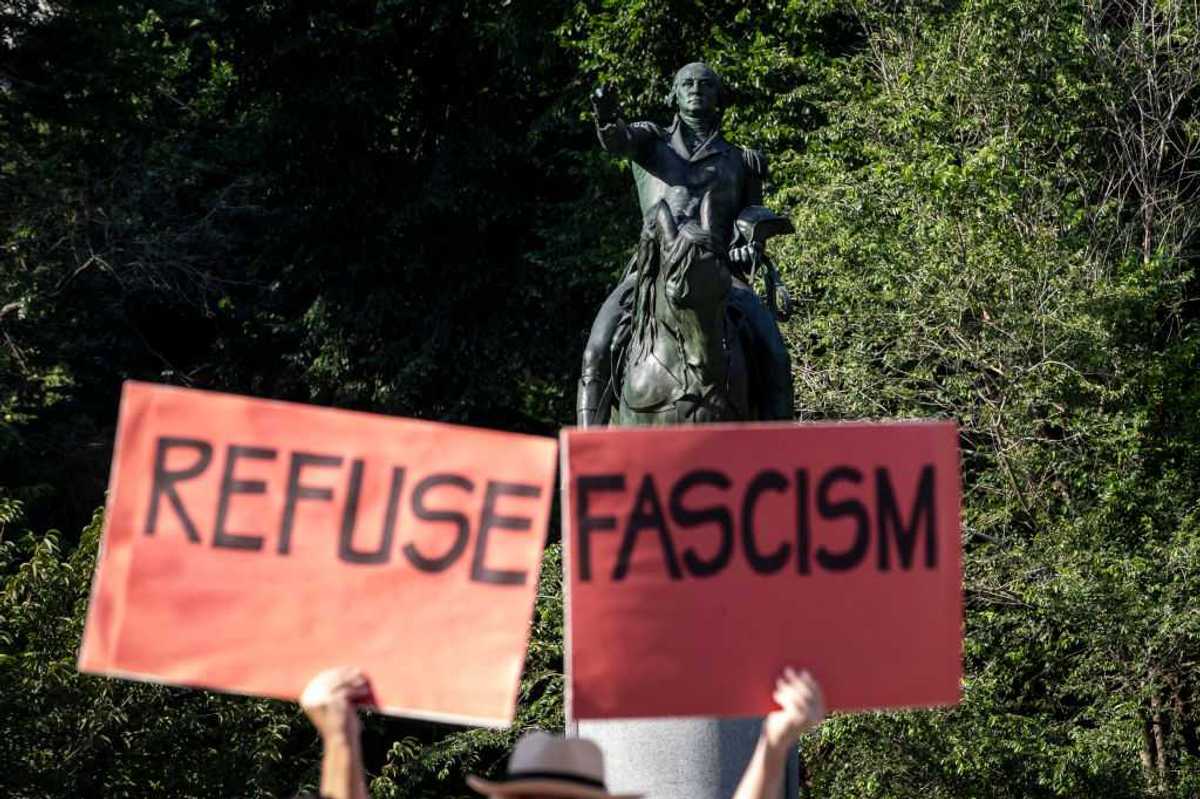
As in previous generations, our societal turmoil is a symptom of an underlying disease that develops from a broken social contract. We’ve witnessed hypocrisy, corruption and the resulting nihilism has made us selfish; each wanting our own way, regardless of the harm caused to others. Fueled by disinformation, grifters and wannabe kings, many among us believe that turning to authoritarians, theocracy or fascism will keep the world as it was. It won’t.
As of today, we still are a functioning democracy. We can still elect pro-democracy candidates to represent us. Or we can elect authoritarians who will strip away the protections of democracy, one by one.
If we elect authoritarians, we will follow a predictive pattern. Protections will first be removed from those who are “othered” by the ruling class. And as each successive protection is removed, power is concentrated within a smaller and smaller group of people – the privileged. Until they are not. Is this the future we want? Either we are all free, or none of us are free.
Change is our only guarantee. And if we can collectively decide what we want our future to be, we can then plan to make it so. I want a free and open society for my future. For that future, I’m choosing to fully participate in its co-creation. Like those before me, I’ll speak truth to power. I’ll work the election. I’ll engage with people different from myself and recognize our common humanity. I’ll vote for pro-democracy candidates. How will you measure your courage?
What do you want? And what will you do to get it?







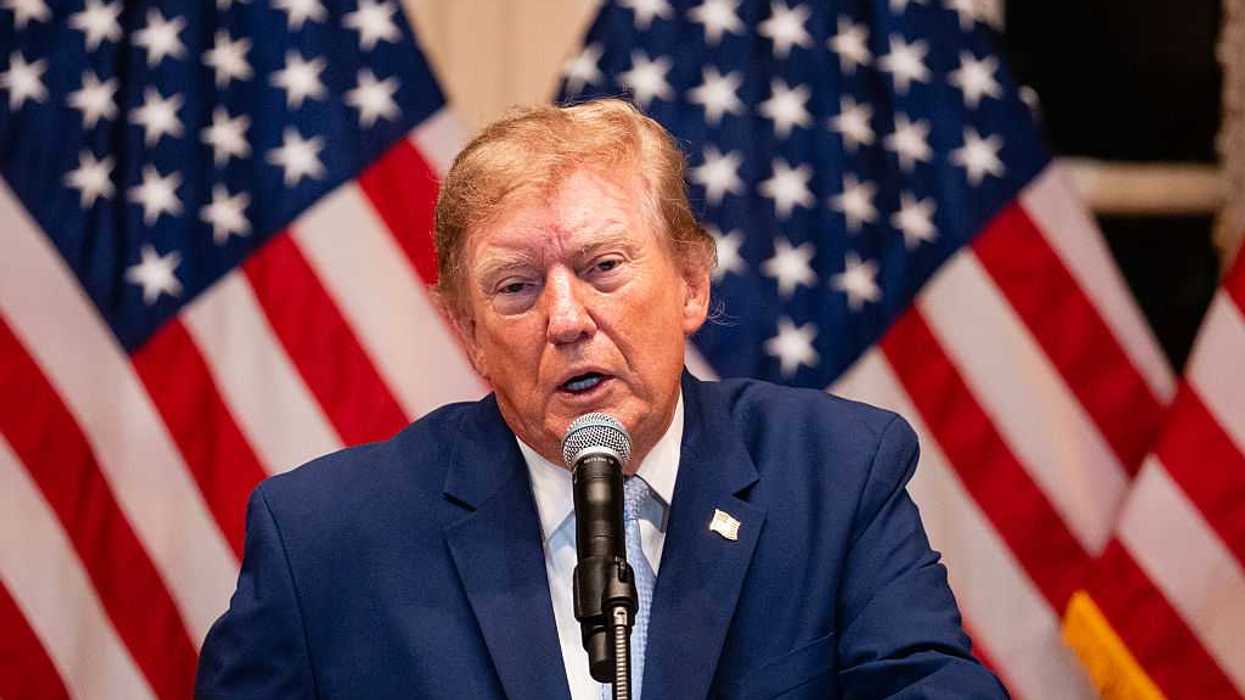


U.S. President Donald Trump delivers the State of the Union address during a joint session of Congress in the House Chamber at the Capitol on Feb. 24, 2026, in Washington, D.C. Trump delivered his address days after the Supreme Court struck down the administration's tariff strategy, and amid a U.S. military buildup in the Persian Gulf threatening Iran.
Some MAGA loyalists have turned on Trump. Why the rest haven’t
I recently watched "A Face in the Crowd" for the umpteenth time.
I had a better reason than procrastination to rewatch Elia Kazan’s brilliant 1957 film exploring populism in the television age. It was homework. I was asked to discuss it with Turner Classic Movies host Ben Mankiewicz at the just-concluded TCM Film Festival in Los Angeles. As a pundit and an author, I do a lot of public speaking. But I don’t really do a lot of cool public speaking, so this was a treat.
With that not-very-humble brag out of the way, I had a depressing realization watching it this time.
"A Face in the Crowd" tells the story of a charming drifter with a dark side named Larry “Lonesome” Rhodes, played brilliantly by Andy Griffith. A singer with the gift of the gab, Rhodes takes off on radio but quickly segues to the brand-new medium of television. He becomes a national sensation — and political kingmaker — by forming a deep connection with the masses, particularly among the rural and working classes. His core audience is made up of people with grievances. “Everybody that’s got to jump when somebody else blows the whistle,” as Rhodes puts it.
The film’s climax (spoiler alert) comes when Rhodes’ manager and spurned lover, Marcia, turns on the microphone while the credits rolled at the end of “Cracker Barrel,” his national TV show. Rhodes tells his entourage what he really thinks of the “morons” in his audience. “Shucks, I can take chicken fertilizer and sell it to them for caviar. I can make them eat dog food, and they’ll think it’s steak. … Good night, you stupid idiots.”
It was a canonical “hot mic” moment in American cinema. But the idea that if people could glimpse the “real person” behind the popular facade, they’d turn on them is a very old theme in literature — think Pierre Choderlos de Laclos’ "Les Liaisons Dangereuses" (1782) or Richard Brinsley Sheridan’s "The School for Scandal" (1777), in which diaries and letters do the work of microphones.
Kazan and screenwriter Budd Schulberg were very worried about the ability of demagogues to whip up populist fervor and manipulate the masses through the power of TV, in part because everyone had already seen it happen with radio and film, by Father Coughlin in America and Hitler in Germany. But as dark as their vision was, they still clung to the idea that if the demagogue was exposed, the people would instantly turn on their leader in an “Emperor’s New Clothes” moment for the mass media age.
And that’s the source of my depressing realization. I think they were wrong. It turns out that once that organic connection is made, even a shocking revelation of the truth won’t necessarily break the spell.
In 2016, a lot of writers revisited "A Face in the Crowd" to understand the Trump phenomenon. After all, here was a guy who used a TV show — "The Apprentice" — and social media to build a massive following, going over the heads of the “establishment.” Trump’s own hot mic moment with "Access Hollywood," in which he boasted of his sexual predations, proved insufficient to undo him. That was hardly the only such moment for him. We’ve heard Trump bully the Georgia secretary of state to “find 11,780 votes.” He told Bob Woodward he deliberately “played down” COVID-19. After leaving office, he was recorded telling aides he shouldn’t be sharing classified documents with them — then doing it anyway. And so on.
Trump’s famous claim that he could “shoot somebody” on Fifth Avenue and not lose any voters may have been hyperbole. But it’s not crazy to think he wouldn’t lose as many voters as he should.
In the film, Lonesome Rhodes implodes when Americans encounter his off-air persona. The key to Trump’s success is that he ran as his off-air persona. Why people love that persona is a complicated question. Among the many complementary explanations is that he comes across as authentic, and some people value authenticity more than they value good character, honesty, or competence.
This is not just a problem for Republicans. Maine Senate candidate Graham Platner once had a Nazi tattoo and has said things about women as distasteful as Trump’s “grab them by (the genitals)” comments, and the Democratic establishment is rallying around him because he’s authentic — and because Democrats want to win that race.
Many prominent MAGA loyalists are turning on Trump these days. They claim — wrongly in my opinion — that he’s changed and that the Iran war is a betrayal of their cause. But if you look at the polls, voters who describe themselves as “MAGA” still overwhelmingly support Trump. In short, he still has the Fifth Avenue voters on his side.
Jonah Goldberg is editor-in-chief of The Dispatch and the host of The Remnant podcast. His Twitter handle is @JonahDispatch.