


It didn’t exactly end well the last time a president declared victory this quickly. On May 1, 2003, President George W. Bush landed on the USS Abraham Lincoln in a flight suit, strutted across the deck for the cameras, then changed into a suit and tie, stood in front of a banner that read “Mission Accomplished,” and declared the end of major combat operations in Iraq. It was 43 days after the invasion began. Over the next eight years, as the conflict devolved into a protracted insurgency and sectarian war, more than 4,300 Americans and hundreds of thousands of Iraqis died.
On April 7, Trump—presumably not wearing a flight suit—declared in a telephone interview with AFP that the United States had achieved victory in Iran. “Total and complete victory. 100 percent. No question about it.” This was the day after the President threatened to destroy a “whole civilization,” hours after a two-week ceasefire was announced. It took six days for the whole thing to fall apart. By April 15, he was back on Fox Business: “We've beaten them militarily, totally. I think it’s close to over.”
In fact, Trump has been declaring some degree of victory since the first bombs. At a rally in Kentucky two weeks in, he told the crowd, “We won. We won the… in the first hour, it was over,” then seemed to catch himself and add, “We got to finish the job, right?” A few days later, he told reporters aboard Air Force One that the US had “essentially defeated Iran” while clumsily allowing they could “have a little bit of fight back.” After a call with Vladimir Putin, he said, “The war is very complete, pretty much.” When the Wall Street Journal's editorial board called it a premature win, he posted, “Actually, it is a Victory.” Asked about negotiations, he said, “Regardless what happens, we win.”
On February 28, 2026, the United States and Israel launched a coordinated air campaign against Iran, assassinating Supreme Leader Ali Khamenei and striking military, nuclear, and civilian infrastructure across the country. Thirty-eight days later, Trump announced a ceasefire brokered by Pakistan, declaring that the US had “already met and exceeded all Military objectives.” The facts on the ground are harder to square with that claim, in part because the administration never settled on a clear definition of victory to begin with.
The war aims have shifted and contradicted throughout the conflict: freedom for the Iranian people, elimination of Iran’s nuclear program, regime change, the unconditional surrender of the Iranian government, and, as Trump put it in one post, peace “throughout the Middle East and, indeed, the world.”
No formal authorization for the use of military force has been requested from or passed by Congress. The administration never provided the American people with anything resembling an imminent threat, the legal threshold that would allow a president to launch an attack without congressional authorization. The 60-day clock under the War Powers Resolution of 1973 expires next week on May 1. The Senate has now voted five times to block war powers resolutions, each attempt failing predictably along party lines, with Rand Paul the only Republican voting to end the war and John Fetterman the only Democrat voting to continue it. But cracks are beginning to show: Senators Susan Collins and Thom Tillis have both signaled they may not authorize continued operations past the deadline. It is an illegal, undeclared war, launched unilaterally by a man who seems to believe the presidency should have the power of a monarchy, and Congress has spent nearly two months proving him right.
The war has been costly to both countries. Thirteen American service members have been killed and approximately 373 wounded, many severely. The Pentagon has been actively manipulating those figures. During the ceasefire, it inexplicably subtracted 15 wounded-in-action troops from the official count without explanation, with two Pentagon spokespersons unable to account for the discrepancy. A defense official described the practice to The Intercept as a “casualty cover-up.” On the Iranian side, more than 3,500 people have been killed, including 1,665 civilians, according to the Human Rights Activists News Agency. On the first day of the war, a girls’ elementary school in Minab was struck, killing scores of children.
The Pentagon estimates it has spent roughly $28 billion, and the administration is still seeking up to $100 billion more from Congress. The closure of the Strait of Hormuz, which the International Energy Agency called the largest supply disruption in the history of the global oil market, has sent gas prices past $4 a gallon. The full extent of the damage to the global economy, from supply chains to food prices to markets that haven't yet absorbed the shock, probably won’t be known for years.
Adam Kinzinger, the former Republican congressman and Air Force veteran, put it plainly in a social media post: “The people of Iran aren’t free. Iran can now charge tolls. The nuclear material sits EXACTLY where it did, in the same amount, since June. The regime is still in place with a younger ayatollah. Iran was still launching missiles, now with more money to rebuild. Period.”
He’s right on every count. Trump declared “complete and total regime change,” but the assassinated Supreme Leader’s more hard-line son, Mojtaba Khamenei, was quickly installed as the new ayatollah, and the IRGC that runs the war still runs the country. Trump told the nation last June that Operation Midnight Hammer had already eliminated Iran’s nuclear capabilities, then went to war again over the same nuclear program. The uranium is still in the ground in Isfahan. As of the IAEA's last inspection in June of 2025, Iran had 440.9 kilograms of uranium enriched to 60 percent, enough for roughly ten nuclear weapons. That material remains unaccounted for. The IAEA has been denied access to Iran’s bombed nuclear facilities since February 28 and cannot verify the current status of the enriched uranium stockpile, meaning no one outside Tehran knows whether that material has been moved, used, or further processed. Trump himself acknowledged post-ceasefire that “nothing has been touched from the date of attack.” The authoritarian theocracy that imprisoned and killed thousands of protesters in January is still governing. Before the war, the Strait of Hormuz was international waters under de facto US Navy control. Under the ceasefire terms, Iran would coordinate passage and collect fees on every vessel.
Both sides are claiming they won, and when both sides claim victory after 38 days of war that has left thousands dead, and no measurable change in the nuclear threat that was one of the stated reasons for fighting, the word that comes to mind is stalemate, not victory. If anything, Iran may come out of this conflict stronger than it was before the war started.
Vice President Vance flew to Islamabad on April 12 to negotiate a permanent deal. The talks lasted 21 hours and, despite the vice president’s high-school debate champ energy, produced nothing. Vance told reporters that Iran had “chosen not to accept our terms” and flew home. Trump, six days removed from “total and complete victory,” responded by announcing a full naval blockade of Iran.
On April 19, he threatened to “knock out every single power plant, and every single bridge, in Iran” if the talks failed, then announced that the US Navy had fired on and seized the Iranian-flagged cargo ship Touska in the Gulf of Oman. U.S. Marines rappelled from helicopters onto the deck after a destroyer disabled it with gunfire, with Trump excitedly posting that they were “seeing what’s on board!” Iran called it piracy and vowed retaliation. The next day, Iran pulled out of a planned second round of talks in Islamabad, and two days after that, Iran seized two container ships in the Strait of Hormuz and attacked a third. On April 21, Trump extended the ceasefire, while keeping the blockade fully in place. Iran has called the blockade an act of war and said it won’t negotiate until it is lifted.
Despite the fragile ceasefire, I’m writing about this war in the present tense, and that’s intentional. If there’s anything we’ve learned from watching Trump since he first came to power, it’s that he says one thing, does another, lies constantly, backs out, and changes his mind on a daily basis. A ceasefire extension, a naval blockade, and dueling ship seizures in the same week say a lot about just how “over” this war really is—because it feels like we’ve seen this movie before. We all watched President Bush declare “mission accomplished” on May 1, 2003, 43 days after we invaded Iraq. In January of 2004, my infantry brigade deployed to Kirkuk to fight the growing insurgency. Over 4,300 Americans died after that banner came down.
In the lead-up to the Iraq War, President Bush stood at a podium and tried to deliver a simple proverb: “Fool me once, shame on—shame on you…” He paused, lost the thread, and landed on “fool me, you can’t get fooled again.” We all laughed and laughed and then spent a decade watching caskets come home. Some of those caskets had my friends in them.
Maybe the ceasefire holds. Maybe the talks resume, and something real comes out of them. I genuinely hope so. But we’ve elected Donald Trump twice, believed his promises twice, and now we’re watching another victory banner come down over another unfinished war in the Middle East. We should know better by now, but despite whatever W was trying to say, history suggests you absolutely can get fooled again.
***
As this piece was going to press, a third aircraft carrier, the USS George H.W. Bush, arrived in the Middle East, joining the USS Gerald R. Ford and the USS Abraham Lincoln—the same ship President George W. Bush stood on when he declared mission accomplished in Iraq… apparently, history has a sense of humor. Meanwhile, US forces seized a second tanker in the Indian Ocean, and Trump ordered the Navy to "shoot and kill" Iranian boats laying mines in the Strait of Hormuz and said there is "no time frame" on ending the war.
Nick Allison is a writer and editor based in Austin, Texas. His work has appeared in Slate, HuffPost, The Fulcrum, The Chaos Section, and elsewhere. Find him on Bluesky @nickallison80.bsky.socialEditor's Note: This story was updated on 4/24 to reflect several timely developments.


 Ben Droz
 Ben Droz






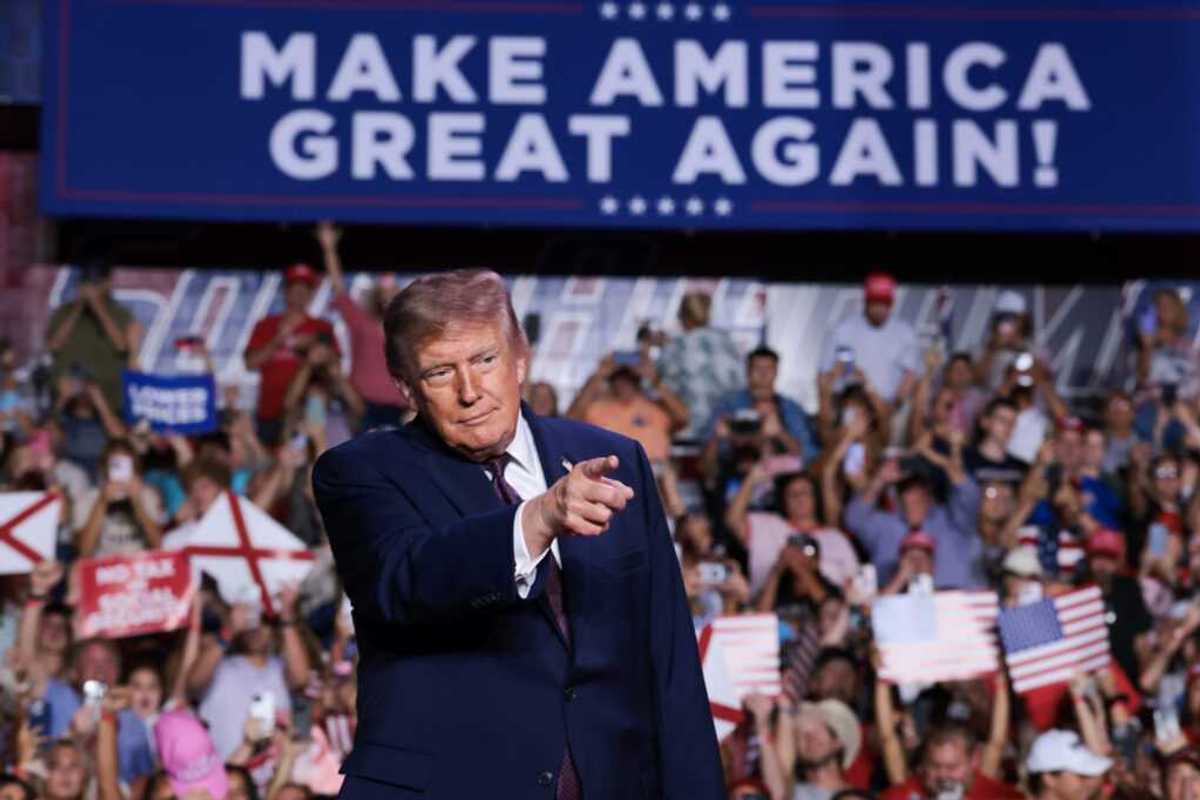
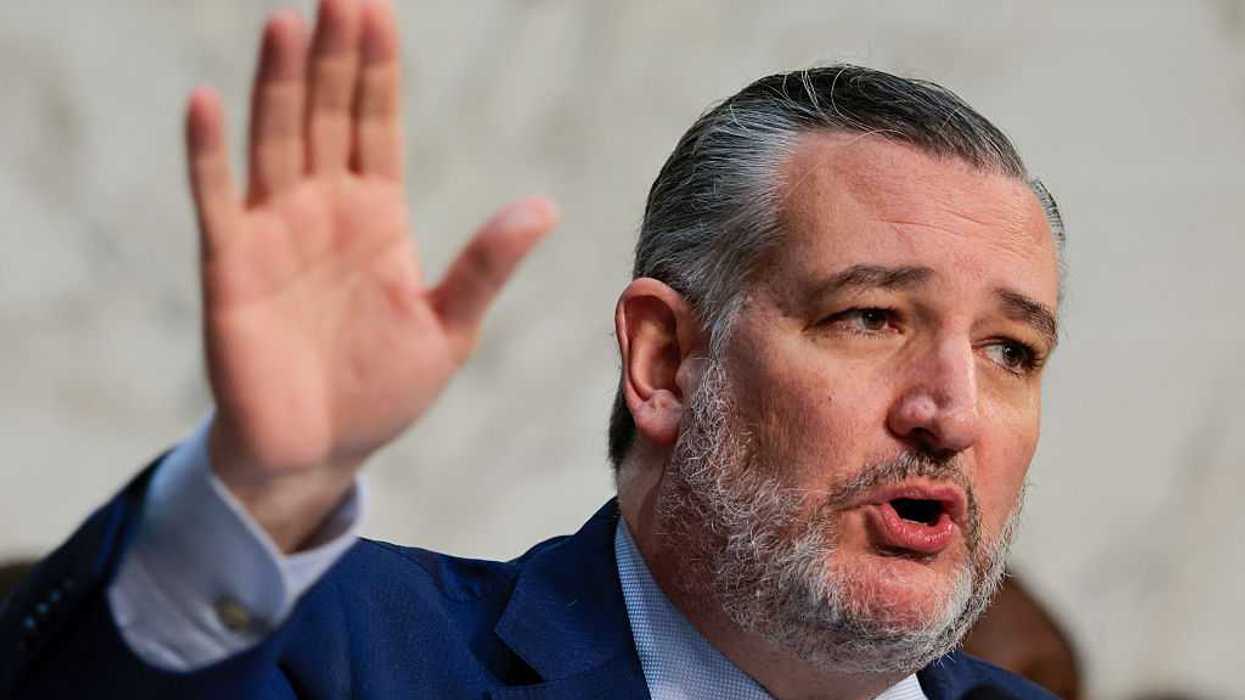
U.S. President Donald Trump speaks during a campaign rally at Pinnacle Bank Expo Center on the Nebraska State Fairgrounds on October 05, 2026 in Grand Island, Nebraska.
The President Invited Iran to Bomb My Home
I was driving home to San Diego from Los Angeles on Monday night when I heard that the President of the United States had offered both cities up to Iran as bomb targets. At a rally in Nebraska, defending his war, Trump told the crowd, “let [Iran] take out Los Angeles, let ‘em take out San Diego.” It was, he said, “a very small price to pay.”
I was coming from a Bernie Sanders rally for Proposition 40, the one-time tax on California billionaires that would send 90% of its revenue to healthcare. We desperately need it to pass because, in order to give tax breaks to billionaires, Trump signed a law that will strip health coverage from 10 million Americans; this tax will make sure we can still cover Californians. Call me crazy, but I think taxing billionaires one time so we can make sure kids in California get to see a doctor is a very small price to pay. I also think that even if Trump were joking, it is indefensible to make jokes about the potential destruction of so many lives. Human life is never a small price to pay. Human life is priceless.
Plus, the reality is: here in San Diego, we’re already paying the price for Trump’s actions, and it’s not small at all. He has gutted FEMA, tried to kill climate resiliency programs, and destroyed public health standards, while his signature law is set to cut off health insurance and food support for hundreds of thousands of San Diegans. Like plenty of American cities, San Diego is already busy finding local solutions to respond to the problems this president has recklessly created.
Not to mention, at least 19 American service members have been killed in this war already. Human rights monitors have documented more than 3,600 dead in Iran by April alone. Here at home, gas is sitting just pennies below its all-time record. Taxpayers have already spent more than $45 billion on the war, while Trump’s oil and gas portfolio has grown by roughly $15.5 million this year alone. Of course anything is a “small price” to someone paying free.99 for this war, and profiting from it. Meanwhile, We the People are paying twice: first for the war, and then for the consequences of that war. But now he wants San Diego to pay a third time, flippantly offering us up to Iran.
It is worth noticing which cities he thought to name. Were San Diego and Los Angeles strategically chosen to signify something to his audience, or were they simply the first cities that came to mind as expendable places? Either way, the effect is to normalize—-and to gauge a crowd’s reaction to–the idea of massive violence in major California cities, suitable targets because of their perceived liberal lean. So what if Iran needs to bomb a little bit of America before the war can be over? Who cares, says Trump, if they target Los Angeles and San Diego?
By the way, why didn’t he offer up San Francisco, the free-love hippie-town MAGA loves to hate (and also my birthplace)? Could it be because that’s where the tech titans live? The same ones who joined Trump for Xi Jinping’s state dinner, a guest list worth a combined $2.4 trillion?
San Diego may have fewer billionaires, but it is home to more than 115,000 active-duty service members and 230,000 veterans. One in six active-duty sailors–in the entire Navy–is stationed here. So is one in four Marines. You cannot throw a rock in this county without hitting a military family: brats and spouses and veterans are among us. I got out of the Navy last year after ten years, and eight of those were here in San Diego. When Trump says “let ‘em take out San Diego,” he’s talking about the backbone of the United States military. He’s also talking about the people fighting his war.
San Diego has not been watching this war from the sidelines. Today, the USS Abraham Lincoln returns to North Island after an almost yearlong deployment to the Middle East that featured food shortages, broken toilets, and mold in the showers after 286 days at sea without a single port call. Eight sailors in the Lincoln’s strike group attempted suicide, but in August, when a reporter asked whether the deployment had gone on too long, Trump said “not nearly long enough.” Now he has told a crowd in Nebraska that we should let Iran take out the city those sailors call home. These are sociopathic sentiments.
Last week at Quantico, Pete Hegseth closed his address to the force by telling them, “President Trump has your back and so do I.” To the contrary, President Trump has put one of the biggest military towns in the country forward as a target for our adversaries. With friends like these, the “domestic” in “against all enemies, foreign and domestic” starts to sound a lot less hypothetical.
San Diego is home to Naval Air Station North Island, Naval Base San Diego, Naval Amphibious Base Coronado, the Point Loma submarine base, Camp Pendleton, and Miramar (and I have been permanently stationed at or trained at all of them). If Iran bombed San Diego and Los Angeles, aside from the devastating loss of life, it would cripple an immense share of our national security readiness.
And for what, exactly? Trump says the war is “essentially almost over with.” This is the same man who claimed in June 2025 that Iran’s nuclear program had been “obliterated,” then launched a war over it anyway on February 28. More than seven months later, he wants us to believe two things at once: that we’ve basically won, and that we might need to sacrifice an American city or two to finish winning. If the war is almost over, why does anybody need to take out San Diego?
I wonder if Trump’s endorsed candidate for California’s 48th District here in San Diego County will respond to these remarks. He recently said “no pain, no gain,” when referring to the gas prices San Diegans are paying. Jim Desmond, would you apply that same mindset if we were bombed? Or do you have the moral courage to stand up for the people you’re running to represent?
Last November, six Democratic members of Congress, all veterans, including Senator Mark Kelly, recorded a video reminding troops of their duty to disobey unlawful orders, restating the law that says so. Trump called it “SEDITIOUS BEHAVIOR, punishable by DEATH,” and then his Justice Department went looking for an indictment, which a grand jury refused. The president treated reading the law out loud to the troops as a capital offense, but then he himself invited a foreign enemy to destroy two American cities, possibly as a punchline. Is anyone calling the latter sedition? Who is demanding accountability?
Calling our lives a small price to pay affirms a moral bankruptcy, as well as an obvious dereliction of duty to the office he holds. While we can’t impeach him or invoke the 25th Amendment ourselves, we must stop being so quiet about what we’re paying already. We can make our voices heard by calling our representatives, writing op-eds, knocking doors, phone banking, and voting in defiance of the man who threatens the safety of our city. Ballots are already arriving in mailboxes. Vote, and vote yes on 40 (and no on 41 and 42).
Trump has been harming our cities for a while, but now he is inviting our military adversaries to join him in the harm. If we have any self-respect as Americans, we must not tolerate our leaders disregarding the dignity of lives in this way. We must fight for our home.
Julie Roland was a Naval Officer for ten years, deploying to both the South China Sea and the Persian Gulf as a helicopter pilot before separating in June 2025 as a Lieutenant Commander. She has a law degree from the University of San Diego, a Master of Laws from Columbia University, and is a member of the Truman National Security Project.