


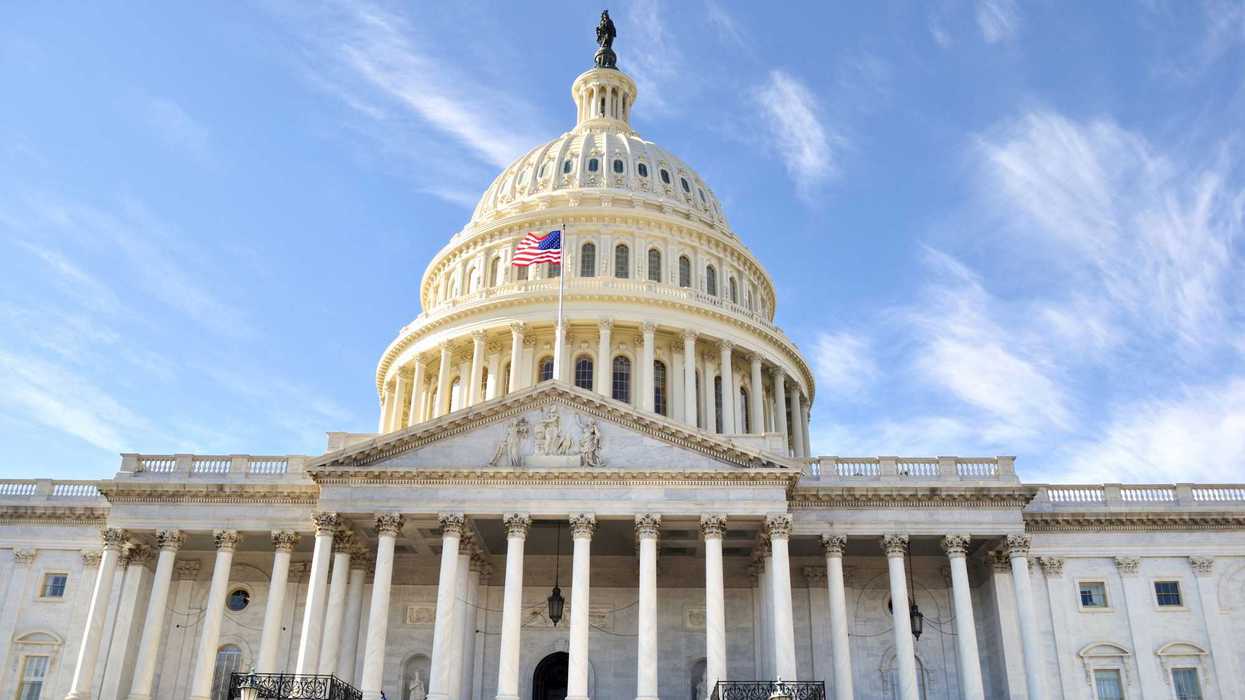

What has happened to the U.S. Congress? Once the anchor of American democracy, it now delivers chaos and a record of inaction that leaves millions of Americans vulnerable. A branch designed to defend the Constitution has instead drifted into paralysis — and the nation is paying the price. It must break its silence and reassert its constitutional role.
The Constitution created three coequal branches — legislative, executive, and judicial — each designed to balance and restrain the others. The Framers placed Congress first in Article I (U.S. Constitution) because they believed the people’s representatives should hold the greatest responsibility: to write laws, control spending, conduct oversight, and ensure that no president or agency escapes accountability. Congress was meant to be the branch closest to the people — the one that listens, deliberates, and acts on behalf of the nation.
However, the Constitution cannot function when those entrusted to uphold it abandon the qualities that make leadership possible. Americans elected human beings — not placeholders — and expected character, responsibility, empathy, humility, integrity, and independent judgment. Instead, too many surrendered those qualities the moment they arrived in Washington. Congress has devolved into a clique where belonging matters more than governing, and safety in numbers becomes an excuse for cowardice.
Members appear to hide behind one another, acting as if being part of a group absolves them of responsibility to their oath. It resembles the “locker room behavior” my mother warned me about — not crude behavior, but the danger of doing something simply because everyone else is doing it. We see it in the way many members vote: supporting policies simply because the President or their colleagues do, even when those decisions harm their own constituents, as we saw with the ACA and the OBBBA (NPR)). A few do cross the aisle to cast votes that support the people, but they remain the exception, not the norm.
Independent analyses show that the 119th Congress has produced the lowest legislative output in modern history, passing only a few dozen bills (Newsweek). None of the major legislation addressing affordable housing, food security, healthcare access, immigration relief, gun‑safety reform, or poverty reduction has advanced. Bills that would help families — including the Housing for All Act (GovTrack), the Health Equity and Access for Immigrant Families Act (Congress.gov), and multiple food‑security measures (FRAC) — were introduced but blocked by the President’s loyalists.
Leaders in Congress are not loyal to the Constitution, nor to the people, nor even to their own conscience. They are loyal to their party — and to the President — turning a blind eye to corruption, poor policies, reckless pardons, war tactics, and broader governance abuses (Corruption | Brennan Center). They ignore the needs of the people they swore to serve. By choosing loyalty over conscience, the entire country pays the price — in stalled legislation, weakened safeguards, and communities left without the resources they need.
The consequences are visible in every state. Congress’s failure to serve the people has earned it an approval rating of just 17% (Gallup.com) — a stark reflection of dysfunction, infighting, and the abandonment of basic responsibilities. The legislative branch has lost focus, neglected its role, and allowed the system to drift into free fall.
Millions describe the 119th Congress as lacking moral and ethical discipline. Many members seem torn between loyalty to a president, to their party, to their constituents, and to their oath. That confusion leads to poor choices, an inability to listen, a fear of challenging the President, and a passivity that accelerates the erosion of our democracy.
This loyalty crisis is not just political — it is psychological. When leaders operate in a clique, they stop thinking independently. They wait to see who speaks first, who objects, who hesitates, who proposes a bipartisan law, and who dares to tell the President that campaign promises must be honored. They take emotional cues from the group instead of moral cues from their conscience. They approve budgets without alignment to data‑driven needs. This is how institutions lose their way: not through one catastrophic decision, but through a thousand small moments of choosing expedience over courage.
In my own leadership experience, I lived by W. Edwards Deming’s reminder: “In God we trust; all others bring data.” Team members knew that when requesting resources, new programs, or changes in reform direction, they needed to present data to support the need. My school team and I implemented Deming’s Plan‑Do‑Check‑Act model — a discipline Congress has abandoned.
At the same time, Congress has shown a willingness to fund expansive foreign operations while neglecting urgent domestic needs. The ongoing military action in Venezuela — involving naval deployments, air operations, and significant federal resources — has already cost tens of millions of dollars, with additional expenses expected through DOJ investigations and prosecutions. These are resources that could be stabilizing communities at home: expanding healthcare access, strengthening food security, supporting housing, or responding to families pleading for basic gun‑safety protections. Congress’s readiness to approve distant operations while ignoring crises in its own backyard reflects a profound misalignment of priorities — and a failure to exercise its constitutional duty to check executive power abroad.
A legislature that will not check a president at home cannot be trusted to check him abroad. We saw this on January 6 (BBC), when too many members remained passive or complicit — not because the facts were unclear, but because allegiance to one individual outweighed their duty to the Constitution. That moment revealed a Congress unwilling to assert its Article I responsibilities even in a constitutional crisis. That same reluctance now shapes Congress’s daily decisions.
Congress’s ethics challenges are not hypothetical. Members continue to trade stocks in industries they oversee, despite bipartisan calls for a stock‑trading ban (Corruption | Brennan Center) — a practice that erodes public trust and reinforces the perception that lawmakers play by different rules. At the same time, Congress routinely fails to enforce its own ethics and disclosure requirements. When lawmakers exempt themselves from the standards they expect others to follow, accountability becomes optional — and the institution’s credibility collapses.
To demonstrate to Americans that it has not forgotten its oath or the people, Congress must reclaim the responsibilities the Constitution already gives it — writing clear laws, enforcing real oversight, strengthening ethics rules, and choosing the country over the comfort of party loyalty. To function properly — and begin rebuilding public trust — Congress must commit to working across the aisle: collaborating, compromising, using data, and developing aligned plans that solve problems. Effective governance requires disciplined problem‑solving, a shared vision, and clear goals. It requires members to stop asking “What’s in it for me” and start asking “What do the people need.”
Congress must restore real oversight — not the performative hearings designed for cable news. Committees need to subpoena witnesses, demand documents, and follow evidence wherever it leads. It must also strengthen its ethics and accountability rules. Members cannot credibly demand integrity from presidents or agencies while exempting themselves. Enforcing conflict‑of‑interest rules, banning stock trading, and tightening disclosure requirements are basic guardrails that rebuild trust.
Finally, citizens must remain alert and informed — paying attention to what is happening in their government, speaking out, writing, organizing, and protesting peacefully. Democracy depends on people choosing leaders who listen, serve, and honor their constitutional responsibilities — and who vote out those who abandon their duties while voting in those committed to governing with integrity, empathy, and fidelity to the Constitution.
A Congress that has forgotten its oath can still honor it — but only if its members choose conscience over clique, courage over expedience, people over loyalty, and the Constitution over the noise of the crowd.
_____________________________________________________________________________
Carolyn Goode is a retired educational leader and national advocate for ethical governance, institutional accountability, and civic renewal. She writes about leadership, constitutional responsibility, and the urgent need for data‑driven, people‑centered policymaking.












The President Invited Iran to Bomb My Home