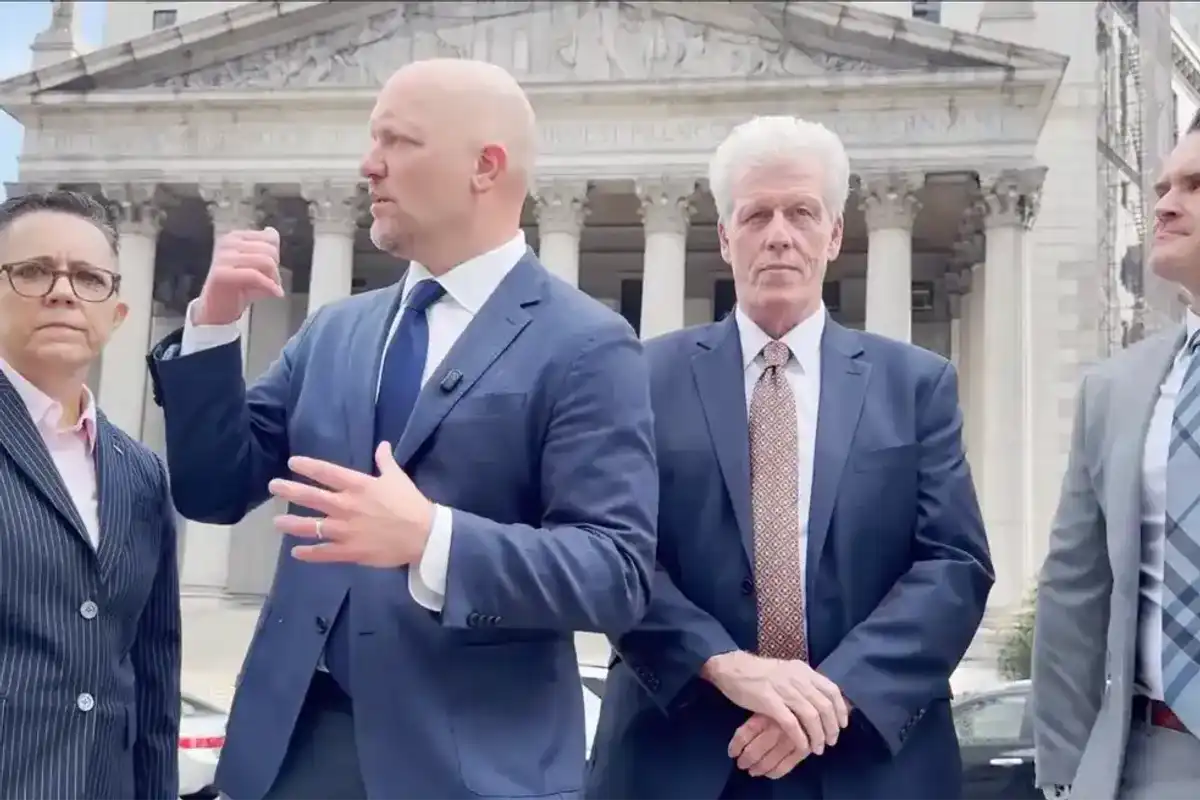


Amid political unrest ahead of Mexico’s 2024 presidential election —between late 2023 and early 2024—, Russian state media outlet Russia Today (RT) launched a street-level promotional campaign in Mexico City. Posters appeared in Metro and Metrobús stations, encouraging commuters to scan a QR code to watch the channel’s newscasts.
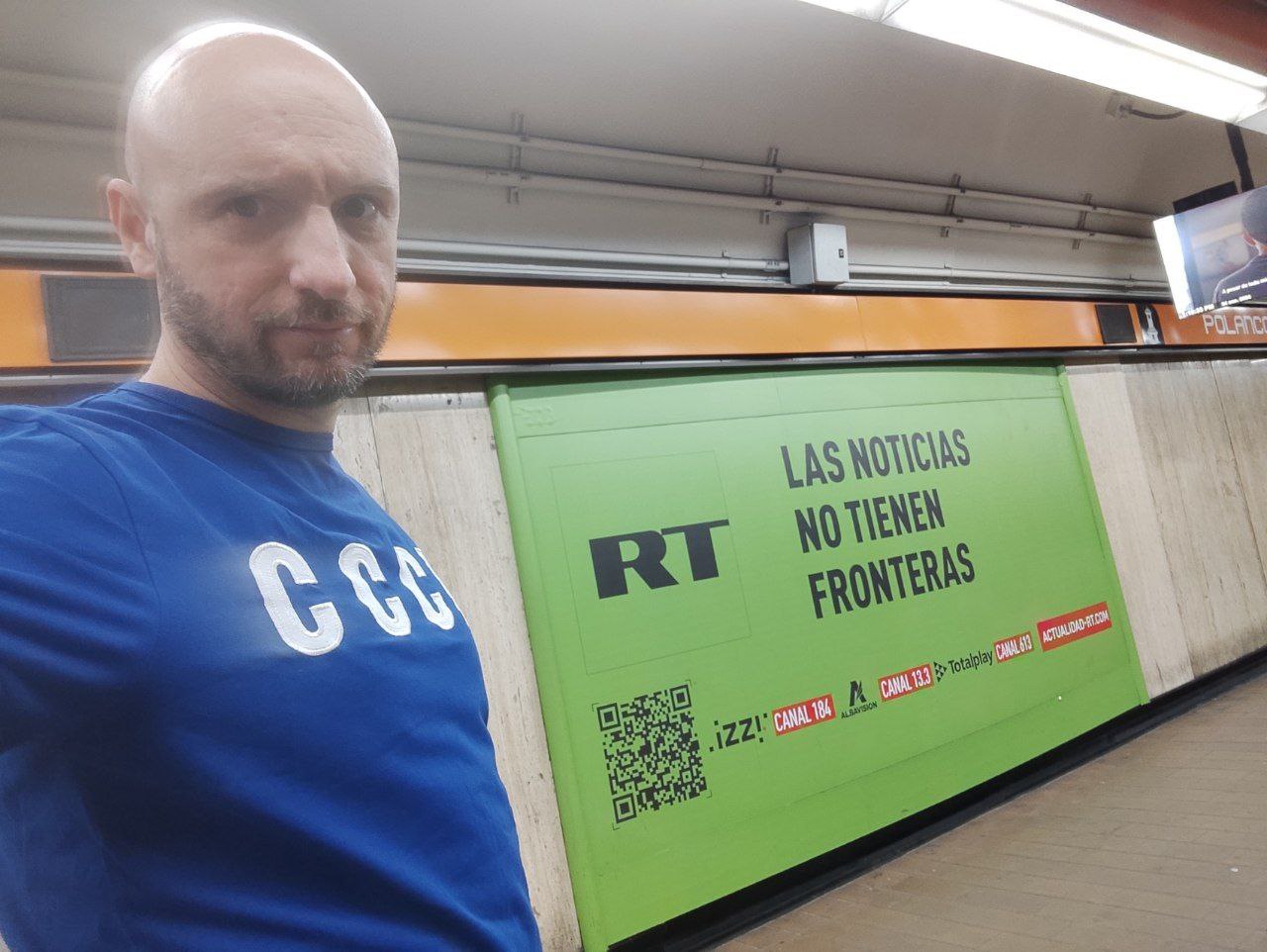
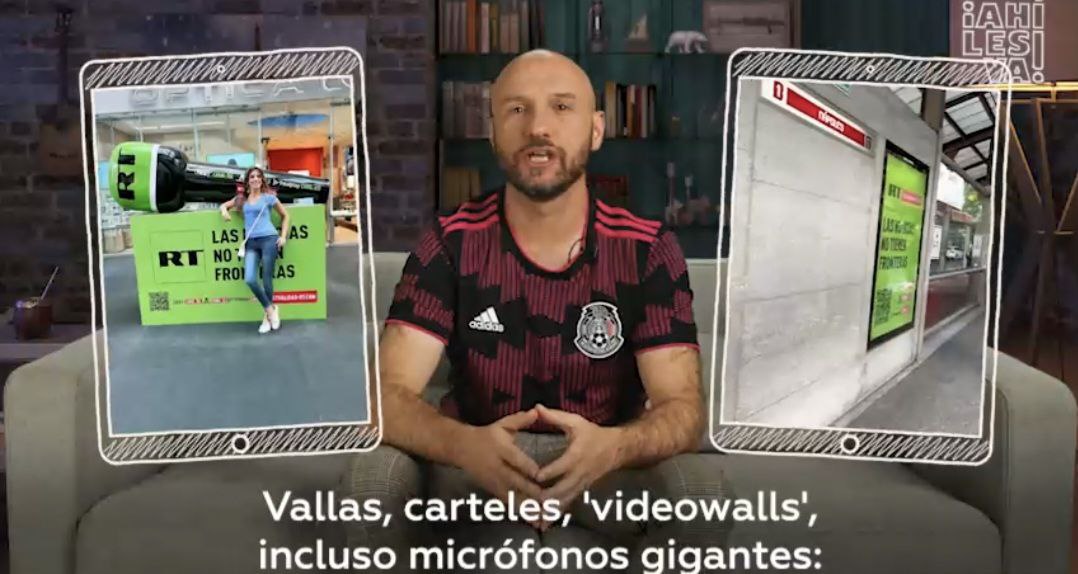
The host of RT’s program Ahí les va also mocked accusations that the channel spreads propaganda on his YouTube show.Photos from the Telegram account “¡Ahí les va!”
The promotion drew scrutiny in Mexican media, which noted that the European Union and companies such as Google had blocked RT for spreading pro-Putin narratives and disinformation about Russia’s invasion of Ukraine, which began Feb. 22, 2022. No similar restrictions were imposed in Mexico. Then-President Andrés Manuel López Obrador publicly opposed limiting access to RT or Sputnik content for Mexican audiences, both owned by the Russian state.
In January 2024, RT held a communications workshop in Mexico City as part of its RT CompaRTe initiative. According to the channel, over the past three years, the program has held training events in at least eight Latin American countries: Mexico, Argentina, Colombia, Venezuela, Nicaragua, Cuba, Guatemala, and Panama.
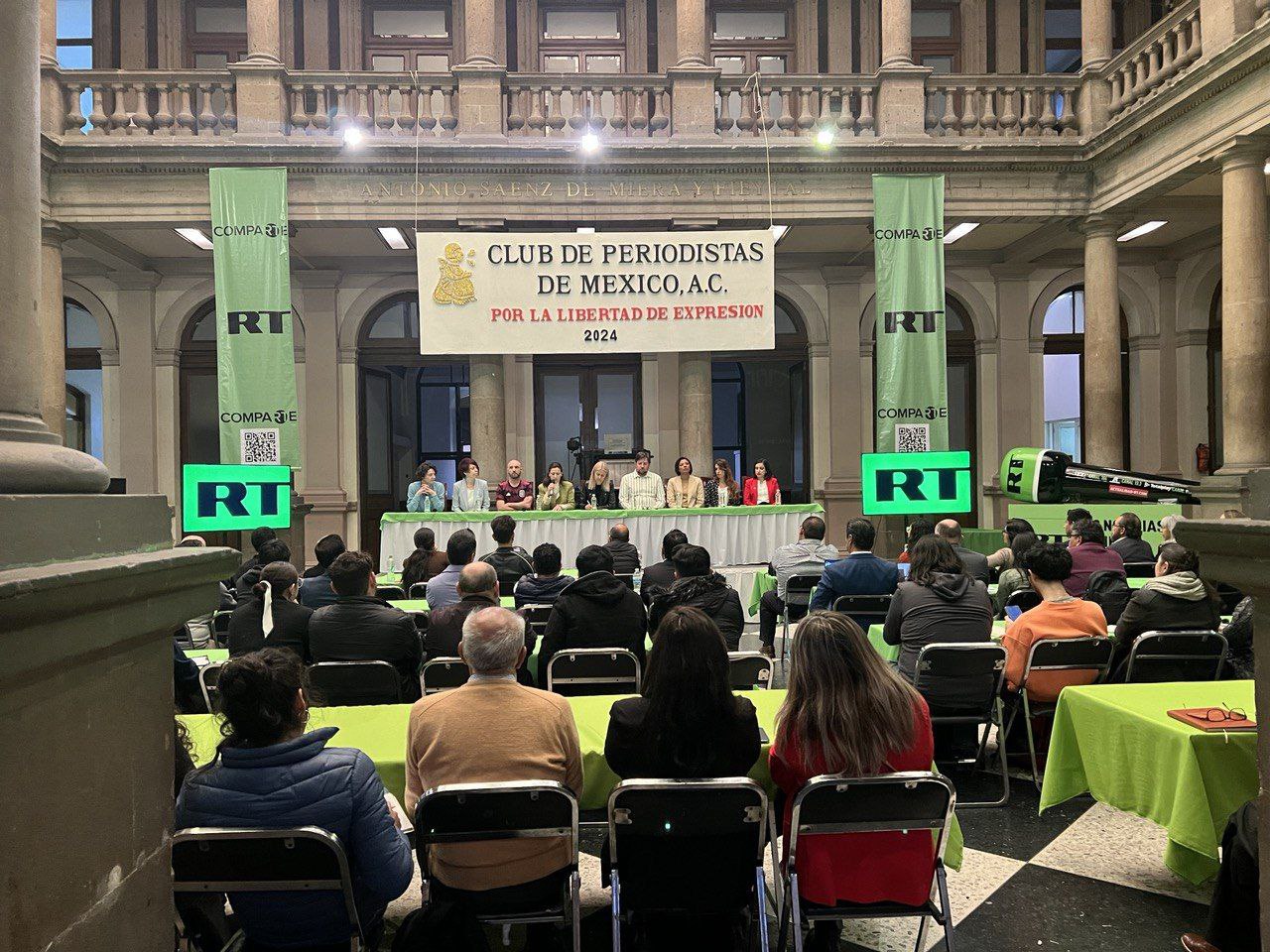

The Club de Periodistas de México, which hosted the workshop, told Factchequeado that “the spaces for RT were completely free,” that the courses were free for participants, and that panelists received no compensation. “No fees were charged to participants. In fact, we provided coffee and a modest buffet, covered by the Club de Periodistas de México,” the organization said.
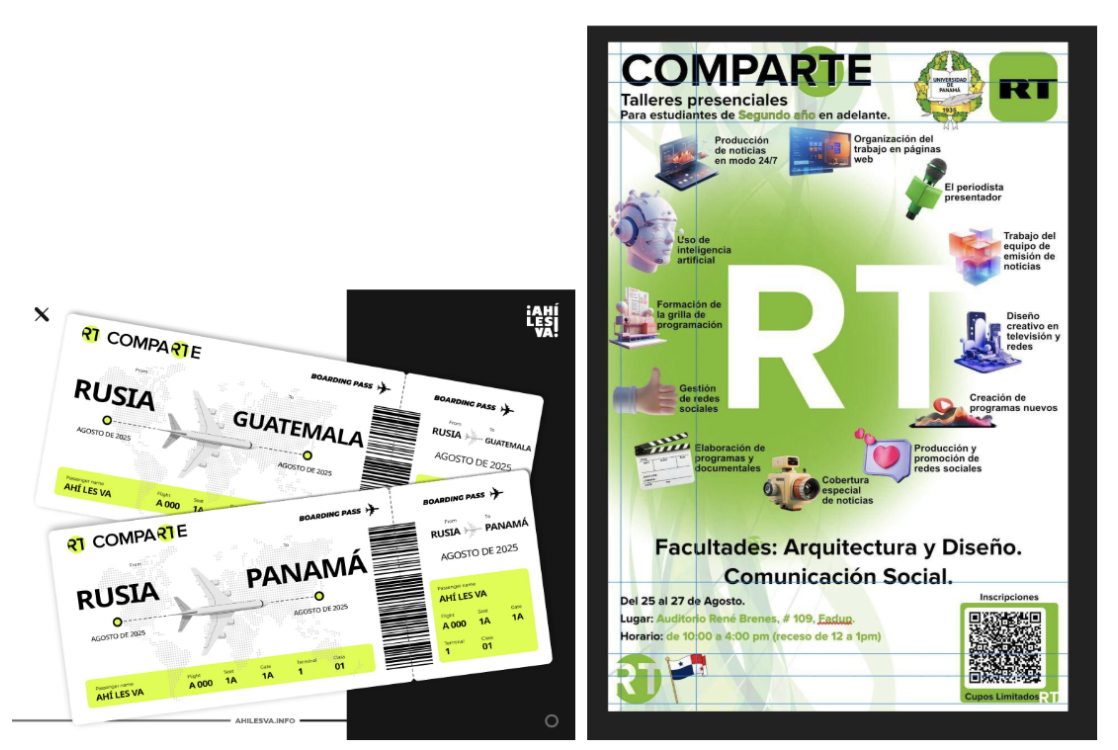
The Mexico City workshop covered topics including source management, “broad perspective topic research,” artificial intelligence, and even fact-checking. RT says more than 1,000 journalists and media workers from Latin America have participated in its workshops and exchange programs since RT CompaRTe began.
Venezuelan fact-checking outlet Cazadores de Fake News, a member of the LatamChequea network like Factchequeado, reported that at a workshop in Venezuela attended by journalists sympathetic to the government, participants shouted “¡Viva Rusia!” and “¡Viva Putin!” at the end of the sessions. This took place in the presence of channel executives and the Russian ambassador in Caracas, Sergey Melik-Bagdasarov.
In Mexico City, the RT workshop was held at the Club de Periodistas, led by Celeste Sáenz de Miera, a communications professional who promotes pro-Russian narratives online and coordinates the annual Certamen Nacional e Internacional de Periodismo. RT in Spanish and its journalists have been recurring winners of the award. When Izzi, a major Mexican cable network owned by Televisa, began broadcasting RT in 2016, the channel celebrated receiving the “prestigious international award from the Club de Periodistas de México” for the third consecutive year.
Factchequeado reached out to RT for comment but did not receive a response before publication.
RT’s Reach in the Region
RT says its Spanish-language content currently airs in 18 Latin American countries, including Brazil, Argentina, Bolivia, Ecuador, Paraguay, Honduras, Venezuela, and Cuba. Sputnik, another outlet affiliated with Rossiya Segodnya, Russia’s state-controlled international news agency, also targets Latin American audiences.
In Mexico, at least 81 cable providers carry RT, according to the channel. Izzi removed the channel from its package, but TotalPlay still offers it. Telsusa or Albavisión network broadcasts RT over open digital television, claiming coverage in 15 of 32 Mexican states and a potential audience of 11 million households. In 2024, Telsusa obtained a contract from the Mexican Social Security Institute (IMSS) for 1 million pesos, with reference number 050GYR019N05824-008-00, to broadcast institutional campaigns, and in 2023 signed a 2 million-peso contract with the Fondo Mixto de Promoción Turística de la Ciudad de México.
“Personally, I don’t feel any opposition to RT in any Latin American country. RT has faced challenges in the U.S., Europe, and England, but we are happy, our audience is loyal, and it keeps growing,” said Victoria Vorontsova, RT en Español director, in January during the channel’s Mexico courses. “We are always accused of propaganda, but what we try to do is not propaganda, it’s to tell stories that interest all the peoples of Latin America,” she added.
When critics raised concerns in late 2023 and early 2024 about RT’s street promotions in Mexico City, columnist Mirko Casale, host of Ahí les va, argued that such campaigns were logical in a Spanish-speaking country where the channel’s content had been censored or ignored elsewhere. “RT en Español does not seek to misinform or create chaos, nor to install or remove presidents in the countries where it broadcasts or advertises. Not in Mexico either. Its goal is to provide an alternative perspective on international events and, occasionally, present the Russian state’s viewpoint, which, like any nation’s, matters and has a right to be shared,” Casale said.
“México No Perdona”
The broadcasts and workshops are the public face of Russia’s propaganda efforts. Separately, multiple reports and legal actions allege covert Russian operations aimed at disinformation and polarization in several countries.
In September 2024, the U.S. Department of Justice seized 32 internet domains linked to the “Doppelgänger” operation, in which Russian companies Social Design Agency (SDA) and Structura National Technology (Structura) allegedly cloned government and media websites in multiple countries to spread anti-Ukraine narratives, justify the invasion, and influence voters in events such as the 2024 U.S. presidential election.
“As alleged in our court filings, President Vladimir Putin’s inner circle, including Sergei Kiriyenko, directed Russian public relations companies to promote disinformation and state-sponsored narratives as part of a campaign to influence the 2024 U.S. Presidential Election,” said then-Attorney General Merrick B. Garland.
“An internal planning document created by the Kremlin states that a goal of the campaign is to secure Russia’s preferred outcome in the election. The sites we are seizing today were filled with Russian government propaganda that had been created by the Kremlin to reduce international support for Ukraine, bolster pro-Russian policies and interests, and influence voters in the United States and other countries,” the official document said.
One seized document indicates that SDA included Mexico in its disinformation plans under “Operation México No Perdona” (“Mexico Does Not Forgive”). “The campaign intended to encourage “anti-American sentiment” as well as to exacerbate confrontation between the United States and Mexico. Although the campaign would target Mexico, the campaign’s goal also intended to influence the U.S. Presidential Election,” U.S. authorities said.
Although a direct link to the operation has not been confirmed, Factchequeado and El Sabueso of Animal Político have observed a surge in disinformation about Mexico-U.S. relations since early 2025, including fake accounts impersonating news outlets and journalists using AI-generated identities.
One disinformation post warned, “If the U.S. army sets foot in Mexico, we go to war.” Another falsely attributed statements to President Claudia Sheinbaum and former President Donald Trump regarding U.S. control of southern Mexico’s airspace.
Factchequeado documented how RT and Sputnik spread conflicting narratives in Spanish and English about protests in Los Angeles against migrant raids in June 2025. Spanish coverage criticized Trump’s immigration policies, while English posts suggested the protests were orchestrated by NGOs or George Soros as part of a plot against Trump.
In November 2023, the U.S. State Department warned of a Russian operation exploiting media contacts in Argentina, Bolivia, Chile, Colombia, Cuba, Mexico, Venezuela, Brazil, Ecuador, Panama, Paraguay, Peru, and Uruguay to promote “Russia’s strategic interests in the region.” Russian agencies SDA and Structura and pro-Kremlin journalist Oleg Yasinsky were cited as participants.
In response, Yasinsky published a column on Mexican site desinformemonos.org defending his independence as a Ukrainian and calling the U.S. “the true global propaganda machine,” adding that only a military defeat of Ukraine could “end NATO’s experiment in the heart of Europe.”
Workshops, Street Promotions and Alleged Covert Operations: Russian Propaganda in Latin America was first published on Factchequeado and was republished with permission.
This article is part of our investigation “Putin’s Laundromat.”
Factchequeado is a fact-checking outlet that builds a Spanish-speaking community to counter disinformation in the United States. Want to join? Send the content you receive to our WhatsApp +1 (646) 873 6087 or visit factchequeado.com/whatsapp.