




A decade ago, bootcamp workouts had little to do with appearance or chasing personal records. For me, they meant survival. They offered a way to manage stress, process grief, and stay upright beneath the weight of vocation and responsibility. Pastoral leadership, specifically during the time of “parachute church-planting,” often convinces a person that stillness is an unattainable luxury and that exhaustion is a sign of virtue. Eventually, my body defied those assumptions. So I went to the workout and may have discovered the “secret sauce” behind such entrepreneurial success. Then I returned. And kept returning. Mornings meant emerging outdoors at first light. I found myself in empty parking lots, on tracks, inside gyms, and eventually in a neighboring storefront home to BKM Fitness, owned by Braint Mitchell. There was no soundtrack, only measured breath and occasional encouragement called out by someone who hardly knew my name.
I could not have predicted that such spaces would become the most honest civic grounds I occupy. Today, my sense of belonging unfolds less in churches, classrooms, or boardrooms, and more in bootcamp circles, running groups, the leaderboard on Peloton, and, more recently, at a Hyrox start line—a hybrid fitness space where community looks and feels different.
As I engaged with these new fitness environments, I noticed a broader trend: hybrid, multidisciplinary sports now stand as one of our era’s great, largely unacknowledged social experiments. These sports are rooted not just in endurance or competition, but in proximity. Strangers come together to share oxygen, channel effort side by side, and reveal vulnerabilities. What unfolds when people from utterly different backgrounds hear the same instruction? Start when the horn sounds. Finish in whatever manner you are able.
Peloton was the first to show this to me, not just through the bike's movement. Belonging there was built by the design itself. The leaderboard collapsed every geographical divide. Instructors saw and named people otherwise invisible. A pastor from Ohio could ride with a nurse on a different continent, a teacher in Brooklyn, or a retiree on the West Coast. Everyone brought their own politics and voices, their own worlds. Yet everyone maintained the same cadence, climbed through the same challenge, and exhaled as one when the interval ended. Before the cooldown, nobody asked about your voting history. That detail matters deeply.
Today’s culture constantly sorts and divides. Hybrid sports resist those patterns. You are not the sum of your résumé. You are not your beliefs or affiliations. Here, you are reduced to raw data: your watts, your heart rate, your breath, the resilience made concrete. In these spaces, effort does not get hidden. When effort is shared, it creates trust—far outpacing the slow work of agreement.
Serving as a running ambassador for a couple of years with Columbus Running Company and its training runs only deepened the lesson. There is a soft disarmament that happens when you move shoulder to shoulder with someone for miles. At mile four, posturing folds. Ego acts as a weight, slowing you down. Conversation arises, if at all, only after it is earned. Moments of silence become sacred. Pace is something people must compromise on, not demand. Community emerges through negotiation, not sameness, always happening in the present and never on autopilot.
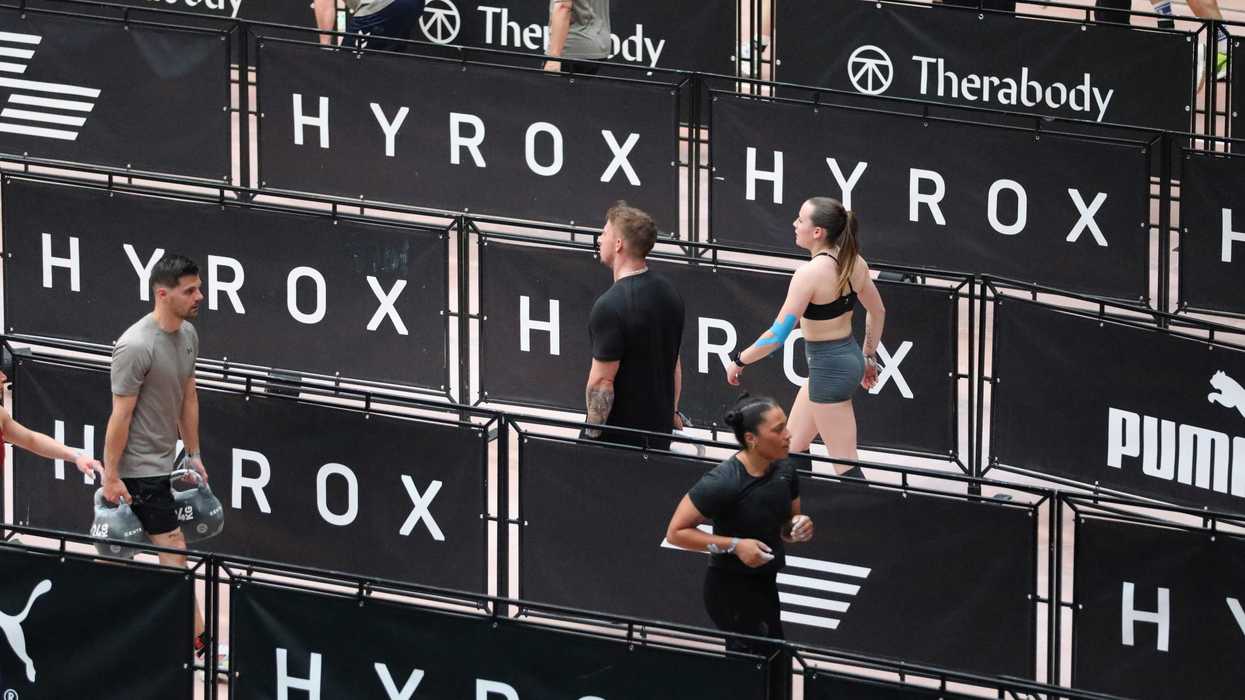
Building on these lessons, Hyrox scales this logic worldwide. This endurance contest spans eight workout stations, each followed by running, and the experience is deliberately and thoroughly standardized. The rules, movements, and format remain unchanged in Las Vegas, London, Nice, or Leipzig. Democratization sits at the heart of the design. This is not CrossFit, nor does it mimic marathon running. It instead occupies a third, ambiguous space—suited for those unwilling to be confined to a single definition. Looking ahead, in February, I will participate in my first Hyrox event in Las Vegas, raising funds for mental health and aiming to address inequities in wellness access globally for BIPOC communities and children. That choice reflects more than practicality. It is a theological act.
Wellness in the United States has never been neutral. Who is allowed to enter spaces safe for movement? Who receives encouragement to take a rest? Who gets health marketed as hope, and who gets blamed for their disease? Which bodies are welcomed into gyms without suspicion, and which are watched through a lens of doubt? Beneath every fitness trend, these questions linger, unspoken most of the time.
Hybrid sports push back quietly against this narrative. They are not flawless, but their boundaries are soft. The most radical move Peloton made was not inventing a touchscreen. It was their intentionality around representation and the manner in which instructors gave voice to struggle, never attaching shame. They normalized the need to modify a movement. They held up for celebration the person who finished last. They spoke straight to anxiety, grief, and fatigue. In a culture bent on optimization, they modeled what it is to be human, openly and honestly.
Hyrox, by intent, does something similar. Appearance means little. No one needs to lift the most, nor outrun every competitor. The only requirement is that you keep moving. Here, the community honors those who finish, rather than celebrate those who dominate. This distinction may seem small, but it carries meaning for a democracy at risk of splitting apart at the seams.
A democracy survives, like an endurance sport, not on star players but through the continued, repeated effort of those who show up. Participants carry their weight. They return even when it is tiresome or uncomfortable or when there is doubt that their contribution matters. Democracy depends on rules agreed upon by all, and on outcomes that stand beyond anyone’s control. It demands both the agency of the individual and the restraint of the collective.
Weekly, hybrid sports rehearse these very lessons. You learn patience waiting for your turn on a sled. You discover the joy in cheering competitors onward. Occasionally, you find finishing together is a far greater satisfaction than the lonely feeling of victory. Most of all, the loudest presence rarely matches the most enduring strength. These are not trivial things to know.
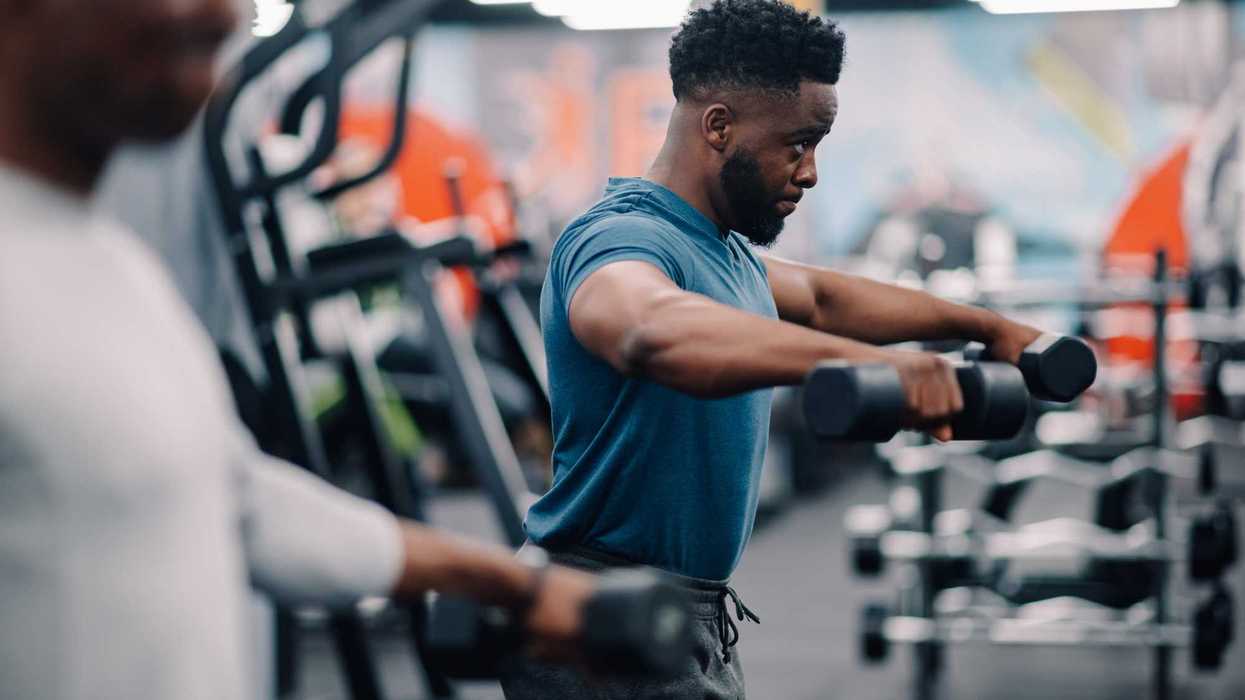
I train in rooms where people of all backgrounds—Black and white, young and old—share the fatigue of exertion. Where men accept guidance from women, not out of politeness, but necessity. Where vulnerability is less a risk and more a rite of passage. In a nation searching for ways to remember kindness, these are not empty havens of escape. They are training grounds for better ways of being.
As a pastor and civic actor, I take the social contract as a daily practice, not merely as a concept. We promise to care for one another, not because sameness binds us, but because we are inextricably linked. Hybrid sports pull that connection out into daylight. You cannot rely on yourself alone. Stamina will betray you if it is counterfeit. Resilience can be learned but never outsourced. Such virtues must be built up, and that construction is only possible together,
There is a temptation to dismiss all this as boutique wellness, as something reserved for those of privilege, an exclusive and consumer-driven indulgence. While that critique is understandable, it only tells half the story. The true power of these movements has little to do with equipment or entry fees. It reveals itself in the structure of organized challenge, shared standards of accountability, encouragement out in the open, and meaning communicated through narrative. These ideas can reach a wide audience. They can be brought into public parks, school gyms, community centers, and the basements of churches. Technology is not a requirement. They can become critical public health tools, funded as essentials rather than luxuries.
Similarly, meaningful change in mental health does not occur through slogans. Instead, rhythms and embodied practices play a greater role. They reconnect people to their capacity, set boundaries around their limits, and stitch them back together. Hybrid sports accomplish this work gently, without grandstanding committees or complicated policy. They do so a single workout at a time.
When I join the line in Las Vegas this February, my thoughts will not dwell on my finishing time. Instead, I will think of those beside me. Of the children denied safe movement due to the lack of their addresses. Of how sweat erases status. I hope for a country that learns empathy anew, not from louder rhetoric, but by finding its breath together. The finish line, I have come to realize, does not close the race; it opens a shared space for all.
And now, of all times, we are most in need of places that remind us how to share.
Rev. Dr. F. Willis Johnson is a spiritual entrepreneur, author, scholar-practioner whose leadership and strategies around social and racial justice issues are nationally recognized and applied.










Trump is stuck between two realities. Neither serves the American people