



As the spring primary cycle ramps up, voters are deciding which candidates to elect in the November general election, but too much doomscrolling on social media is leading to uninformed — and often anxiety-based — voting. Even though online platforms and politicians may be preying on our exhaustion to further their agendas, we don’t have to fall for it this election cycle.
Doomscrolling is, unfortunately, part of daily life for many of us. It involves consuming a virtually endless amount of negative social media posts and news content, causing us to feel scared and depressed. Our brains have a hardwired negativity bias that causes us to notice potential threats and focus on them. This is exacerbated by the fact that people who closely follow or participate in politics are more likely to doomscroll.
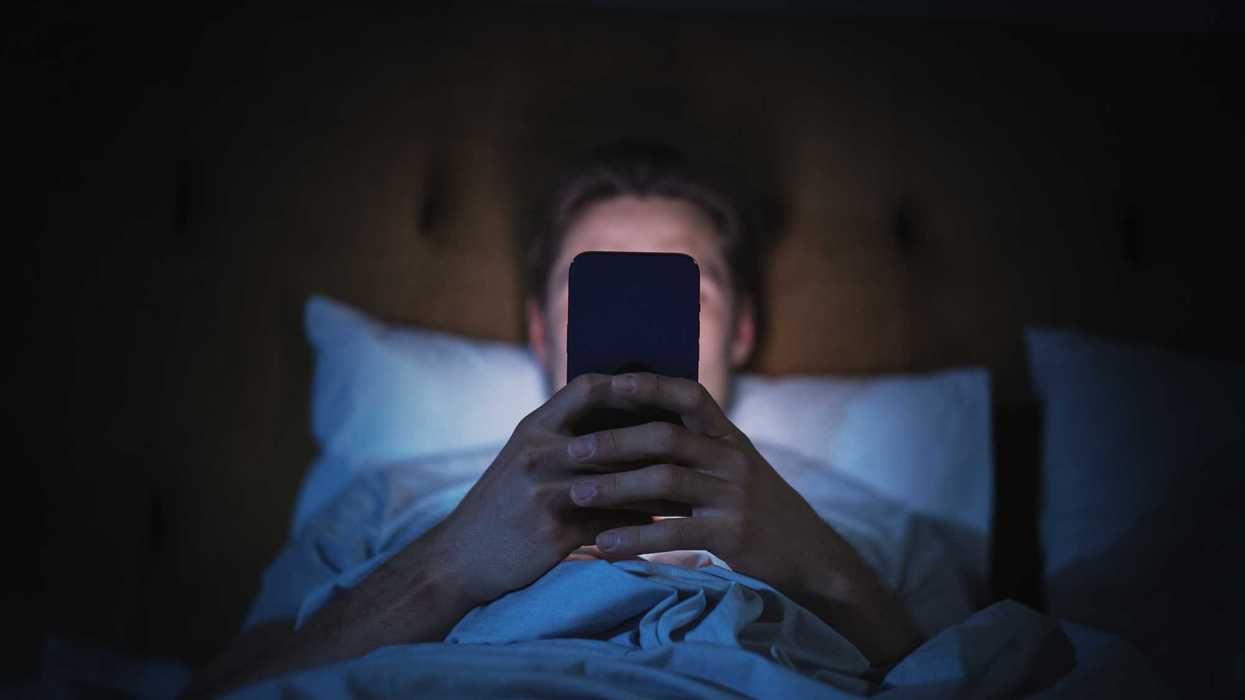
A 2024 report found that 31% of adults in the U.S. who use social media indicated they doomscroll “a lot” or “some,” and a 2026 study found that more than one-third of Americans doomscroll before bed. Meanwhile, 21% of Americans get their political and election news from social media, and 53% of people get at least some of their general news from social media, which will undoubtedly impact their 2026 election choices.
Our social media timelines are filled with stories about the Russian invasion of Ukraine, the war in Gaza, military strikes on Iran, inflation, the high cost of housing, and every other problem in the world. When we see these potential threats, we keep scrolling to learn more about them; it is part of our natural fight nor flight response to threats, evolutionarily ingrained in us as a form of self-protection and survival.
Social media companies know this, and they inevitably benefit from it. When we endlessly doomscroll, we see advertisements that make enormous profits for these companies even at the expense of users. Recently, a California jury determined that social media companies often put profits over people.
For politicians, our doomscrolling provides a different but related opportunity. Politicians take advantage of our fears and anxieties by offering themselves as the remedies to all the threats in the world. They tell voters that they alone can prevent the danger, and that we neither need to fight or flee; instead, we only have to vote for them.
Social media has led to our fears growing deeper than any specific news topics and right to the very issue of our survival as a country. According to an American Psychological Association survey, “The future of the nation” was the most common source of significant stress for 77% of Americans in 2024, followed closely by the economy and the presidential election.
With this in mind, politicians campaign on solving all of our problems and offer themselves as the release for the pent-up anxiety caused by our doomscrolling. They don’t assert their candidacy as a form of statesmanship and governance, but rather as the way to protect us from the world’s instability.
Still, just as it always has been, the world is a dangerous place. Our ancestors knew that, only they didn’t spend hours each day scrolling on social media, constantly looking for those dangers like so many of us do now. That is where doomscrolling has gotten us.
Social media companies make billions of dollars, and politicians who offer true governance often get ignored. We instead elect politicians who promise to do the impossible of alleviating all the threats we see online, despite the fact that they know — and we should also know — that they cannot.
So how do we stop this? The standard advice to “put down the phone” is no longer enough. We need a strategic refusal to quit treating the ballot box like an anxiety-release valve. To break the cycle, we need to apply a “scroll-check” to every candidate. We need to ask ourselves: “If the digital threat this candidate is shouting about disappeared tomorrow, what would be left of their vision?” If the answer is an empty room, they aren't a leader; they are a symptom of the news feed.
While the dangers of the world cannot be eliminated, we can at least lessen some of the anxiety by remembering that politicians can’t fix everything, despite their empty promises. As Carl Jung said, “The man who promises everything is sure to fulfil nothing.”










The President Invited Iran to Bomb My Home