

Skip to content
Search

Latest Stories

Follow Us:
Top Stories

Michigan group pushes to get big money out of politics

News

Michigan group pushes to get big money out of politics

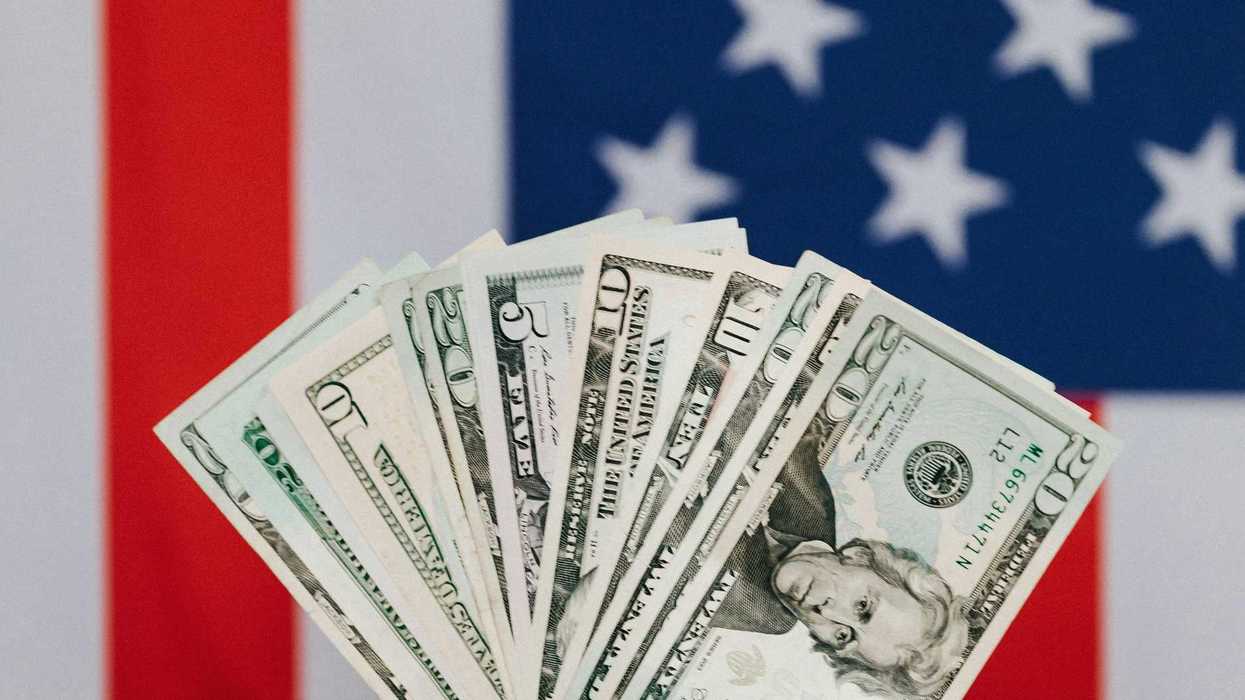
According to the Federal Election Commission, the 2024 election cycle saw billions spent on campaigns, with PACs alone raising more than $15 billion.

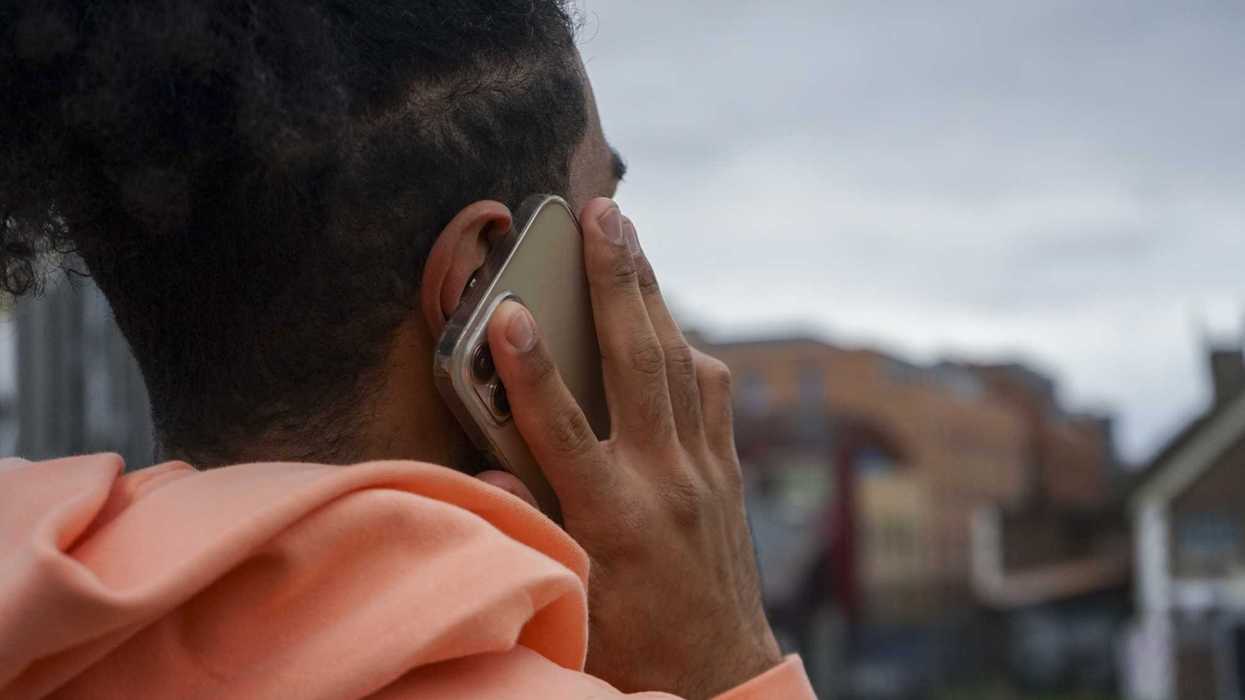
(Pexels)

A new push to limit corporate money in Michigan politics appears to be gaining traction.

There is strong bipartisan support for restricting political contributions from regulated monopolies and companies seeking government contracts, according to a survey commissioned by supporters of the proposal. Supporters said the measure would increase transparency and reduce “pay-to-play” politics, where political donations can influence government decisions.


Christy McGillivray, executive director of the group Voters Not Politicians, said the response from voters has been consistent across the political spectrum.

"It's wildly popular," McGillivray reported. "We are on track to meet our goal, and the bipartisan support is amazing with voters. Voters, regardless of political party, are furious about how money's corrupted politics."

Organizers must get nearly 360,000 valid signatures by May 27 to qualify for the ballot, aiming for closer to 450,000 to account for rejected entries. Critics of the proposal said even with limits in place, money will still find its way into politics, just through different, and sometimes harder-to-track, channels.

However, backers contended the effort is about fairness, arguing many Michiganders feel their voices are being overshadowed by big money in Lansing. McGillivray stressed the issue comes down to who lawmakers are ultimately responding to.

"Nothing in Lansing is changing, and they're not being held accountable because fundamentally, the money in Lansing is what lawmakers are answering to instead of their constituents," McGillivray underscored. "When that happens, that means people start losing faith in democracy."

Supporters said the proposal could help rebuild trust in government by increasing transparency and making sure elected leaders answer to voters, not big donors.

Chrystal Blair is a producer with Public News Service.

Michigan group pushes to get big money out of politics was first published on PNS and republished with permission.

Read More

Reducing the Influence of Money in Presidential Politics is Within Our Reach, from where we Least Expect it: the Electoral College

American flag funnel with money

Illustration provided

Reducing the Influence of Money in Presidential Politics is Within Our Reach, from where we Least Expect it: the Electoral College

Reducing the influence of money pouring into presidential politics since the 2010 Citizens United decision may actually be possible by addressing the "winner-take-all" (WTA) structure of the Electoral College. By changing how electoral votes are allocated, the incentive to concentrate money in a few swing states could be reduced.

The winner-take-all (WTA) feature of the Electoral College narrows the focus of massive campaign expenditures in a “Funnel Effect”* to a handful of closely divided battleground states. Because candidates have little to gain from spending in states where they are comfortably ahead or hopelessly behind, they concentrate all their financial resources on 15 or 16 states, or in some cycles, as few as seven key swing states. All this could change if the "battleground state" phenomenon were taken away from the wealthy, as the National Popular Vote Interstate Compact (NPVIC) would accomplish.

Keep Reading Show less
Getting Big Money out of Politics

money in politics

erhui1979/Getty Images

Getting Big Money out of Politics

As we get into the business of solving problems, it’s important to remove the obstacles that block solutions. One of the biggest hurdles, especially for solutions involving government policies, is the staggering amount of money showered on candidates for public office. The system guarantees that billionaires and big industries are taken care of at the expense of ordinary citizens who lack the resources in this pay-to-play environment.

A couple of examples:

Keep Reading Show less
Seattle Votes on Democracy Vouchers Designed To Counteract Wealthy Donors

If approved, the Democracy Voucher program would bring in $4.5 million each year through a property tax.

Road Red Runner/Adobe Stock

Seattle Votes on Democracy Vouchers Designed To Counteract Wealthy Donors

A public funding mechanism for Seattle elections is up for renewal in next week's election.

The Democracy Voucher program was passed 10 years ago. It offers voters four $25 vouchers to use each election cycle for candidates who accept certain fundraising and spending limits. Supporters said it is a model for more inclusive democracy, touting higher turnout, increased participation from more small donors and a more diverse candidate field.

Spencer Olson, spokesperson for the group People Powered Elections Seattle, which supports Proposition 1, said the program helps level the playing field.

"It's really important that people's voices are heard and that candidates can run being supported by their constituents," Olson contended. "Versus just listening to those wealthiest donors, those special interests that have historically been the loudest voices at the table and really dominated what priorities rise to the top."

The voucher is supported by a property tax. Olson and other supporters hope to bring the model statewide. Critics said the program is not big enough to make a difference in elections and has not curbed outside spending. Ballots are due by 8 p.m. Tuesday.

Olson pointed out the vouchers have succeeded in encouraging more diverse participation in local elections.

"The intention of the program was to bring a public financing program to Seattle elections to help empower more candidates -- more diverse candidates, women, renters, people of color -- to have equal access to be able to run, and run competitive elections without having to rely on wealthy donors, special interests," Olson emphasized.

Olson noted because the money comes from a dedicated tax levy, unused vouchers roll over to the next election.

"The goal isn't to create an unlimited pot of money but to be able to provide resources for candidates to run with the community's support," Olson stressed. "But it's not a blank check at the same time."

Eric Tegethoff is a journalist covering the Northwest for Public News Service.

Keep Reading Show less
Dollar in Decline: Trump’s Economic Policies and a Falling Dollar
1 U.S.A dollar banknotes
Photo by Alexander Grey on Unsplash

Dollar in Decline: Trump’s Economic Policies and a Falling Dollar

“Tariffs are like throwing sand into the gears of the global economy.”
— David Kelly, JP Morgan Asset Management

The dollar has plunged 10.8% in 2025, marking its worst start since 1973—a year defined by oil shocks, soaring inflation, and Watergate-era political turmoil. Behind the headlines, one has to wonder: Could America be headed for a crisis reminiscent of that turbulent era? A volatile mix of President Trump’s trade wars, sweeping tax cuts, and assertive executive actions fuels uncertainty. The dollar’s slide isn’t merely a currency-market blip—it’s a warning that America’s economic stability and global standing are under threat.

Keep Reading Show less