

Skip to content
Search

Latest Stories

Top Stories

Podcast: Understanding Trump voters and American Populism
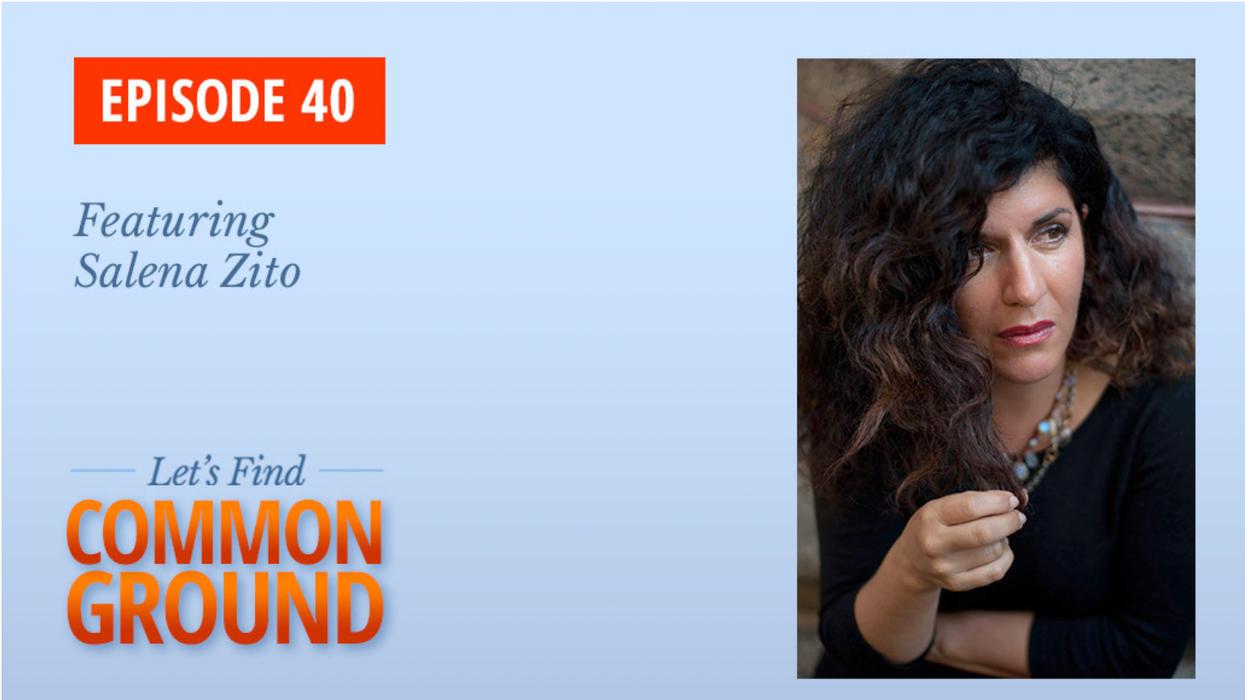
Podcast: Understanding Trump voters and American Populism

Unlike the majority of journalists who cover U.S. politics, columnist Salena Zito lives far away from the centers of power and wealth. Twice a year she leaves her home in western Pennsylvania and drives thousands of miles across the country visiting towns and rural communities, many of which supported Donald Trump for president. In this episode of the Let's Find Common Ground Podcast, we learn more about the perspective of these voters in rural communities.

Listen now

Read More

For the Sake of Democracy, We Need to Rethink How We Assess History in Schools

classroom

Photo by Ivan Aleksic on Unsplash

For the Sake of Democracy, We Need to Rethink How We Assess History in Schools

“Which of the following is a right guaranteed by the Bill of Rights of the United States Constitution?"

  1. Right to public education
  2. Right to health care
  3. Right to trial by a jury
  4. Right to vote

The above question was labeled “medium” by the National Assessment of Educational Progress (NAEP) for the 2022 8th-grade U.S. history assessment.

Keep ReadingShow less
For the Sake of Democracy, We Need to Rethink How We Assess History in Schools

classroom

Photo by Ivan Aleksic on Unsplash

For the Sake of Democracy, We Need to Rethink How We Assess History in Schools

“Which of the following is a right guaranteed by the Bill of Rights of the United States Constitution?"

  1. Right to public education
  2. Right to health care
  3. Right to trial by a jury
  4. Right to vote

The above question was labeled “medium” by the National Assessment of Educational Progress (NAEP) for the 2022 8th-grade U.S. history assessment.

Keep ReadingShow less
White Books and Curriculum Damage Black Children

The rise of book bans and erasure of Black history from classrooms emotionally and systematically harms Black children. It's critical that we urge educators to represent Black experiences and stories in class.

Getty Images, Klaus Vedfelt

White Books and Curriculum Damage Black Children

When my son, Jonathan, was born, one of the first children’s books I bought was "So Much" by Trish Cooke. I was captivated by its joyful depiction of a Black family loving their baby boy. I read it to him often, wanting him to know that he was deeply loved, seen, and valued. In an era when politicians are banning books, sanitizing curricula, and policing the teaching of Black history, the idea of affirming Black children’s identities is miscast as divisive and wrong. Forty-two states have proposed or passed legislation restricting how race and history can be taught, including Black history. PEN America reported that nearly 16,000 books (many featuring Black stories) were banned from schools within the last three years across 43 states. These prohibitive policies and bans are presented as protecting the ‘feelings’ of White children, while at the same time ignoring and invalidating the feelings of Black children who live daily with the pain of erasure, distortion, and disregard in schools.

When I hear and see the ongoing devaluation of Black children in schools and public life, I, and other Black parents, recognize this pain firsthand. For instance, recently, my teenage granddaughter, Jaliyah, texted me, asking to visit the National Museum of African American History and Culture in Washington, D.C., because she had heard that the President planned to close it. For what felt like the millionth time, my heart broke with the understanding that too many people fail to rally on behalf of Black children. Jaliyah’s question revealed what so many Black children intuitively understand—that their histories, their feelings, and their futures are often treated as expendable.

Keep ReadingShow less
People holding microphones and recorders to someone who is speaking.

As the U.S. retires the penny, this essay reflects on lost value—in currency, communication, and truth—highlighting the rising threat of misinformation and the need for real journalism.

Getty Images, Mihajlo Maricic

The End of the Penny — and the Price of Truth in Journalism

232 years ago, the first penny was minted in the United States. And this November, the last pennies rolled off the line, the coin now out of production.

“A penny for your thoughts.” This common idiom, an invitation for another to share what’s on their mind, may go the way of the penny itself, into eventual obsolescence. There are increasingly few who really want to know what’s on anyone else’s mind, unless that mind is in sync with their own.

Keep ReadingShow less