
Skip to content
Search

Latest Stories

Follow Us:
Top Stories

Sport is more than just a game in America

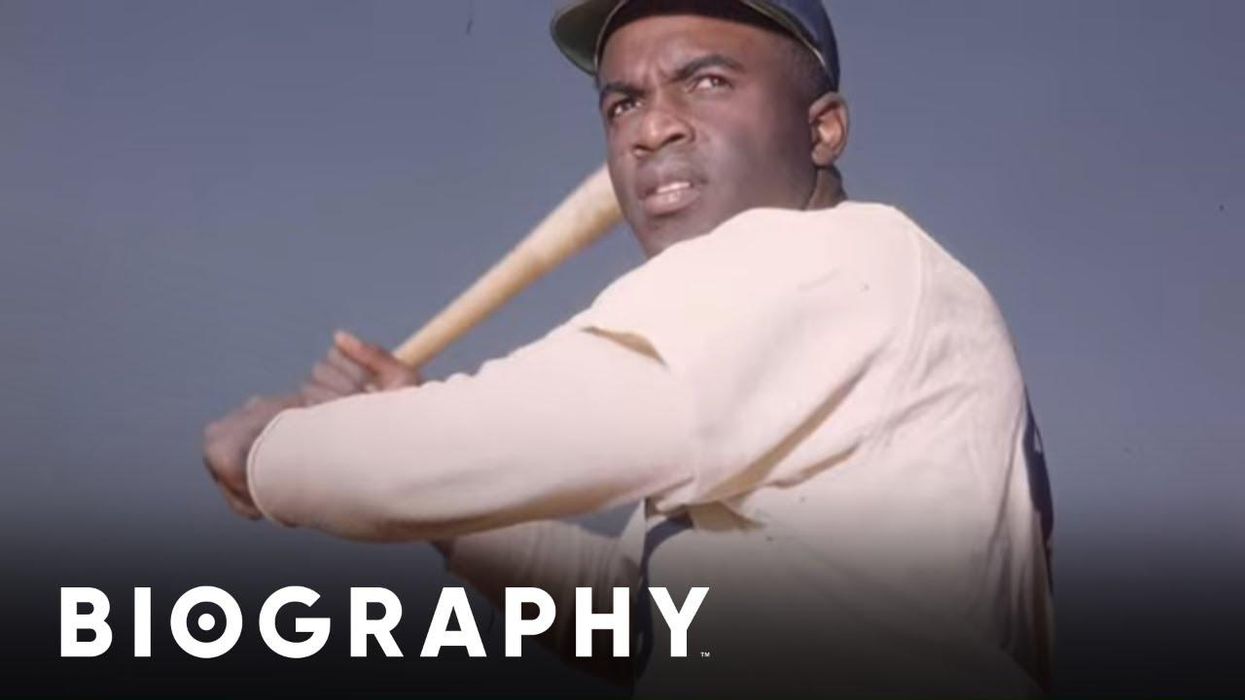
Jackie Robinson: The First African American to Play in the MLB | Mini Bio | BIO

The Fulcrum is committed to connecting pop culture to democracy. That includes music, theater, poetry and so much more.

As we think about the many aspects of American culture that are connected to democracy, we would be remiss if we did not include sports.


No one can deny the important role sports play in American society. But perhaps more important than the game itself are the values of justice, fair play and teamwork that emerge when sport is at its best.

Perhaps more than any other social institution in America, sport has contributed to racial and social integration.

One prime example is the role Jackie Robinson played in 1947 as he broke Major League Baseball's decades-old "color barrier" when he made his debut with the Brooklyn Dodgers.

It is almost unfathomable today to think that "America's pastime" excluded people of color from playing. There is no doubt that Robinson impacted more than just the game of baseball, as his outspoken activism in his later years helped set the stage for the burgeoning civil rights movement of the 1960s.

Robinson was a man of courage. As he was taunted and insulted with racial epitaphs he repeatedly stated that he was not concerned with whether people liked him or disliked him: "All I ask is that you respect me as a human being."

His endurance at being "first," is honored one day every baseball season, when all players wear his number, 42. It's a tribute to a man who experienced the flaws of our nation through bigotry and chose to serve his community throughout his life. He was a team player.

There are many examples of how athletes have impacted our society and our democracy in ways that model the character needed to endure, offer support and be a good human being. Things far more important than the winning or losing of a game.

As The Fulcrum embarks on this journey of connecting American sport to democracy we want to hear your stories, your examples of sport connecting to democracy — whether by advancing social justice, economic rights or gender equality; placing the team above the individual; or honoring one's opponents.

There are so many powerful forces beyond the field or the arena. Which is your favorite? Do you have other examples? Please send your ideas to pop-culture@fulcrum.us.
Read More

More Artists Boycott Trump‑Renamed Kennedy Center

Musicians and dance companies are canceling performances in protest, adding to a widening backlash over political interference at the nation’s premier arts institution.

Getty Images, ntn

More Artists Boycott Trump‑Renamed Kennedy Center

The recent wave of cancellations by artists at the Kennedy Center underscores a broader and urgent question in contemporary society: the struggle between artistic autonomy and political influence. By withdrawing from their scheduled appearances, these artists are responding to the Center's controversial renaming by a new Board of Directors appointed by President Trump. This renaming, seen by many as politically motivated, has catalyzed a strong reaction. Earlier this year, at least 15 performers withdrew in protest. This forms part of a growing trend, with public resignations and statements from notable figures like Issa Rae, Rhiannon Giddens, Renée Fleming, and Ben Folds. They have all expressed concerns that the Center’s civic mission is being undermined.

More performers are visibly withdrawing from the Kennedy Center, with fan-favorite names disappearing from the roster. In recent weeks, news outlets have reported that more artists and groups have called off their upcoming shows. These include jazz drummer Chuck Redd, the jazz group The Cookers, singer-songwriter Kristy Lee, and the dance company Doug Varone and Dancers. Fans holding tickets now face the stark absence that mirrors these artists' discomfort with the renaming and what it represents politically.

Keep ReadingShow less
Interfaith Music Aims to Reclaim January 6 for Unity

Elena “La Fulana” Lacayo

Interfaith Music Aims to Reclaim January 6 for Unity

Music has played a significant role in uniting people of different faiths in the United States. From the Civil Rights era to the years following 9/11, Americans have used music to bridge religious divides and affirm their shared humanity. Interfaith music extends beyond worship and remains a lasting way for Americans to remember their common bonds. St. Augustine expressed the power of music in faith when he said “When I sing, I pray twice.”

In this spirit, The Fulcrum highlights stories during the holiday season that reflect universal themes. Messages of love, kindness, hope, and generosity resonate across cultures and traditions, reminding us that shared values are stronger than our divisions.

Keep ReadingShow less
A Baseball Team Caught Between Two Countries — a Visa Shift and a Shutdown

The Tucson baseball team playing against the Águilas de Mexicali in the border city of Mexicali. Photo courtesy of the Tucson baseball team

A Baseball Team Caught Between Two Countries — a Visa Shift and a Shutdown

NOGALES, SONORA, MEXICO — What was meant to be a historic first for America’s pastime — a Mexican Pacific League baseball franchise anchored north of the border — has become a bureaucratic curveball.

The newly relocated Tucson, Arizona, baseball team — formerly the Mayos de Navojoa from Sonora, Mexico — has yet to fulfill a long-held dream shared by fans on both sides of the border: bringing professional Mexican winter baseball to U.S. soil.

Keep ReadingShow less
From Bob Dylan to Kendrick Lamar: How Protest Music Still Shapes America in 2025
Bob Dylan | Xavier Badosa | Flickr

From Bob Dylan to Kendrick Lamar: How Protest Music Still Shapes America in 2025

Pop music has always been more than entertainment. Reflects society’s struggles, dreams, and contradictions.

Across the last fifty years, artists from Bob Dylan to Kendrick Lamar have given voice to war and peace, protest and resilience, identity and equality, economic struggle and hope. Their lyrics, written for a moment in time, echo with startling relevance in 2025.

Keep ReadingShow less