


In the wake of Charlie Kirk’s assassination earlier this year, a YouGov poll was released exploring sentiments around political violence. The responses raised some alarm, with 25% of those who self-identified as “very liberal,” and nearly 20% of those polled between the ages of 18 and 29, saying that violence was sometimes justified “in order to achieve political goals.” Numerous commentators, including many within the bridging space, lamented the loss of civility and the straying from democratic ideals. Others pointed to ends justifying means, to cases of injustice and incivility so egregious, as they saw it, that it simply demanded an extreme response.
But amidst this heated debate over what is justified in seeking political ends, another question is often overlooked: do the extreme measures work? Or, do acts of escalation lead to a cycle of greater escalation, deepening divisions, and making our crises harder to resolve, and ultimately undermining the political ends they seek?
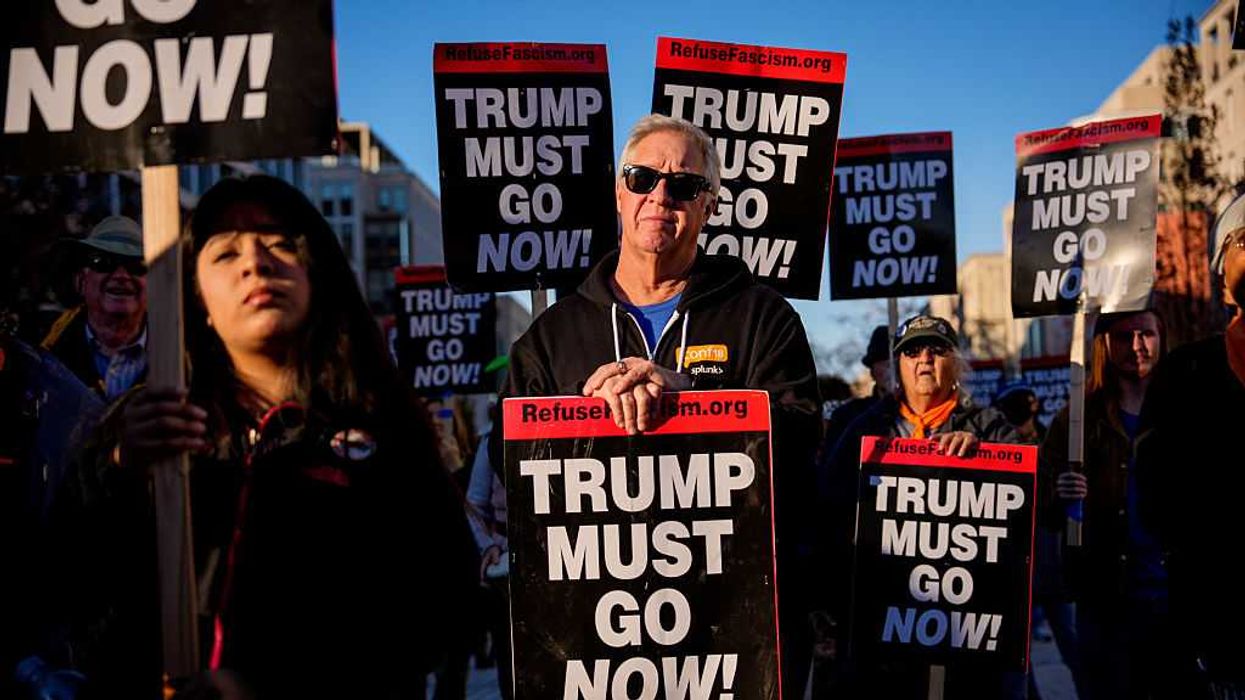
Let’s take a look, for instance, at the ongoing ICE crackdowns and the various protests, demonstrations, and actions that have come in response. From the Left’s perspective–and it is worth noting that this is the activist Left, which may not be indicative of mainstream thought, and represents far from half of the country–the protests and acts of resistance are righteous defiance against inhumane and fascistic policy. The harder the administration cracks down, the more validated they feel in this view, and the more fervent the response.
From the Right’s perspective–once again, not the whole of the Right, but largely the most passionate of the MAGA base–the impetus of this so-called resistance is unjustified and misinformed, and so any actions made upon it are irrational. The louder, angrier, and more destructive the Left’s actions are, the more that the Right perceives them as lunatics, incapable of maintaining order and in need of federal force. And of course, as this sentiment grows louder and more fervent, the Left’s opposition will grow in turn, and the cycle will continue.
Within each tribal bubble, the calls to escalation, and some of the acts that follow, are seen as strong-willed, as brave and bold. They energize, stirring up more social media traction, more passionate turnout at events and demonstrations, and, occasionally, more funds raised for the cause. What is difficult to see from this perspective, however, is that what riles up one side is used to rile up the other, and that such a chain of action and reaction rarely moves the needle.
What is also difficult to see from our siloed perches is that the ideas we fight about so often aren’t as bound to conflict as we might assume. On an issue like immigration, for instance, the need for clarity and consistency in our established laws, and the moral demand for a humane and empathetic process, should both help inform what a functional national policy might be. Alas, few of the loudest voices seem interested in what those other loud voices have to say.
These divisions themselves are deeply exploitable and may present the greatest existential threat of all. Our fear and loathing for the Other Side provides abundant opportunity for manipulation by demagogues who play to our basest elements, by media amplifying the alarm, and even by foreign or otherwise hostile agents who might look to gain from sowing discord. Indeed, these profiteers may be the only ones who really gain when things escalate.
Where we find ourselves, then, is in something of a Chinese finger trap (which is not to say that the Chinese are responsible, mind you). We feel stuck. We're ready to pull like hell, willing to pull apart the seams of our relationships and our communities and our dignity. But the pulling only makes it worse.
It is by pushing in, by listening to one another, and by working together that we can improve the state of things. Through both social movements focused on cutting through the noise and fostering more productive discourse, and through political leaders and organizations championing a more positive and unifying ethos, we can show how powerful a more collaborative and pluralistic mindset can be in solving problems. What we need is to come together not just for the sake of coming together, but for the sake of putting ourselves in the best possible position to solve the growing crises we find ourselves in.
It may well be that our major parties are ill-positioned to rise above this strife, because the incentives to play upon our division - the pulls of continuing to pull apart - are simply too great. The threat of the “Other Side” taking power is one of the primary selling points, if not the primary selling point, every election season, and the zero-sum two-party games lend themselves all too well to those who drive this fear further.
Our greatest opportunity may lie in the nascent Independent space, in coalition-minded individuals and organizations who can position themselves for success in single-party strongholds (as Evan Macmullin and Dan Osborn demonstrated in increasingly close Senate efforts in 2022 and 2024, respectively) as a needed alternative. And while immediate success can be achieved by avoiding the division-running where no spoiler effect can be threatened, and where the Other Side is a non-factor, enough of these victories can add up to a fulcrum within our national legislatures, a buffer to effectively deny either major party a majority. This, in turn, would remove one of the major boogeymen of partisan division (again, the Other Side seizing power) and all the incentives that come with propping it up.
Rather than diminishing our political parties, this fulcrum in place can empower them to be the best versions of themselves, to serve complementary functions, to shed light on the challenges we face and the things we need from policy. If what follows is not only effective policy, but a political process that makes people of different leanings feel heard, then that can finally begin to defang the divisive impulse. And while I may be biased in this assessment as an Independent strategist, it is also, by and large, the reason I became an Independent strategist.
Regardless, as things stand, our divisions continue to feed upon themselves, reverberating through our media and our elected politics, alienating all too many from one another. Reinforced within each tribal bubble is the notion that the conflict is existential, a battle of Good against Evil, and it should come as no surprise that any sacrifice–moral or otherwise–might be considered worthy in the name of political victory, if that is what it takes to find political victory. Escalation will always seem justified, but if we can make the case that the greatest ends can be found through more noble means, then we may yet find our way out of this finger trap.
Nathan Smolensky is an Independent strategist and consultant who served as State Director for the Florida Forward Party from 2022 through 2024. His book, Common Ground from the Ground Up, is currently available on Amazon.