






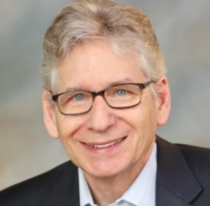
I spend too much of my day doomscrolling—Financial Times, Foreign Affairs, the Atlantic, the New York Times, The Fulcrum, and others, to stay current. They deliver a steady stream of trusted news and analysis. But much of it is deeply depressing. Civil rights and liberties contracting, an administration pushing authoritarian programs, and federal agencies dismantled or redirected. On the world stage, it's worse: power shifting, conflicts spreading, the war in Iran, Gaza, Israel, and global energy in chaos. On a recent Saturday morning, before the scrolling even began, I was already feeling the full weight of it all.
My wife and I have spent decades in local civic work in Falls Church, Virginia, and that day, we showed up for two events. The first was a city forum on affordable housing—genuine public engagement. The second, in the afternoon, was at Meridian High School: a community discussion called "Othering and Belonging," hosted by the Tinner Hill Heritage Foundation and the Meridian High School Black Student Union. Tinner Hill is a historic African American community in Falls Church, and the foundation that bears its name has long been a civic anchor in the city. The room was full. Parents, students, professionals, and community members were there.
I walked out of that school feeling deeply alive and fully engaged, a sharp contrast to the despair that greets me most mornings from the news.
The panel was substantive. Professionals spoke about transformative leadership, how communities respond to harm, and what genuine belonging looks like in practice. Students spoke candidly about how othering affects their mental health, sense of belonging, and overall well-being. And the superintendent—a Black man leading schools in a predominantly white community—described learning early that exclusion wasn't something to accept from the outside. His instinct was to pull a chair up to the table and claim his seat in the conversation. When belonging is not granted, it must be claimed.
I came away thinking about something the professionals emphasized: that responding to injustice effectively requires understanding what's actually driving it. That's not the same as excusing it. It means knowing enough to act with precision rather than just reacting. It also means recognizing that standing up takes preparation—emotional and psychological—knowing how to manage your own reaction so you can be effective rather than simply present. Not everyone knows how to do that, and not everyone realizes there's training available. Organizations such as the Othering and Belonging Institute at UC Berkeley, Right to Be, Peace Through Action, and others offer practical tools, courses, videos, and workshops that teach you what to do when you witness injustice—in schools, workplaces, and communities. Civic courage is not just an impulse. It is a skill. And it can be learned.
The doomscrolling does something insidious. It fills your vision with problems at a scale that feels overwhelming—national politics, global crises, institutional failures you can't touch. Organizations working at that level are worth joining, and that work matters. But the relentless national and international news can consume your attention entirely, leaving you feeling overwhelmed—as though if you're not operating at that scale, you're not part of the solution. What can get lost watching your feeds is that local engagement is equally important, equally real, and far more immediately accessible—with rewards you can see and feel.
Democratic resilience doesn't live only in the headlines. It lives in a packed room at a high school where students speak honestly about their experiences, where professionals share hard-won knowledge about harm and healing, and where a superintendent's words about belonging capture the room. That's where you feel the possibility of change. That's where you can be part of it.
Falls Church is a small city. But what the Tinner Hill Heritage Foundation and the Meridian High School Black Student Union built in that room is the kind of engagement that can hold democracy together.
The news will still be dark tomorrow. But in that gathering, I remembered that my community is where I can actually be part of change—and that there are ways to learn how.
Edward Saltzberg is a Visiting Scholar at the Environmental and Energy Management Institute at George Washington University, Executive Director of the Security and Sustainability Forum, and author of the Substack newsletter The Stability Brief.









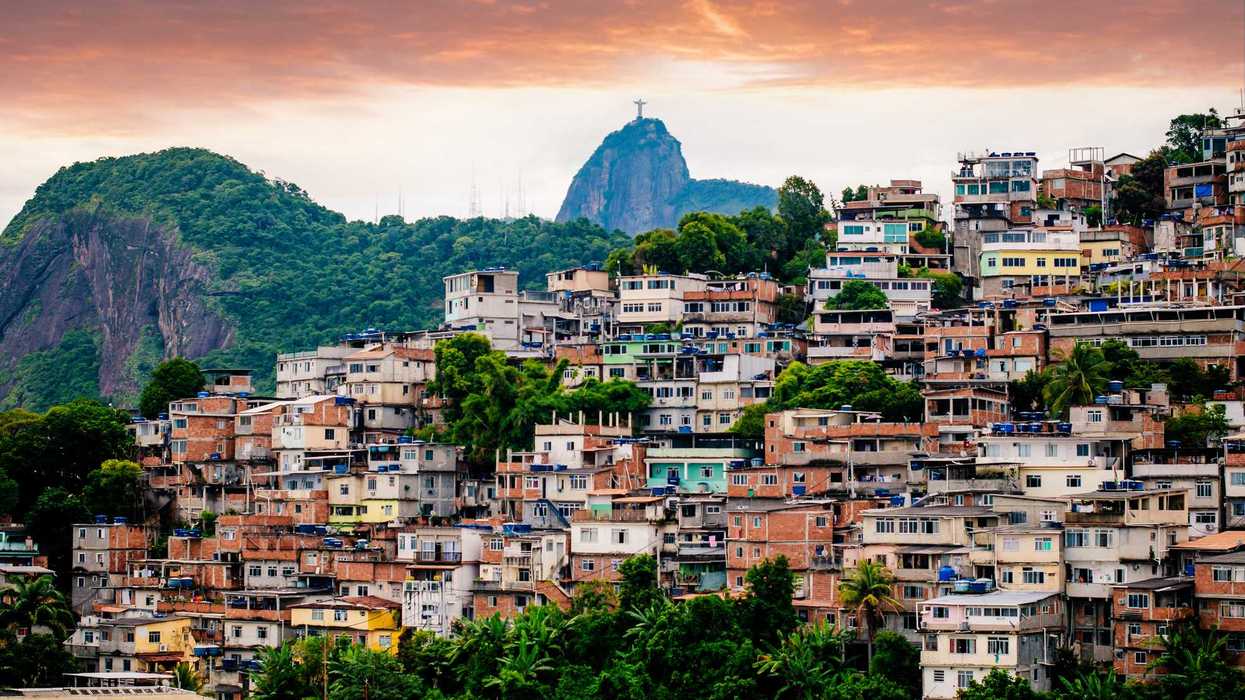
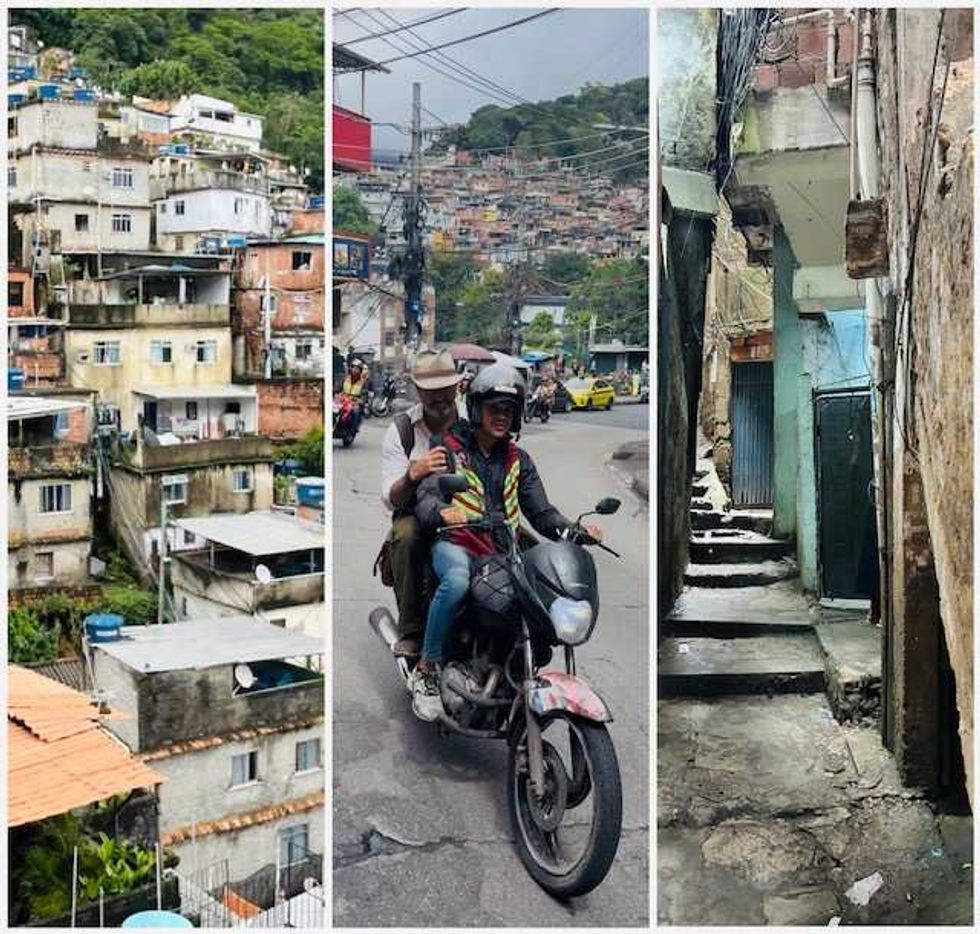 Scenes from Favela Rocinha, Brazil - (R-L) Rows of brick homes, Hugo Balta on a motorcycle taxi, and steep, winding roadsHugo Balta
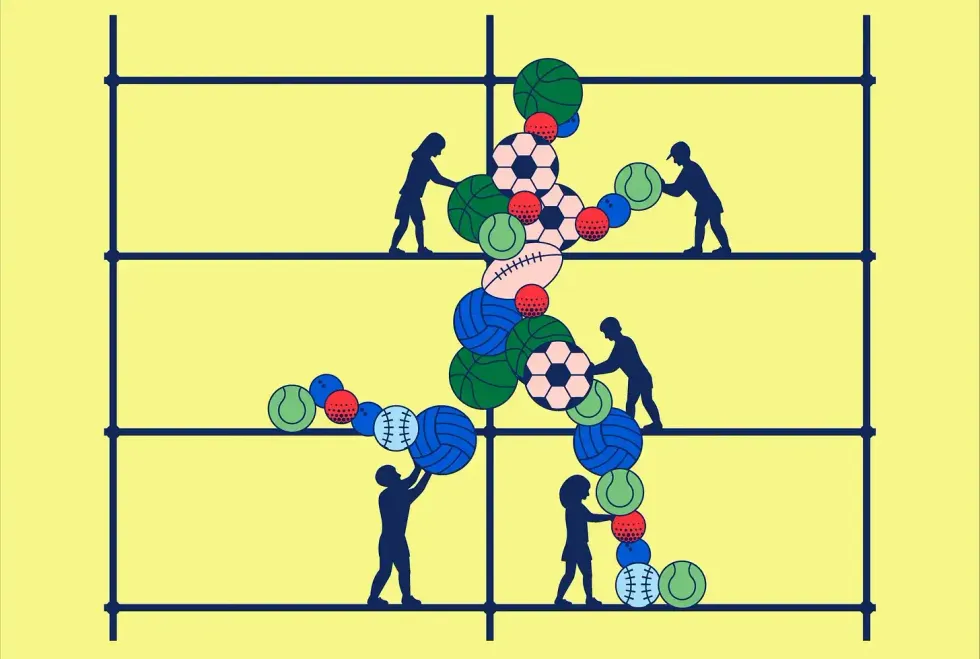 Following our HWF Civic Futures kickoff last week with Eric Liu, our design partners at Public/Official have created a unique visual to capture the “civic scaffolding” spirit of this conversation.
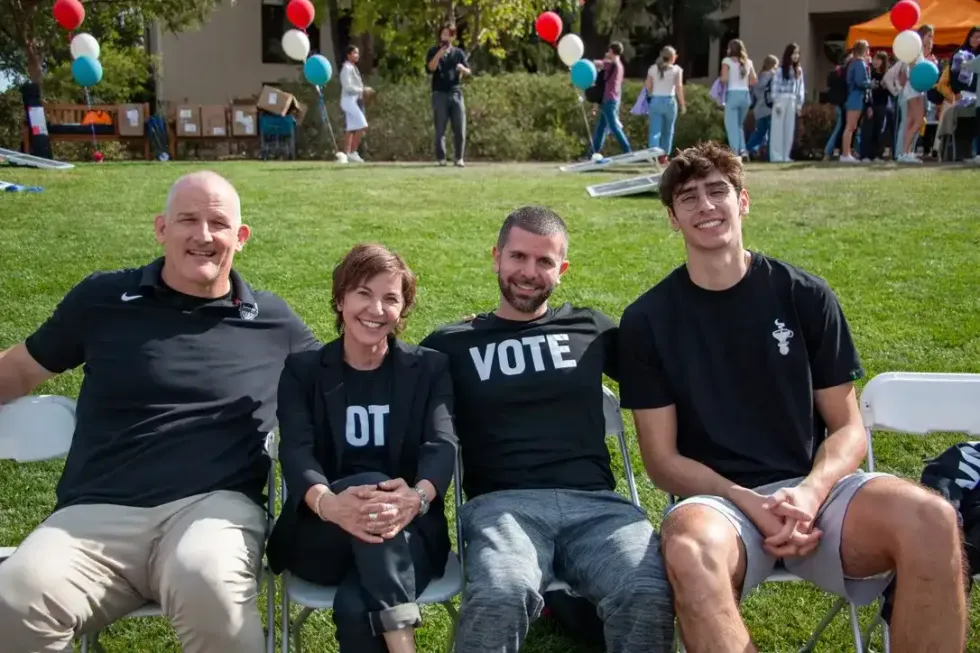 Lisa, Coaches Rev and Matt Elkin, and former Stanford Men’s Basketball star Maxime Raynaud at Stanford’s “All Vote No Play” Democracy Day, 2025