


The Fulcrum is committed to nurturing the next generation of journalists. To learn about the many NextGen initiatives we are leading, click HERE.
We asked Shon Eric Hernandez, a student at University of Massachusetts Amherst and a Fulcrum Fellowship cohort member, to share his thoughts on what democracy means to him and his perspective on its current health.
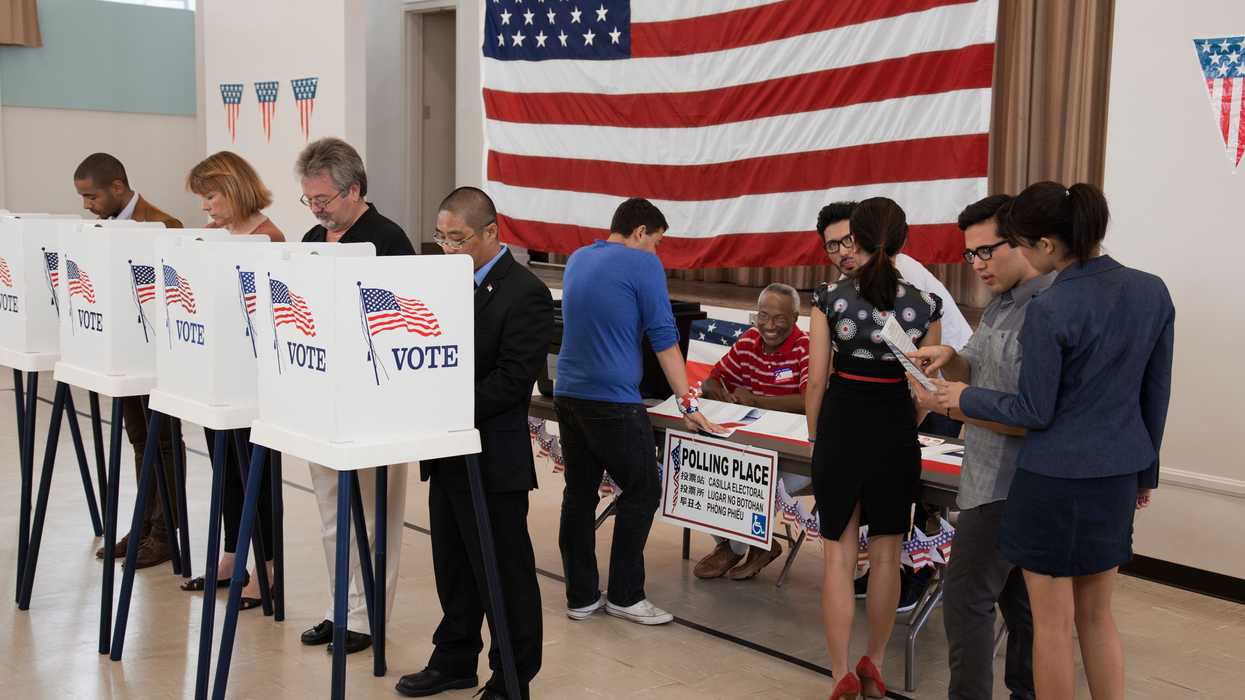
Who did you vote for in the last election? Even if you didn’t, it was on the night of November 5, 2024, when you couldn’t avoid the tension of who would be Commander-in-Chief for the next four years. The results trickled, stalled, flipped, and eventually sparked outrage. For many Americans, that chaos felt like a failure; a betrayal of the system we trust to protect us—but what if the process was working as intended?
Democracy has always been spoken about like some grand standard for fairness and the “moral” way. From grade school to university classrooms, it is taught as a system where every voice is equal, every vote counts the same, and the will of the people is always reflected in the outcome. It is the light, the angel that we look up to for a fair government where its citizens aren’t taken advantage of by those of higher classes.
While arguments concerning its effectiveness compared to alternate political systems—such as Epistocracy, where the most informed and competent politically hold higher value with their votes—are valid to have, the underlying issue is that we do not allow the idea that just because it works, it does not mean it is necessarily good.
Take Alberto Fujimori, who won a perfectly fair election, then later suspended Peru's constitution and established an authoritarian regime marked by numerous abuses. The system worked as intended—it reflected the voters' will at that moment. The outcome, however, was harmful. This distinction matters. A system can function correctly while still producing bad results.
After Donald J. Trump won his second election to become the 47th president of the United States, many in my online circle expressed a lack of ideological diversity in their social lives. They would state something along the lines of “how did he win? I don’t even know anyone who voted for him.” That reaction says less about the electorate and more about the environments people exist in. Political and social bubbles limit exposure to opposing views, and this makes legitimate outcomes feel wrong.
This is normal within the current climate. To fast forward, you will see many conversations in these same communities about the death of democracy and the rise of fascism/dictatorship due to the Trump administration's conduct. However, unlike in 2020, Trump did in fact win the election, securing 312 electoral votes to Harris's 226 and winning 77.3 million votes (49.8%) compared to Harris's 75.0 million (48.3%)—a margin of roughly 2.3 million popular votes and 86 electoral votes.
On paper, the system worked, right? How come so many people feel it’s wrong then? People expect Democracy to validate their sense of fairness; however, it only reflects participation. According to a poll conducted by NPR from June 23 to 25 of 2025, ~76% of people said they believe democracy is under serious threat; Not in its results necessarily, but that a process that is supposed to be a filter for “truth” and “fairness” would allow a person who had previously shown signs of a disregard for rules to come in and turn it on its head. The expectation that the system should prevent certain outcomes altogether—an expectation democracy was never built to meet.
The conversations about how one figure dismantles democracy are important, but they are not the main discussions needed to save it if it is in danger. You cannot treat an illness after being given the wrong diagnosis. We need to concede that it’s okay for a system/process to be fundamentally flawed in its nature. It's messy, tedious, unfair, and that’s where the beauty lies.
A system that overtime learns from its mistakes and evolves as the people hit walls and work together to break through. Like an advanced AI model piecing together how to solve a puzzle. Kicking out the abuser of our sacred system will not heal the damage already done.
The elephant in the room is that democracy has systemic flaws that can't be easily changed. The most glaring example is the Electoral College, which gives voters in small states disproportionately more power than voters in large states. A voter in Wyoming has about four times more influence on the presidential election than a voter in California—not because their vote matters more, but because the system is structured that way.
On one hand, this denies the fundamental principle of Democratic voting: every person's vote should count the same, regardless of where they live. The Electoral College violates this by allowing 100 people in Wyoming to collectively have the same electoral weight as 400 people in California. It's not just "messy"—it's unfair, and it means millions of Americans in densely populated states have less say in who becomes president than millions in sparsely populated ones.
On the other hand, though, ultimately while true, the Electoral College wasn't accidental—it's a deliberate constitutional design that forces candidates to build broad geographic support, not just win urban areas. Without it, candidates would focus only on California, New York, Texas, and Florida, ignoring rural America.
The U.S. is a federal republic, not a pure democracy—states elect the president, not citizens directly. The question is not whether the Electoral College is flawed—it is—but whether those flaws are an acceptable tradeoff for the stability and balance it aims to provide. If the college needs a rework, accepting that we all approach these conversations often one-sidedly is imperative to progress.
The healing will not be instant. These ideas and systems are highly complex with tons of moving parts. The first band-aid will be to have more public conversations about why candidates win elections and how some may manipulate the system using money and resources to gain an advantage. If you want to change how you talk about democracy, get civically involved! There are many ways!
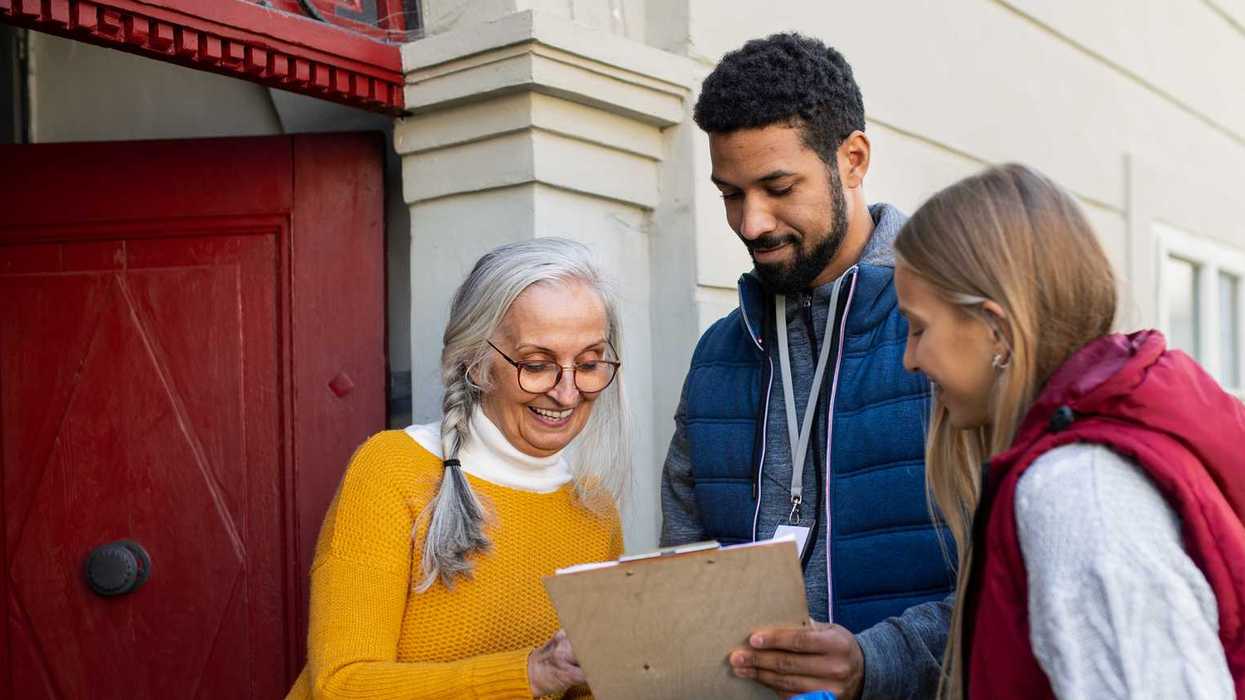
If democracy’s greatest weakness is the gap between expectation and reality, then its greatest strength is participation. First, think about what you're passionate about. If you're interested in politics and you know your party[democrat/republican/other], go to their local social media accounts and find meeting times. The hardest part will be showing up. Local non-profits, for example, can always use a new set of hands, and that can be your doorway into gaining connections with your local government. Advocate for different approaches, and you might be surprised how many people listen.
Shon Eric Hernandez is a Fulcrum fellow and M.D.C. contributor. He can be reached at shondesil06@gmail.com







The President Invited Iran to Bomb My Home