



Baltzar Enríquez was born in Michoacán, Mexico, and moved to Chicago at the age of three. Little Village, often called “The Mexico of the Midwest,” became his new home, a community he has grown to love and serve. In 2008, Enríquez joined the Little Village Community Council, a nonprofit organization originally founded in 1957. Upon becoming a member, he noticed the lack of participation and limited community programs available for residents. In 2020, he was named president of the council and began expanding, introducing initiatives such as Equal Education for Latinos, among other resources for the Little Village community. Enríquez reflected on his years of involvement and how he has navigated leading the council amid the current political climate.
Question: What inspired you most to get involved in the council?
Answer: Honestly, my community. I love Little Village. It’s one of the coolest communities to me. Its people are very humble, very hardworking—my neighbors, my friends, my schoolmates. Some still live here and we’re still friends and Little Village has something magical that embraces you, that supports you, that includes you. These are all things that make you fight for your community, defend it, and sacrifice yourself because our people are worth it.
Question: How have you seen your efforts as president come to life within the community?
Answer: We’ve created committees like the EEL committee, which is Equal Education for Latinos. That committee is dedicated to education issues; it’s the committee that advocates for better schools, better teachers, and for parents to have the power to run their schools and their programs. EEL has been around for two years now and has been heavily involved in education for cluster programs, which are for children with special needs. We’ve received more funding to create a sensory room. If a child is having a panic attack or an episode, we can take them to the sensory room where they can release their emotions, whether that’s low self-esteem or anger.
Question: An important part of Little Village’s identity is Spanish. How would you describe the role of Spanish in the work you do?
Answer: Spanish is very important here. Several of our volunteers help residents, whether that be with applications because they don’t speak English, and we help interpret the applications and apply for benefits. Right now, with everything going on with immigration, we’re helping people find their loved ones, whether online or through a phone number. All of this is done with the intention of educating people about the importance of being bilingual and knowing another language, especially English, because it allows you to defend yourself, and we have pushed bilingualism a lot. We will always preserve Spanish because it is our language, and we’re not going to let them take our language away, because it’s part of our culture.
Question: Beyond language, other factors have influenced the relationship between the council and the community. How have you seen the current political climate affect Little Village and the council?
Answer: Our community has been completely affected because sales have already dropped. Sales have fallen by 50 percent. Our street vendors have stopped going out to sell; our temp workers who go to the factories have stopped going to work. The laborers at Home Depot as well. Today, there was a raid where 15 of them were arrested. We’ve seen that this administration has made a mockery of the Constitution because it gives us the right to bail, the right to a hearing. These are constitutional rights, and this administration is not giving us those rights.
Question: How has this situation made your role as president more difficult?
Answer: Yes, it has become harder because we’ve had to hold more “Know Your Rights” workshops, talk to the community about what to do if you are detained, don’t sign anything, don’t say anything, and don’t self-deport. Even if they use certain tactics, try not to fall for the tricks the government uses.
Question: Are there other initiatives the council has carried out to offer more support?
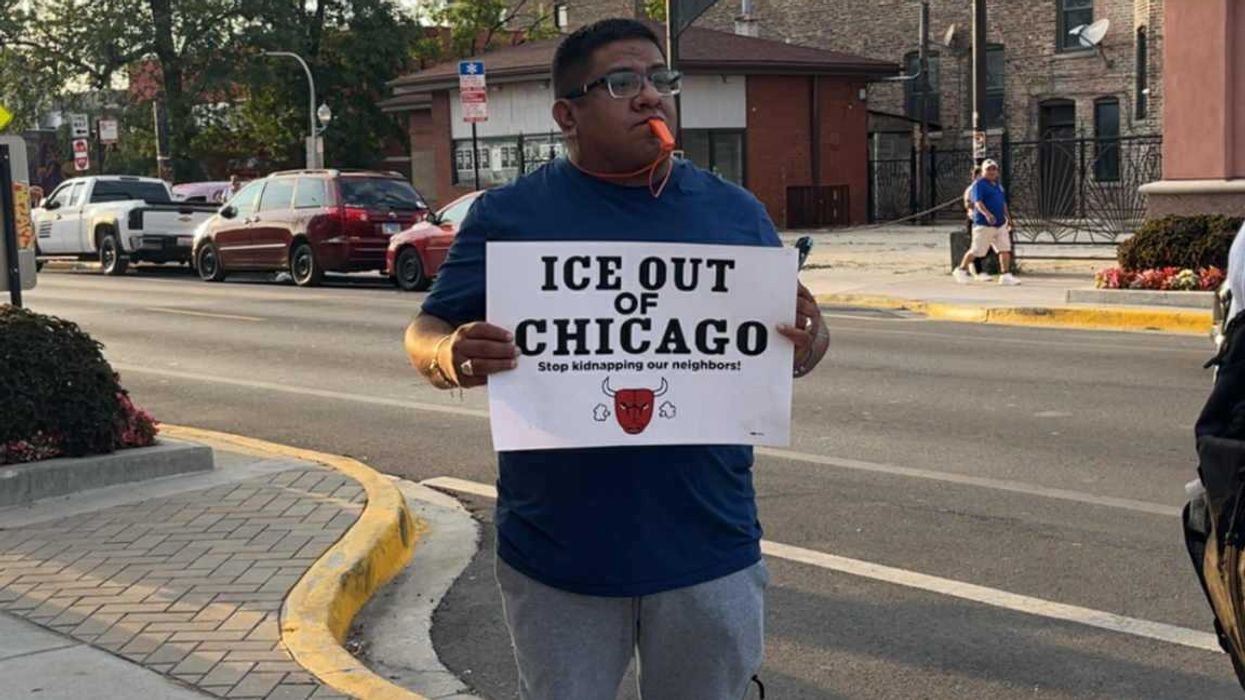
Answer: We have a campaign called “Blow the Whistle Against ICE,” where, since June, we’ve been organizing and passing out whistles, teaching people that if ICE shows up, start blowing the whistle so that when people hear it and don’t have papers, they can take shelter or leave the area. Those who are at home can close their doors, not open them, and alert others. We have volunteers patrolling the community; when they see an ICE vehicle, they start blowing the whistle and the agents leave.
Question: What are your hopes for the future of Little Village, and what reflections would you like to share about the challenges it faces?
Answer: Our goal is to get ICE out of here—out of Chicago, out of Little Village, out of the state of Illinois, out of our nation, and push for amnesty so that people can reunite with their families, come out of the shadows, walk down 26th Street without worry, and push for immigration reform. But we can only do this if people come together and fight together. United, we can move mountains.
Baltazar Enríquez: Perspectives from Little Village Community Council President was first published on Illinois Latino News and was republished with permission.
Teresa Ayala Leon is a sophomore journalism student at Northwestern University from the Bay Area who reports for The Daily Northwestern, contributing mostly to its social media coverage.