





Despite the brief #MeToo era, we still live in a world where if a man and a woman are engaged in a sordid—meaning, in conflict with society's conventions—relationship, it is the woman who will be chastised and not the man.
Men have always been able to do what they want and receive little criticism; women, on the other hand, have been pilloried when they engage in behavior that does not conform to society's expectations. Society judges the woman's behavior as unseemly, while it judges the man's behavior as doing what men do—men are known to be pigs when it comes to sex, and that's just the way it is.
The one exception to men getting away with it used to be politicians. Many politicians were brought down because of sexual misbehavior.
Obviously, times have changed—witness Donald Trump. Not the release of the "Access Hollywood" tape nor the accusations against him by women made a dent in his standing among Republicans, not even female Republicans.
In contrast, we have the recent story of Kristin Cabot, who has received death threats, thousands of phone calls, and public shaming—mostly from women—for having been caught by a video at a concert in a suggestive entanglement with her married boss. The TikTok video received 100 million views within days of the event.
That so many people, especially women, have pilloried Kristin Cabot for relatively harmless, non-sexual behavior is especially shocking in the age of Donald Trump. While the #MeToo incidents were about powerful men making unwanted sexual advances towards women, and in that sense were different, they were also attacking the standard view of women as being the temptress or disloyal, while men were just expected to be, well, men.
One must ask the question: Why have women through the ages been held in such a subservient relationship vis-à-vis men? Yes, there have been a few societies that were and are matriarchal and matrilineal, but the vast majority have been patriarchal.
And while women have often been viewed with great regard and put on a pedestal in patriarchal societies, they have been viewed as the property of men, and their role has been to bear children and make a comfortable home. The respect they were shown was only so long as they served their purpose and played the role they were given. If they strayed outside that, there was no respect—only scandal.
The vehemence directed at Ms. Cabot made me think of Nathaniel Hawthorne's The Scarlet Letter and the Salem witch trials. The saying may be, "There is no wrath like a woman scorned," but I would say it is also true that, "There is no wrath like that of people towards women who have violated the conventions of society."
But the question is still, why has there been this eternal judgmental attitude towards women? I suspect it has to do with the Church's, at one time, absolute power over society and the story of Adam and Eve. It was Eve who listened to the serpent and took the first bite from the Tree of Knowledge, thus causing them to be cast out from the Garden to wander in the misery of the world—the independent-thinking woman was at fault. And so, the Church instructed women to be obedient and subservient to their husbands.
In modern times, women have made major advances and gained equal rights both within the family and in the business world. Still, despite those advances and the formidable force of feminism, attitudes towards women in our society have not changed much. Regardless of their changed status, many men still regard women as inferior creatures meant for the use of men. And there is a lot of resentment towards the advancements that women have made in the workplace and all areas of our culture.
One piece of evidence of this was the Kamila Harris v Donald Trump election. While Harris ran a campaign that was flawed in many respects, one of the main reasons why she lost was that the Trump campaign presented a macho perspective—including sexist, misogynist attacks on Harris—that appealed to younger men, both white and of color, who felt left behind by the country's economy, culture, and political system and who, as a result, crossed over and voted for him.
If regardless the advances that women have made, their regard by many men has not changed, what is the way forward to a culture in which women and men are not just treated legally as equals but respect each other as equals? In many ways, this is the same problem facing Blacks—while their status has greatly improved legally, how Whites regard them has not changed that much, even among liberals. Liberals support equal rights, but Blacks are not viewed by many as equal.
The answer, I feel, lies in enabling men to feel secure, both financially and psychologically. The religious origin is past; it is no longer operative. As long as men do not feel safe, they will neither support nor be offended by women's increasing independence and advancement. But how does one do that?
Much has been done over the past few decades to support young girls and women, both in how they think of themselves and in how they can improve their status in the workplace and at home.
While this was happening on many levels, it was assumed that men didn't need any help; they had always been in charge, both in the workplace and the family. But the world has changed; men are no longer as secure as they once were, and they view their place as under attack. And so they do need help now.
This means government-driven help, whether in education or the workplace. This does not imply nor necessitate backtracking on the advancements that women have made. But it does mean ending any preferential treatment for women. It also means providing support to boys who see a world that no longer caters to them, where the macho beliefs they were raised with no longer reflect the real world they encounter.
It means raising children to think of others—whether in terms of gender, race, ethnicity, religion, physical traits, or intelligence—as being equal. By eschewing the macho perspective, boys will not feel less capable; they will just have to compete with girls as well as other boys. This will be the hardest to implement, because it will involve getting parents to "buy into" the program. My book, Raising a Happy Child, addresses the issue of getting parents to change how they relate to their children.
The goal is to inculcate in children the words of the Declaration of Independence that "all men are created equal," not in a material sense but in a moral and spiritual sense.
This process will entail a major resetting of our society's conditioning regarding how men and women relate to each other. For these changes to take hold would take I would think a generation. But for the well-being of our country and all its citizens, we must begin the process of change now.
Ronald L. Hirsch is a teacher, legal aid lawyer, survey researcher, nonprofit executive, consultant, composer, author, and volunteer. He is a graduate of Brown University and the University of Chicago Law School and the author of We Still Hold These Truths. Read more of his writing at www.PreservingAmericanValues.com




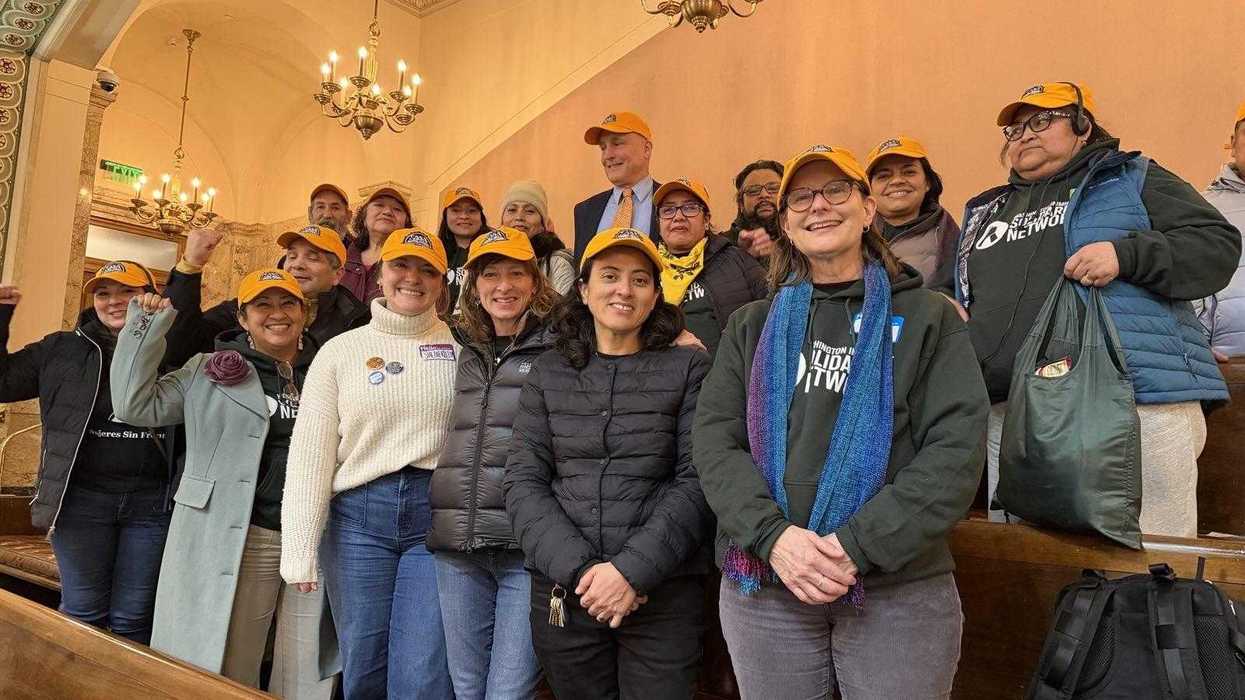
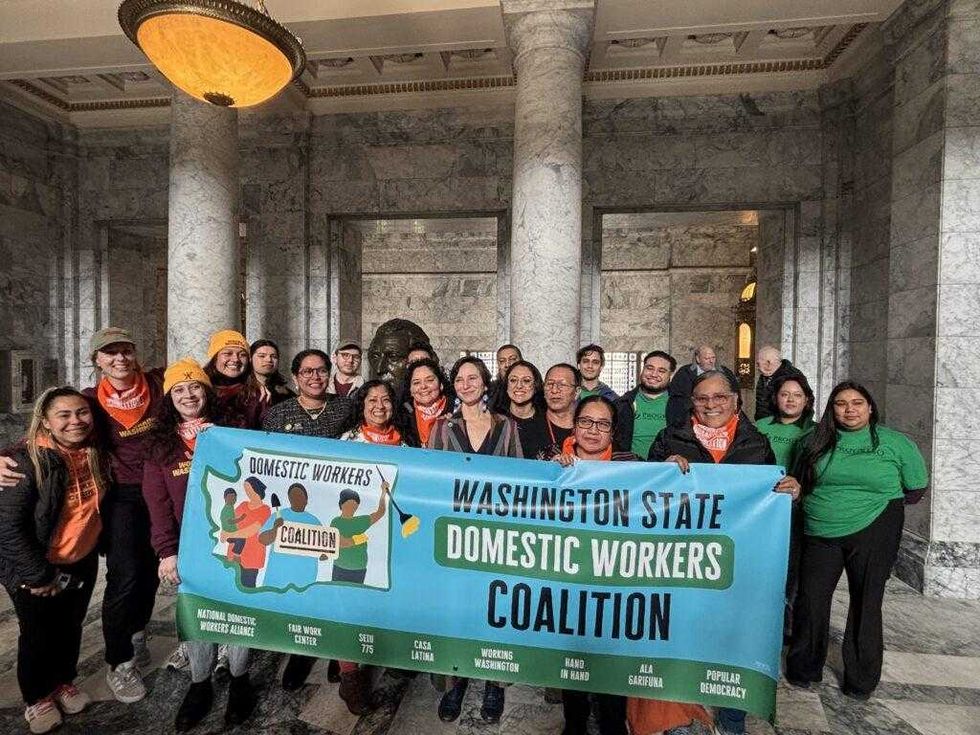 State Sen. Rebecca Saldaña, center, stands with members of the Washington State Domestic Workers Coalition at the state Capitol on Feb. 28, 2026. The Domestic Workers Bill of Rights passed in the House that day, before being signed into law in March. (Photo courtesy of Casa Latina)