
Skip to content
Search

Latest Stories

Follow Us:
Top Stories

How the Unprecedented Redistricting War Is Harming Election Officials, Politicians, and Voters

In recent weeks, redistricting has wreaked havoc in Texas, Indiana, and North Carolina.

News

How the Unprecedented Redistricting War Is Harming Election Officials, Politicians, and Voters

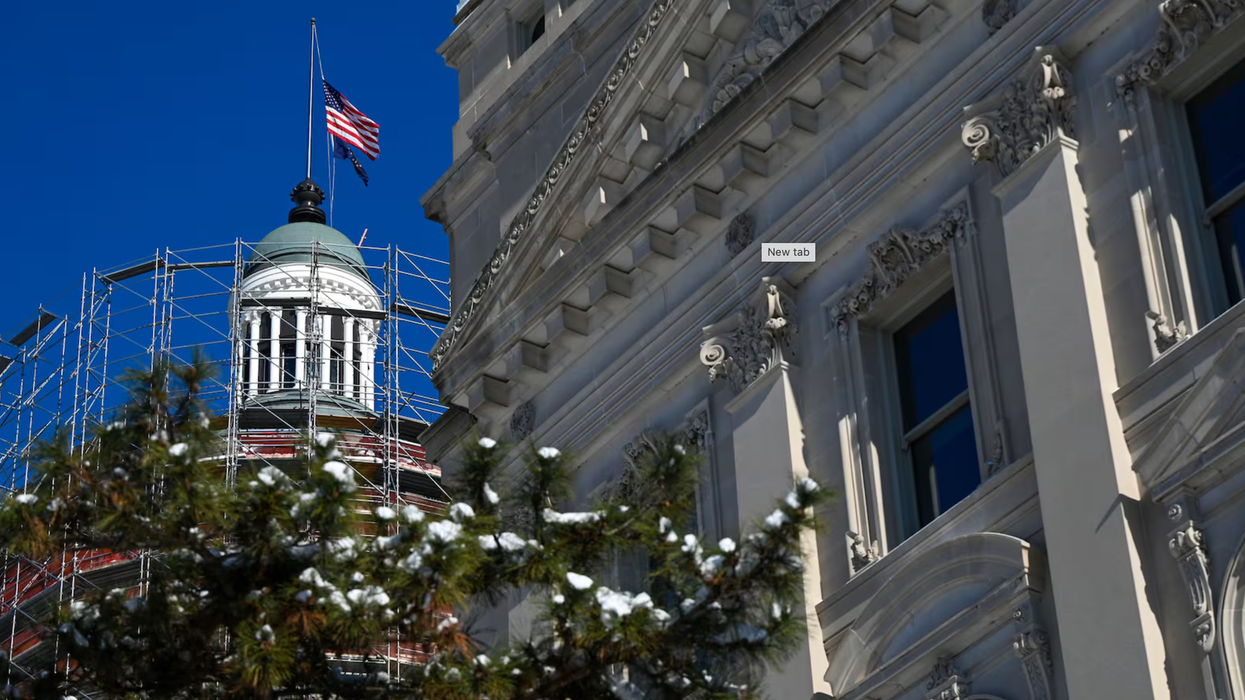
The Indiana State House is the site of the latest political fight over new congressional maps for the 2026 election.

Lee Klafczynski for Chalkbeat

The redrawing of states’ congressional districts typically happens only once per decade, following the release of new U.S. Census data. But we’re now up to six states that have enacted new congressional maps for the 2026 midterms; that’s more than in any election cycle not immediately following a census since 1983-84. Even more are expected to join the fray before voters head to the polls next year. Ultimately, more than a third of districts nationwide could be redrawn, threatening to confuse and disenfranchise voters.

The truly unusual thing, though, is that four of those states passed new maps totally voluntarily. Texas, Missouri, and North Carolina all redrew their districts after President Donald Trump urged them to create more safe seats for Republicans to help the GOP maintain control of the House of Representatives next year, and California did so in order to push back against Trump and create more safe seats for Democrats. (The other two states redrew for more anodyne reasons: Utah’s old map was thrown out in court, and Ohio’s was always set to expire after the 2024 election.) To put that in perspective, only two states voluntarily redistricted in total in the 52 years from 1973 to 2024, according to the Pew Research Center.


So the current “redistricting wars” are truly unprecedented in modern politics — and that’s had some chaotic consequences. In Texas, for instance, voter advocacy groups sued over the new map, arguing that it discriminated against Black and Latino voters. They scored a temporary win on Nov. 18 when a panel of federal judges struck down the new map and reinstated the old one. That ruling, though, came less than three weeks before Texas’ Dec. 8 filing deadline, sending candidates and election officials scrambling to readjust their plans.

But that wasn’t even the end of the story: The state appealed the ruling to the Supreme Court, which for two weeks left Texans hanging about which map would be in force. Finally, on Thursday — four days before the filing deadline — a majority of the justices stayed the lower-court ruling, putting the 2025 map back in place for the midterms.

Meanwhile, in Indiana, lawmakers are considering whether to pass their own new map under the less than ideal conditions of threats to their physical safety. A proposal to eliminate the state’s two Democratic-held seats passed the state House on Friday, but there’s genuine suspense over whether the plan can pass the state Senate, where at least 14 Republicans are against mid-decade redistricting. (Sixteen Republicans would need to join with the chamber’s 10 Democrats to block it.)

The pressure on these GOP holdouts has been intense, with Trump calling out several of them by name on social media and threatening to support their primary challengers. But in the last few weeks, things have gotten much darker: 11 state senators — most of them redistricting opponents or fence-sitters — have been the targets of swatting attempts, bomb threats, or other threats. Although it’s not confirmed that the threats were motivated by redistricting, many of the lawmakers receiving them have decried them as intimidation tactics meant to make them toe the line.

Finally, of course, the push to draw more congressional districts scrupulously engineered to vote a certain way threatens to make Congress less representative of the electorate.

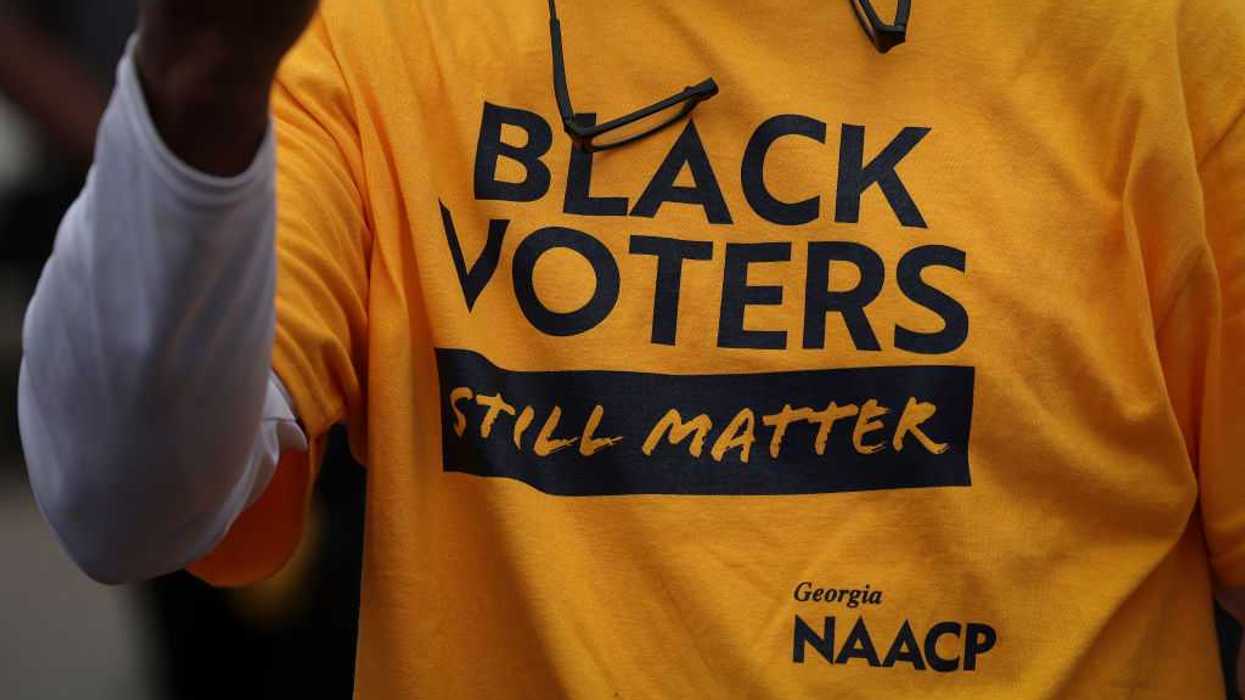
Last week, on the day before Thanksgiving, a panel of federal judges declined to issue a preliminary injunction against North Carolina’s new congressional map, clearing the way for its use in the 2026 election. Although the judges did not find sufficient evidence that the Legislature had drawn the map with the intent to racially discriminate, they did come away convinced that the map would have a “disparate impact on black voters.”

That’s because the map’s goal is to flip the 1st District from the Democratic to the Republican column, and since race and partisanship are so closely correlated in the South, that meant watering down its Black population. Since 1992, the northeastern North Carolina-based 1st District has been configured to enable Black voters to elect the candidate of their choice, but the new map decreases the district’s Black share of the voting-age population from 40 percent to 32 percent. As a result, there are no longer enough Black voters in the district to reliably pull their candidates over the finish line. A political scientist attested in the case that Black voters’ preferred candidate would have carried the new 1st District only seven times in 63 recent statewide elections.

None of this, though, may run afoul of the law. Federal courts have set a very high bar for proving racial gerrymandering claims — and in 2019, they decided to stop trying to umpire partisan gerrymandering altogether. That, as much as anything else, has opened the door to the rash of mid-decade redistricting we’re currently experiencing. Virtually all of the states that have taken the plunge so far have drawn maps with extreme partisan biases that make congressional elections less responsive to the will of voters. For an unprecedented arms race that has caused no shortage of angst, that could be the most indelible impact.


How the Unprecedented Redistricting War Is Harming Election Officials, Politicians, and Voters was originally published by Votebeat and is republished with permission.

Read More

Crowd waving flags
Crowd waving flags
(Mark Wilson/Getty Images)

For the People, By the People

Democracy was once America’s proudest legacy — the last best hope on earth, a torch that lit the path for nations worldwide. Today, dysfunction grips all three branches of government: Congress abandons its duty to the people, the President exploits power for retribution, and the Supreme Court fails to enforce accountability. This betrayal of trust places our republic at risk. Americans must reclaim democracy from dysfunction and abuse of power.

The United States is both a participatory democracy — by the people, for the people — and a constitutional republic. Power lies with the people, and elected officials are entrusted to serve them. The President enforces the laws, Congress checks executive power, and the Supreme Court interprets the Constitution. These checks and balances are designed to prevent abuse of power, yet Congress and the Court have abandoned their duty (U.S. Constitution).

Keep ReadingShow less
Framing "Freedom"

hands holding a sign that reads "FREEDOM"

Photo Credit: gpointstudio

Framing "Freedom"

The idea of “freedom” is important to Americans. It’s a value that resonates with a lot of people, and consistently ranks among the most important. It’s a uniquely powerful motivator, with broad appeal across the political spectrum. No wonder, then, that we as communicators often appeal to the value of freedom when making a case for change.

But too often, I see people understand values as magic words that can be dropped into our communications and work exactly the way we want them to. Don’t get me wrong: “freedom” is a powerful word. But simply mentioning freedom doesn’t automatically lead everyone to support the policies we want or behave the way we’d like.

Keep ReadingShow less
Hands resting on another.

Amid headlines about Epstein, survivors’ voices remain overlooked. This piece explores how restorative justice offers CSA survivors healing and choice.

Getty Images, PeopleImages

What Do Epstein’s Victims Need?

Jeffrey Epstein is all over the news, along with anyone who may have known about, enabled, or participated in his systematic child sexual abuse. Yet there is significantly less information and coverage on the perspectives, stories and named needs of these survivors themselves. This is almost always the case for any type of coverage on incidences of sexual violence – we first ask “how should we punish the offender?”, before ever asking “what does the survivor want?” For way too long, survivors of sexual violence, particularly of childhood sexual abuse (CSA), have been cast to the wayside, treated like witnesses to crimes committed against the state, rather than the victims of individuals that have caused them enormous harm. This de-emphasis on direct survivors of CSA is often presented as a form of “protection” or “respect for their privacy” and while keeping survivors safe is of the utmost importance, so is the centering and meeting of their needs, even when doing so means going against the grain of what the general public or criminal legal system think are conventional or acceptable responses to violence. Restorative justice (RJ) is one of those “unconventional” responses to CSA and yet there is a growing number of survivors who are naming it as a form of meeting their needs for justice and accountability. But what is restorative justice and why would a CSA survivor ever want it?

“You’re the most powerful person I’ve ever known and you did not deserve what I did to you.” These words were spoken toward the end of a “victim offender dialogue”, a restorative justice process in which an adult survivor of childhood sexual abuse had elected to meet face-to-face for a facilitated conversation with the person that had harmed her. This phrase was said by the man who had violently sexually abused her in her youth, as he sat directly across from her, now an adult woman. As these two people looked at each other at that moment, the shift in power became tangible, as did a dissolvement of shame in both parties. Despite having gone through a formal court process, this survivor needed more…more space to ask questions, to name the impacts this violence had and continues to have in her life, to speak her truth directly to the person that had harmed her more than anyone else, and to reclaim her power. We often talk about the effects of restorative justice in the abstract, generally ineffable and far too personal to be classifiable; but in that instant, it was a felt sense, it was a moment of undeniable healing for all those involved and a form of justice and accountability that this survivor had sought for a long time, yet had not received until that instance.

Keep ReadingShow less
Labeling Dissent As Terrorism: New US Domestic Terrorism Priorities Raise Constitutional Alarms

A new Trump administration policy threatens to undermine foundational American commitments to free speech and association.

Labeling Dissent As Terrorism: New US Domestic Terrorism Priorities Raise Constitutional Alarms

A largely overlooked directive issued by the Trump administration marks a major shift in U.S. counterterrorism policy, one that threatens bedrock free speech rights enshrined in the Bill of Rights.

National Security Presidential Memorandum/NSPM-7, issued on Sept. 25, 2025, is a presidential directive that for the first time appears to authorize preemptive law enforcement measures against Americans based not on whether they are planning to commit violence but for their political or ideological beliefs.

Keep ReadingShow less