


Skip to content
Search

Latest Stories

Follow Us:
Top Stories

Kitchen Table Truths: Why America Needs a Pay Raise

Opinion

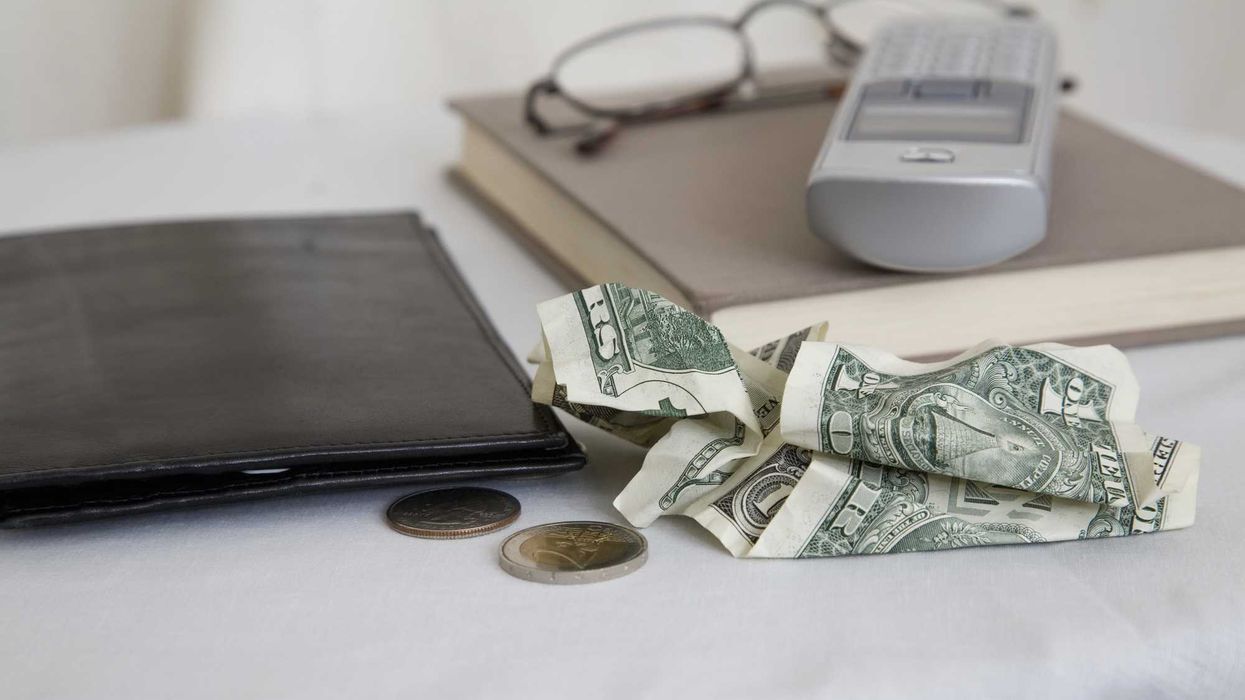
Crumpled dollar bills, two coins, a wallet, book, glasses, and home phone on a table.

Inflation and stagnant wages are squeezing working families. A modest cut to the lowest income tax bracket could offer real relief.

Getty Images, David Harrigan

Affordability as a political issue would in no way surprise my family. During Sunday dinners with my two-jobs, blue-collar mother and my retired grandparents, a former truck driver and former cafeteria worker, prices were always a topic of conversation. Even when inflation was low. Why? All three were running on a treadmill to keep up. My mother had less leverage to get the wage increases that she needed than others had in our economy, and Social Security payments go up only after a year of declining purchasing power and increased Medicare premiums.

Call it “sticky wages” and “fixed income.” I would also call it kitchen table truths. Inflation above 2% is unacceptable. The difference between 3% inflation and 2% inflation is the difference between prices doubling in only 24 years versus 36 years. Add that inflation from the Biden era, which peaked at 9.1%, is baked into the current price level.


Inflation is feeding the already existing problems of cynicism and distrust in institutions. As the famous economist John Maynard Keynes wrote, “There is no subtler, no surer means of overturning the existing basis of society than to debauch the currency. The process engages all the hidden forces of economic law on the side of destruction.”

Sticker shock afflicts the American voter every time they go to the store. They can shift spending habits, substituting a cheaper product for a more expensive product, and thereby making inflation seem less. Say, yogurt for eggs. Producers can shrink the amount of a good contained in a package or otherwise reduce value. Say, reducing cereal in a box by a few ounces. Yet it will not feel like inflation is going down.

There is talk among the political class about bringing down prices, not just the rate of inflation. Of course, such deflation would be no solution. Profits would be destroyed and jobs along with those profits. What is needed is stable money, but then what of those who have struggled to keep up with recent inflation? Voters feeling neglected by the political class are more susceptible to political polarization and radicalization. High-stakes economic anxiety may undermine the sort of civic participation we need.

Americans require a pay raise. This most of all means policies boosting real economic growth. Yet we could also add to real income and wage growth: Reducing the lowest income tax bracket.

Currently, the lowest tax bracket is 10%, a rate established under the George W. Bush administration to reward work by those barely making enough to pay income taxes. He frequently cited the example of a single mother working as a waitress, reminding me of those Sunday dinners. With inflation in 2025 running at nearly 3%, we could reduce the 10% bracket by this amount, creating a 7% income tax bracket. This would mean a pay raise of up to $348 for every single taxpayer and $696 for every couple.

A back of the envelope calculation based on the number of returns paying federal income tax says the cost would be less than $80 billion per year. The number of years for the lower rate rate could be limited if necessary. If we add in a one-time $348 check sent to every Social Security recipient, the cost would be an additional $24 billion.

Whenever the 7% tax rate is scheduled to revert to 10%, we will find ourselves debating our fiscal future again, as we did with the One Big Beautiful Bill Act and it locking in other income tax rates. We should be looking for pay-fors when this time comes, such as limiting itemized deductions. This is necessary as the national debt continues to stand at an unprecedented level. Yet I cannot shake those Sunday dinners. They will always impact me and, for that, I am grateful.


Scott Miller is a graduate of Widener School of Law, a former chief of staff in Congress, and the author of 'Christianity & Your Neighbor's Liberty.

Read More

The Domestic Sting: Why the Tariff Bill is Arriving at the American Door
photo of dollar coins and banknotes
Photo by Mathieu Turle on Unsplash

The Domestic Sting: Why the Tariff Bill is Arriving at the American Door

America's tariff experiment, now nearly a year old, is proving more painful than its architects anticipated. What began as a bold stroke to shield domestic industries and force concessions from trading partners has instead delivered a slow-burning rise in prices, complicating the Federal Reserve's battle against inflation. As the policy grinds on, economists warn that the real damage lies ahead, with consumers and businesses absorbing costs that erode purchasing power and economic momentum. This is not the quick victory promised but a protracted burden that risks entrenching higher prices just as the economy seeks stability.

The tariffs, rolled out in phases since early March 2025, have jacked up the average import duty from 2 percent to around 17 percent. Imported goods prices have climbed 4 percent since then, outpacing the 2 percent rise in domestic equivalents. Items like coffee, which the United States cannot produce at scale, have seen the sharpest hikes, alongside products from heavily penalized countries such as China. Retailers and importers, far from passing all costs abroad as hoped, have shouldered much of the load initially, limiting immediate sticker shock. Yet daily pricing data from major chains reveal a creeping pass-through: imported goods up 5 percent overall, domestic up 2.5 percent. Cautious sellers absorb some hit to avoid losing market share, but this restraint is fading as tariffs are embedded in supply chains.

Keep Reading Show less
America’s Tariff Mirage and the Coming Debt Reckoning

Record tariff revenues mask a deepening U.S. fiscal crisis as deficits, debt, and interest costs soar, raising alarms about economic stability and governance.

Getty Images, Andriy Onufriyenko

America’s Tariff Mirage and the Coming Debt Reckoning

The latest fiscal disclosures from the US Treasury offer a stark reality check for a country that continues to see itself as the global lodestar of economic stability. Tariffs, once an auxiliary tool of industrial policy or bargaining chip in trade negotiations, have quietly morphed into the financial backbone of the Trump administration’s economic experiment. October’s revenue haul - an unprecedented thirty-four point two billion dollars, up more than threefold from a year earlier - has been heralded by the White House as vindication. It is, according to President Trump, not merely proof that tariffs are “working,” but a testament to a new era of American prosperity robust enough to fund direct cash transfers to households. A two-thousand-dollar bonus, he insists, is just the beginning.

The president has taken to social media to cast opponents of this approach as out-of-touch elites, blind to a transformed landscape in which the United States is, in his words, “the richest and most respected country in the world.” Record stock prices, swollen retirement accounts, and subdued inflation are deployed to sustain an alluring political narrative: that tariffs are no longer punitive, but emancipatory - a fiscal engine capable of generating national renewal.

Keep Reading Show less
American flag and money
Javier Ghersi/Getty Images

Why Is the American Economy Designed to Punish the People Who Build It?

Walk onto any construction site in America.

Step into any busy emergency room.

Keep Reading Show less
Cryptocurrency: Debunking Myths, Understanding Realities, and Exploring Economic and Social Impacts
a pile of gold and silver bitcoins
Photo by Traxer on Unsplash

Cryptocurrency: Debunking Myths, Understanding Realities, and Exploring Economic and Social Impacts

“In 2020 and 2021, there was a big crypto bubble. You couldn’t turn a corner without seeing another celebrity crypto endorsement," said Mark Hays, the Associate Director for Cryptocurrency and Financial Technology with AFR/AFREF and with Demand Progress during the NFRPP’s October 25th, 2025, panel discussion. Hilary J. Allen, a Professor of Law at the American University Washington College of Law, joined Hays. The discussion was moderated by Peter Coy, a freelance journalist covering economics, business, and finance.

Celebrities like Kevin Hart, Gwyneth Paltrow, Madonna, Justin Bieber, Serena Williams, Paris Hilton, and Snoop Dogg jumped to endorse crypto-related companies. The record of these endorsements has been poor (Bloomberg), and some are calling for people who endorse these products without doing due diligence to face legal repercussions (Boston College Law Review). The message from the NFRPP’s panel discussion was one of intense skepticism towards cryptocurrencies in general, with Professor Allen going so far as to call them a “failure as a technology.”

Keep Reading Show less