


“We cannot live our lives or govern our countries based on social media posts.”
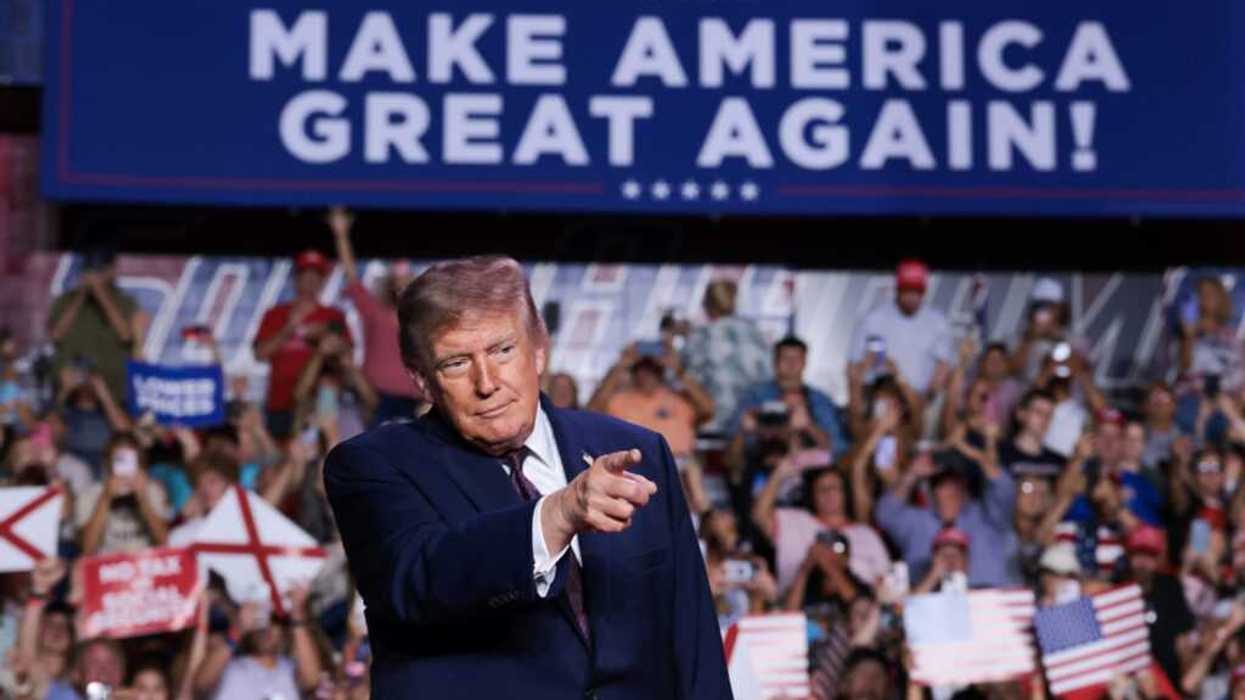
That’s what a European Union official, who was directly involved in negotiations between the U.S. and Europe over Greenland, said following President Trump’s announcement via Truth Social that we’ve “formed the framework of a future deal with respect to Greenland and, in fact, the entire Arctic Region.”
It’s been a bizarre start to the new year, with Trump ramping up his threats against the Danish territory — threats which included actual invasion — and any other NATO allies who sided with Greenland.
Trump’s post also announced invasion is off the table and he won’t be going ahead with the 10% tariffs he’d promised to levy on Denmark’s supporters on Feb. 1, more welcome news.
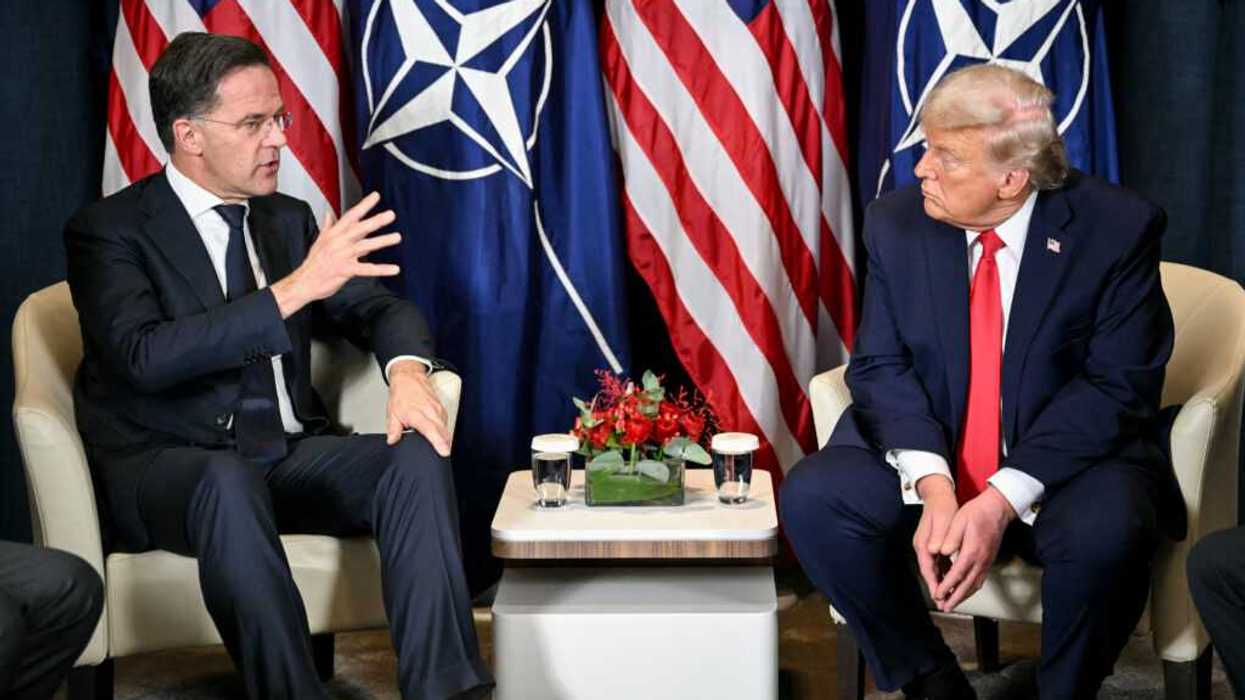
But still, European officials remain skeptical. “After the back and forth of the last few days,” Germany’s Vice Chancellor Lars Klingbeil said, “we should now wait and see what substantive agreements are reached between [NATO Secretary General Mark] Rutte and Mr. Trump. No matter what solution is now found for Greenland, everyone must understand that we cannot sit back, relax, and be satisfied.”
That lack of trust in America, and in particular the American president, is understandable, but deeply lamentable. When it comes to diplomacy, trust is a crucial currency, and to put it simply, we don’t have it.
Trump’s bombastic, reckless, and often dismissive rhetoric toward our allies would make anyone question our commitment, not to mention our moral compass. Whatever happens with Greenland in the coming hours, days, or weeks, Trump has — yet again — deeply damaged our relationships abroad and our standing in the world.
But here at home, the reaction among Republican lawmakers to Trump’s possibly premature Greenland news has been incredibly telling.
They are also relieved — relieved that this dumb ordeal may finally be coming to an end.
The last few weeks have put lawmakers in the unenviable position of having to answer whether they’d support a president who wanted to invade a sovereign territory that rightfully belonged to an ally.
They’ve also had to defend Trump’s utterly insane behavior, social media posts, and press conferences in which he seems truly deranged at times.
Consider what he texted the Norwegian Prime Minister Jonas Gahr Støre, in part, earlier in the week:
“Dear Jonas: Considering your Country decided not to give me the Nobel Peace Prize for having stopped 8 Wars PLUS, I no longer feel an obligation to think purely of Peace, although it will always be predominant, but can now think about what is good and proper for the United States of America….
I have done more for NATO than any other person since its founding, and now NATO should do something for the United States. The World is not secure unless we have Complete and Total Control of Greenland. Thank you!”
Now, I won’t go through all of Trump’s demonstrably false statements here, nor will I point out how puerile and small our president looks. But needless to say, if you’re a Republican lawmaker, this embarrassing display of ignorance and fragility wasn’t a thing you wanted to defend.
Republicans also know how unpopular — like, really unpopular — Trump’s Greenland folly has been. A new Reuters/IPSOS poll found that his push to acquire the territory is sitting at 40 points underwater with the American electorate. To put an even finer point on it, that’s two points worse than Trump’s approval on the Epstein files.
The quicker Trump gets off Greenland, the quicker Republicans can get back to selling their domestic agenda in a crucial election year. And they were all too happy to get in front of reporters to express their relief that he wasn’t, in fact, going to take Greenland by force.
“I don’t think that was ever his intent, and so I’m glad he clarified,” said Speaker Mike Johnson.
“Most of us think it was crazy, with a few exceptions,” said Rep. Don Bacon. “Most of us thought, behind shut doors, he should be bragging on the economy that’s growing at 4.3%, wages climbing faster than inflation for the first time in four or five years. But now we’re talking Greenland.”
Hopefully not for much longer. Whatever Trump walks away with, which could be a “deal” that has already existed — will pale in comparison to the damage he’s done to our global reputation. Mineral rights? More bases? We could have negotiated all of that like a normal nation — and ally — would. Instead, Trump chose chaos and lunacy. The relief overseas and here at home that this nonsense might finally be over tells you just how dumb it was in the first place.
S.E. Cupp is the host of "S.E. Cupp Unfiltered" on CNN.

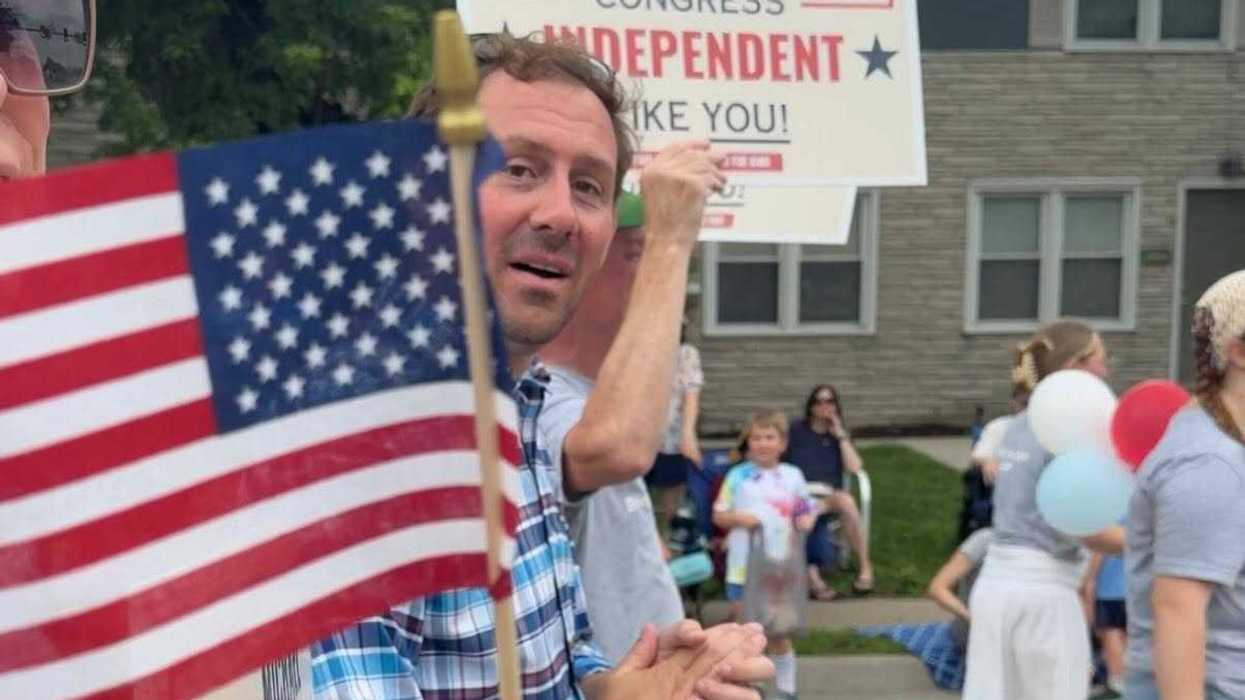











Eric Trump, the newly appointed ALT5 board director of World Liberty Financial, walks outside of the NASDAQ in Times Square as they mark the $1.5- billion partnership between World Liberty Financial and ALT5 Sigma with the ringing of the NASDAQ opening bell, on Aug. 13, 2025, in New York City.
Why does the Trump family always get a pass?
Deputy Attorney General Todd Blanche joined ABC’s “This Week” on Sunday to defend or explain a lot of controversies for the Trump administration: the Epstein files release, the events in Minneapolis, etc. He was also asked about possible conflicts of interest between President Trump’s family business and his job. Specifically, Blanche was asked about a very sketchy deal Trump’s son Eric signed with the UAE’s national security adviser, Sheikh Tahnoon.
Shortly before Trump was inaugurated in early 2025, Tahnoon invested $500 million in the Trump-owned World Liberty, a then newly launched cryptocurrency outfit. A few months later, UAE was granted permission to purchase sensitive American AI chips. According to the Wall Street Journal, which broke the story, “the deal marks something unprecedented in American politics: a foreign government official taking a major ownership stake in an incoming U.S. president’s company.”
“How do you respond to those who say this is a serious conflict of interest?” ABC host George Stephanopoulos asked.
“I love it when these papers talk about something being unprecedented or never happening before,” Blanche replied, “as if the Biden family and the Biden administration didn’t do exactly the same thing, and they were just in office.”
Blanche went on to boast about how the president is utterly transparent regarding his questionable business practices: “I don’t have a comment on it beyond Trump has been completely transparent when his family travels for business reasons. They don’t do so in secret. We don’t learn about it when we find a laptop a few years later. We learn about it when it’s happening.”
Sadly, Stephanopoulos didn’t offer the obvious response, which may have gone something like this: “OK, but the president and countless leading Republicans insisted that President Biden was the head of what they dubbed ‘the Biden Crime family’ and insisted his business dealings were corrupt, and indeed that his corruption merited impeachment. So how is being ‘transparent’ about similar corruption a defense?”
Now, I should be clear that I do think the Biden family’s business dealings were corrupt, whether or not laws were broken. Others disagree. I also think Trump’s business dealings appear to be worse in many ways than even what Biden was alleged to have done. But none of that is relevant. The standard set by Trump and Republicans is the relevant political standard, and by the deputy attorney general’s own account, the Trump administration is doing “exactly the same thing,” just more openly.
Since when is being more transparent about wrongdoing a defense? Try telling a cop or judge, “Yes, I robbed that bank. I’ve been completely transparent about that. So, what’s the big deal?”
This is just a small example of the broader dysfunction in the way we talk about politics.
Americans have a special hatred for hypocrisy. I think it goes back to the founding era. As Alexis de Tocqueville observed in “Democracy In America,” the old world had a different way of dealing with the moral shortcomings of leaders. Rank had its privileges. Nobles, never mind kings, were entitled to behave in ways that were forbidden to the little people.
In America, titles of nobility were banned in the Constitution and in our democratic culture. In a society built on notions of equality (the obvious exceptions of Black people, women, Native Americans notwithstanding) no one has access to special carve-outs or exemptions as to what is right and wrong. Claiming them, particularly in secret, feels like a betrayal against the whole idea of equality.
The problem in the modern era is that elites — of all ideological stripes — have violated that bargain. The result isn’t that we’ve abandoned any notion of right and wrong. Instead, by elevating hypocrisy to the greatest of sins, we end up weaponizing the principles, using them as a cudgel against the other side but not against our own.
Pick an issue: violent rhetoric by politicians, sexual misconduct, corruption and so on. With every revelation, almost immediately the debate becomes a riot of whataboutism. Team A says that Team B has no right to criticize because they did the same thing. Team B points out that Team A has switched positions. Everyone has a point. And everyone is missing the point.
Sure, hypocrisy is a moral failing, and partisan inconsistency is an intellectual one. But neither changes the objective facts. This is something you’re supposed to learn as a child: It doesn’t matter what everyone else is doing or saying, wrong is wrong. It’s also something lawyers like Mr. Blanche are supposed to know. Telling a judge that the hypocrisy of the prosecutor — or your client’s transparency — means your client did nothing wrong would earn you nothing but a laugh.
Jonah Goldberg is editor-in-chief of The Dispatch and the host of The Remnant podcast. His Twitter handle is @JonahDispatch.