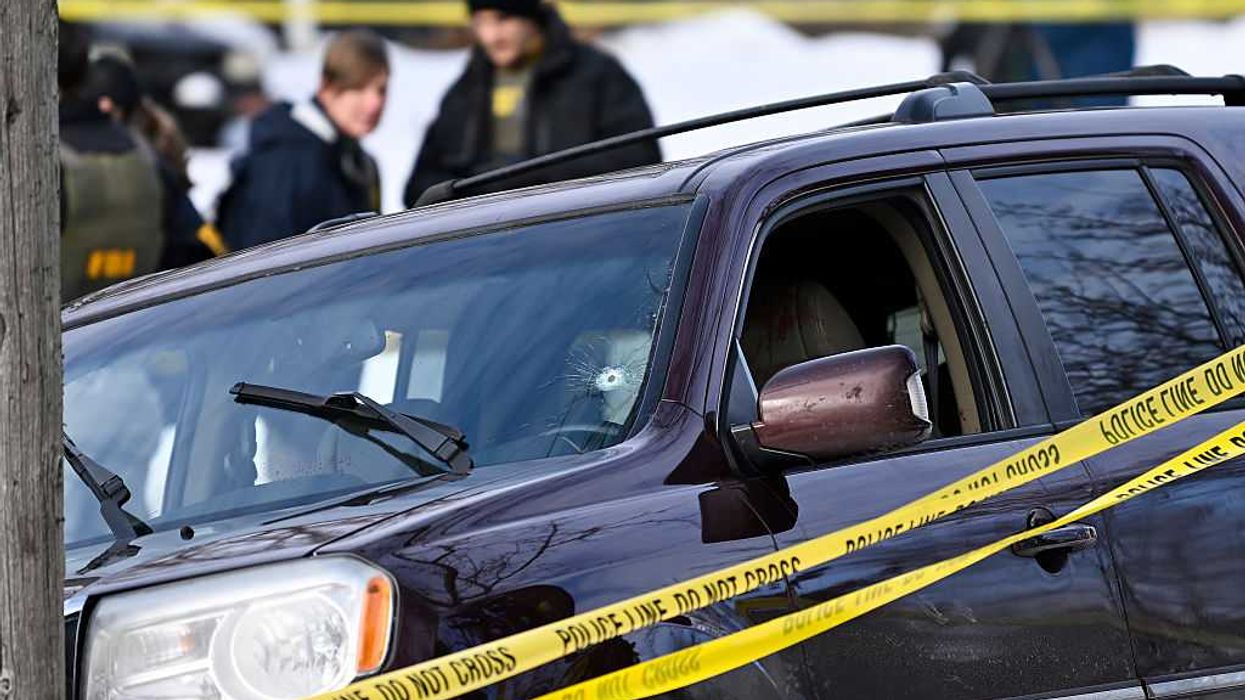
Once again, the nation watched in horror as a 37-year-old woman was shot and killed by an ICE agent in Minneapolis. The incident was caught on video. Neighbors saw it happen, their disbelief clear. The story has been widely reported, but hearing it again does not make it any less violent. Video suggest, there was a confrontation. The woman tried to drive away. An agent stepped in front of her car. Multiple shots went through the windshield. Witnesses told reporters that a physician at the scene attempted to provide aid but was prevented from approaching the vehicle, a claim that federal authorities have not publicly addressed. That fact, if accurate, should trouble us most.
What happened on that street was more than just a tragic mistake. It was a moral challenge to our society, asking for more than just shock or sadness. This moment makes us ask: what kind of nation have we created, and what violence have we come to see as normal? We need to admit our shared responsibility, knowing that our daily choices and silence help create a culture where this violence is accepted. Including ourselves in this 'we' makes us care more deeply and pushes us to act, not just reflect.
More than 60 years ago, Vernon Johns, the Black Baptist preacher whose 1957 sermon “It Is Safe to Murder Negroes in Montgomery” stunned his contemporaries, named this condition plainly. His sermon, "It Is Safe to Murder Negroes in Montgomery," did not court provocation. He named the routine devaluation of Black life, the normalization of racial violence cloaked in law, and the moral rot of a society that witnesses brutality, regrets, and returns to business as usual. “When you stand by and watch your brothers and sisters being lynched,” he warned, “it is as if you stood by while Christ was crucified.”
Civil rights scholars and historians have long argued that state violence rarely turns on individual error alone, but on systems that normalize force against certain populations. It comes from systems that treat some lives as less valuable. Whether it is a sheriff, police officer, or federal agent, calling this violence 'safe' points to both personal responsibility and the larger system that allows, excuses, and overlooks these acts. Legal doctrines such as qualified immunity, which courts have repeatedly upheld, often make it difficult to hold law enforcement officers accountable even when the use of force is contested. Federal use-of-force rules can also make actions seem legitimate when they need more scrutiny. Seeing this structure is key to understanding why this violence keeps happening.
The killing occurred during a period of intensified federal immigration enforcement, according to statements from the Department of Homeland Security. It is part of a long history in America, from the Jim Crow South to Ferguson and now Minneapolis. I remember sitting in a church basement years ago, hearing phrases like 'public safety' and 'law and order' used as justifications, just in different forms. The words change, but they still numb us, passing from one generation to the next. The pattern stays the same: Authority acts, a life is lost, a community grieves, and the nation moves on.
I am not a distant observer. I serve as visiting professor at Luther Seminary in Minneapolis. Also, I do not write as a distant observer. As a pastor, I stood with a community through curfews, funerals, protests, and the long exhaustion of being told that what people saw with their own eyes was not real. I witnessed mothers bury their children and people surrender hope not only in institutions but in the country’s honesty. Those days taught me that a 'moment' can reveal the truth. The crisis did not start or end in Ferguson; it was brought into the open. That exposure is happening again.
For years, I have called for an ethic of humaneness, a moral standard that requires public life to respect every person’s full humanity. This ethic is not easy. It says that democracy is measured not only by elections or courts, but by how power is used against the most vulnerable. It asks what kind of society we build when the state’s main answer to fear, disobedience, or running away is deadly force.
This is not just a mere political issue. It is also a spiritual one. Many faith traditions teach the importance of justice and compassion in leadership. For example, the Bible says to 'let justice roll down like waters,' urging us to take real action, not just talk. The Jewish idea of 'tikkun olam,' or repairing the world, calls us to fix social injustices through real civic involvement. These spiritual lessons can help us build a society where civic duty and moral responsibility go hand in hand.
I agree with Eddie Claude: America’s real crisis is dishonesty, not division. One myth that keeps this dishonesty alive is the idea of 'color-blind enforcement,' which claims the law is fair to everyone, while ignoring the real biases and injustices that still shape how laws are enforced. Our problem is not that we disagree, but that we refuse to face our history and how it affects us now. In the Black prophetic tradition, redemption is not easy. Healing requires honesty. A nation must face the truth about its violence to be healed.
Seen this way, the killing in Minneapolis is not just a bad policy or a mistake. It reveals the weakness of our moral values and how easily we let legality take the place of justice. Officials have described the killing as a “tragedy,” language that suggests inevitability rather than accountability. Instead, we should use words like "breach" or "violation," which highlight responsibility and the choices and systems that led to this. Right appropriation of our language helps us see the problem more clearly and push us toward real change.
There will be investigations, official statements, and maybe calls for healing. But these things alone are not enough. Vernon Johns said that moments like this call for repentance, a real change from old ways to justice. Repentance means seeing silence as agreement and refusing to believe anyone is just a bystander. We will speak out against injustice wherever we see it. We will hold ourselves responsible by acting—through peaceful protest, voting, or supporting laws that demand change. We will question the stories that let injustice continue. Our voices will be heard, and our actions will show our commitment to justice.
John knew that details matter. He named the city, the year, and the pattern. When we speak in general terms, it lets people avoid responsibility. As historians of racial violence have noted, episodes like this echo a long American pattern, from the Jim Crow South to Ferguson and now Minneapolis.
So what is required of us now?
Will we, as a society, choose to break down the systems that allow this violence, or will we keep ignoring the calls for justice? First, we must stop keeping our distance. This killing is not just about policy or one agent; it is about America’s promise. State violence happens in our name. Being a citizen in a democracy means taking part, not just watching.
Second, we must commit to an ethic of humaneness that can truly change public life. This means demanding real accountability, creating systems that care for people instead of controlling them, and rejecting political stories that make us see our neighbors as threats instead of people with dignity.
Finally, we must have the courage to speak and act with honesty. Prophetic language is often seen as anger, but it is really an act of love. It keeps society from lying to itself and losing its moral way. Vernon Johns spoke out not because he hated America, but because he believed it could be better. That belief still inspires people who want a more just democracy.
The blood shed in Minneapolis calls out, as it has in the past. It does not call for shock, but for real change. The question is not whether we are sad, but whether we will change the conditions that allowed this to happen. Allowance for 'safe' murder must end. We need disciplined, unconditional love, not just pious words. Our democracy and our souls depend on it.