



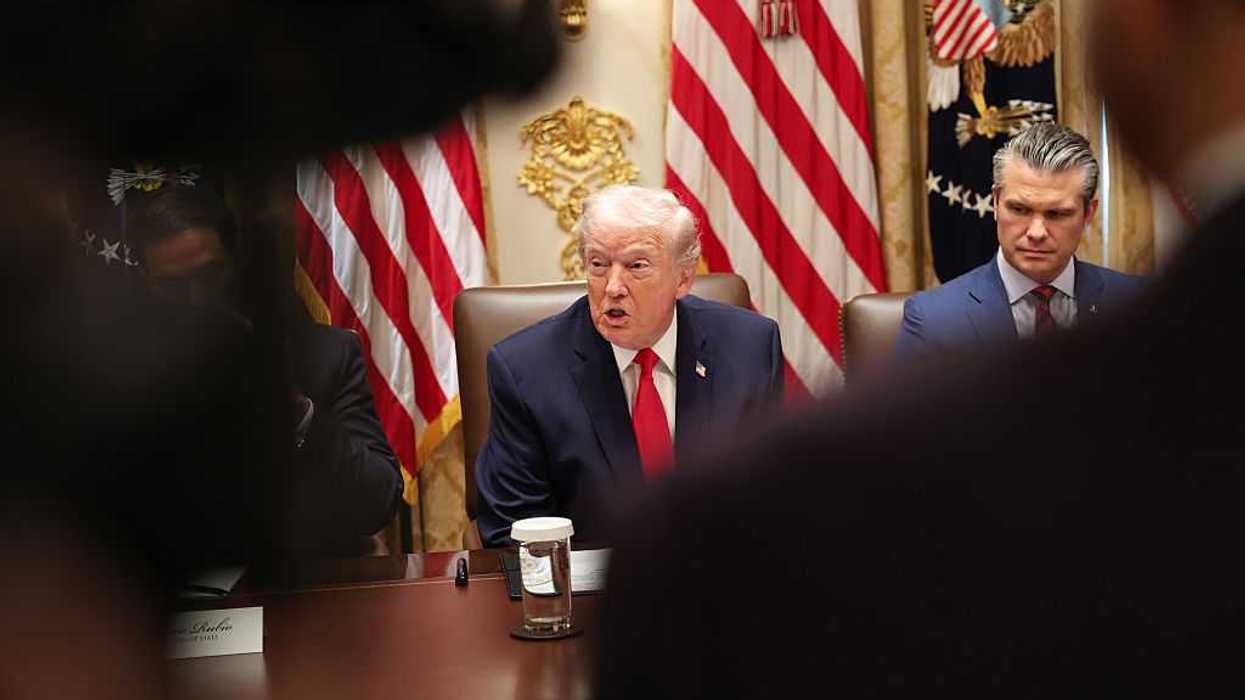
Besides the ill-defined Iranian war, DOJ-FBI created the Epstein file debacle, tariff fiasco, Venezuela, Ecuador, Greenland, and Cuba interventions, special elections turning in Democrats’ favor, and the ever-increasing cost for gasoline, health care, mortgages, rent, prescription drugs, food, clothing, natural gas, electricity, and Agri-fertilizer, President Trump has other problems.
YouGov polling reveals that nearly all of Trump’s second-term political appointees are net-unpopular. Let’s examine six of Trump’s most troubling appointees.
Kristi Noem
Fifty-two GOP and seven Democratic senators confirmed Kristi Noem’s appointment to serve as Department of Homeland Security (DHS) secretary. After Noem gutted FEMA, received hundreds of court orders for unconstitutional immigration actions, spent $220 million for self-promoting DHS ads, and her ICE agents killed two citizens in Minnesota and one resident in Texas, Mr. Trump had seen enough and on March 5 told Noem, “You’re fired.”
Pete Hegseth
Mr. Hegseth’s tenure as Secretary of Defense commenced unfavorably when a journalist and several unauthorized individuals were included in a Signal chat where details about immigrant strikes on Houthi targets were revealed. Hegseth’s mismanagement is under investigation by the Pentagon.
Gerard Baker, a journalist for the conservative-oriented Wall Street Journal, criticized Hegseth in a March 10 essay where Baker described Hegseth’s Iran wartime oratory language as “cringe-making … `death and destruction from the sky all day long’ is the sort that would be rejected by the cartoonists at Marvel Comics.”
On March 13, Hegseth said of the Iran war, “no quarter, no mercy for our enemies” (the refusal to take prisoners and execute everyone), which violates international law and the 1966 War Crimes Act; a serious red flag.
Currently, only 29% of citizens feel Hegseth should remain in office (Truthout).
Pam Bondi
As Trump’s attorney general, Ms. Bondi fired the Department of Justice’s top ethics adviser. Bondi then fired the head of the Office of Professional Responsibility, which investigates DOJ attorney misconduct. Bondi did not fill either position. Legal experts and former judges say the DOJ is now an “ethics-free workplace” (Liz Oyer, March 5).
Despite a December 2025 legal deadline requiring the release of all Epstein files, lawmakers maintain that around 50% of the files remain unreleased (ABC News). It’s not surprising that a March 2026 poll revealed only 22% of Americans believe she should remain in office (Truthout).
RFK Jr’s leadership of the Health and Human Services agency has created turmoil through a series of anti-medical science decisions from issues related to children’s vaccines, mental health grants, fluoridated water, anti-vaccine advisory board, and autism holocaust. A front page headline from March 14-15’s Wall Street Journal spoke volumes: White House puts RFK on tight leash.
Kash Patel
Kash Patel’s tenure as FBI director has been marked by multiple high-profile controversies, centering on the politicization of the bureau, personnel vendettas, public misstatements, the erosion of institutional norms, the use of FBI resources for personal conduct, strains with foreign intelligence partners, and the handling of the Charlie Kirk assassination investigation.
A Feb. 17 Rasmussen Report notes low morale exists among current and former FBI employees. 66% of Americans have unfavorable or very unfavorable opinions of Mr. Patel.
Stephen Miller
Mr. Miller, White House Deputy Chief of Staff for Policy, has been a central figure in the Trump administration’s far-right, populist, pro-tariff, and anti-immigration policies (Parmar & Furse; Nagel; Bose; and Apel). In 2021, Jean Guerrero, an American investigative journalist, characterized Miller as a white nationalist.
As of Jan. 27, 2026, YouGov polling found that only 17% of respondents have a positive impression of Miller.
Brendan Carr
When Mr. Carr, chair of the Federal Communications Commission, threatened to revoke broadcast licenses for ABC, CBS, NBC, NPR, and PBS for being critical of President Trump, freedom of the press and civil liberty groups came unglued.
Suspending Jimmy Kimmel’s show from ABC and cancelling Stephen Colbert’s `The Late Show’ were too much for Americans. Mess with Americans’ TV and here’s the result: only 19% of Americans have a positive opinion of Mr. Carr (Quinnipiac poll).
Reality and Resolve
In an essay I opined, titled `Best and Worse U.S. Presidential Cabinets Ranked: What the Research Reveals,’ published Sept. 3, 2025 in The Fulcrum, research revealed Mr. Trump’s first- and second-term cabinets were the worst in US history, citing his “cabinets have been widely criticized for their lack of qualifications … appointments based on loyalty over capability … and poorly vetted appointees ….”
With over $1 billion in taxpayer funds spent – every year- to keep the Senate operating, we should expect better-vetted, approved presidential appointees.
Let your two Senators know how disappointed you are in their role in permitting Hegseth, Bondi, RFK Jr., Patel, Miller, and Carr to remain on the taxpayer’s payroll while Trump’s appointees are irresponsibly serving their 348 million American constituents. Senators’ and citizens’ silence effectively endorses the status quo.
Americans’ sentiment is clear. Mr. Trump: Say it again six more times, “you’re fired!”
Steve Corbin is a professor emeritus of marketing at the University of Northern Iowa and a non-paid freelance guest columnist contributor to 158 newspapers and 47 social media platforms in 44 states

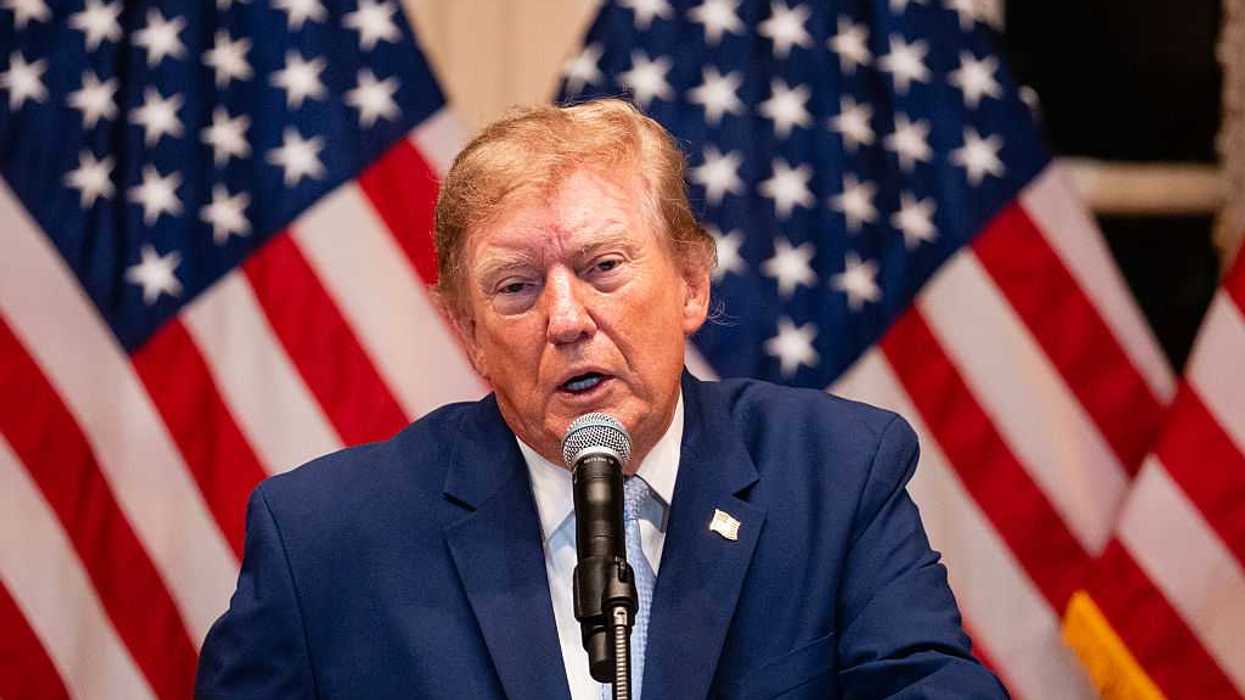







U.S. President Donald Trump speaks during a campaign rally at Pinnacle Bank Expo Center on the Nebraska State Fairgrounds on October 05, 2026 in Grand Island, Nebraska.
The President Invited Iran to Bomb My Home
I was driving home to San Diego from Los Angeles on Monday night when I heard that the President of the United States had offered both cities up to Iran as bomb targets. At a rally in Nebraska, defending his war, Trump told the crowd, “let [Iran] take out Los Angeles, let ‘em take out San Diego.” It was, he said, “a very small price to pay.”
I was coming from a Bernie Sanders rally for Proposition 40, the one-time tax on California billionaires that would send 90% of its revenue to healthcare. We desperately need it to pass because, in order to give tax breaks to billionaires, Trump signed a law that will strip health coverage from 10 million Americans; this tax will make sure we can still cover Californians. Call me crazy, but I think taxing billionaires one time so we can make sure kids in California get to see a doctor is a very small price to pay. I also think that even if Trump were joking, it is indefensible to make jokes about the potential destruction of so many lives. Human life is never a small price to pay. Human life is priceless.
Plus, the reality is: here in San Diego, we’re already paying the price for Trump’s actions, and it’s not small at all. He has gutted FEMA, tried to kill climate resiliency programs, and destroyed public health standards, while his signature law is set to cut off health insurance and food support for hundreds of thousands of San Diegans. Like plenty of American cities, San Diego is already busy finding local solutions to respond to the problems this president has recklessly created.
Not to mention, at least 19 American service members have been killed in this war already. Human rights monitors have documented more than 3,600 dead in Iran by April alone. Here at home, gas is sitting just pennies below its all-time record. Taxpayers have already spent more than $45 billion on the war, while Trump’s oil and gas portfolio has grown by roughly $15.5 million this year alone. Of course anything is a “small price” to someone paying free.99 for this war, and profiting from it. Meanwhile, We the People are paying twice: first for the war, and then for the consequences of that war. But now he wants San Diego to pay a third time, flippantly offering us up to Iran.
It is worth noticing which cities he thought to name. Were San Diego and Los Angeles strategically chosen to signify something to his audience, or were they simply the first cities that came to mind as expendable places? Either way, the effect is to normalize—-and to gauge a crowd’s reaction to–the idea of massive violence in major California cities, suitable targets because of their perceived liberal lean. So what if Iran needs to bomb a little bit of America before the war can be over? Who cares, says Trump, if they target Los Angeles and San Diego?
By the way, why didn’t he offer up San Francisco, the free-love hippie-town MAGA loves to hate (and also my birthplace)? Could it be because that’s where the tech titans live? The same ones who joined Trump for Xi Jinping’s state dinner, a guest list worth a combined $2.4 trillion?
San Diego may have fewer billionaires, but it is home to more than 115,000 active-duty service members and 230,000 veterans. One in six active-duty sailors–in the entire Navy–is stationed here. So is one in four Marines. You cannot throw a rock in this county without hitting a military family: brats and spouses and veterans are among us. I got out of the Navy last year after ten years, and eight of those were here in San Diego. When Trump says “let ‘em take out San Diego,” he’s talking about the backbone of the United States military. He’s also talking about the people fighting his war.
San Diego has not been watching this war from the sidelines. Today, the USS Abraham Lincoln returns to North Island after an almost yearlong deployment to the Middle East that featured food shortages, broken toilets, and mold in the showers after 286 days at sea without a single port call. Eight sailors in the Lincoln’s strike group attempted suicide, but in August, when a reporter asked whether the deployment had gone on too long, Trump said “not nearly long enough.” Now he has told a crowd in Nebraska that we should let Iran take out the city those sailors call home. These are sociopathic sentiments.
Last week at Quantico, Pete Hegseth closed his address to the force by telling them, “President Trump has your back and so do I.” To the contrary, President Trump has put one of the biggest military towns in the country forward as a target for our adversaries. With friends like these, the “domestic” in “against all enemies, foreign and domestic” starts to sound a lot less hypothetical.
San Diego is home to Naval Air Station North Island, Naval Base San Diego, Naval Amphibious Base Coronado, the Point Loma submarine base, Camp Pendleton, and Miramar (and I have been permanently stationed at or trained at all of them). If Iran bombed San Diego and Los Angeles, aside from the devastating loss of life, it would cripple an immense share of our national security readiness.
And for what, exactly? Trump says the war is “essentially almost over with.” This is the same man who claimed in June 2025 that Iran’s nuclear program had been “obliterated,” then launched a war over it anyway on February 28. More than seven months later, he wants us to believe two things at once: that we’ve basically won, and that we might need to sacrifice an American city or two to finish winning. If the war is almost over, why does anybody need to take out San Diego?
I wonder if Trump’s endorsed candidate for California’s 48th District here in San Diego County will respond to these remarks. He recently said “no pain, no gain,” when referring to the gas prices San Diegans are paying. Jim Desmond, would you apply that same mindset if we were bombed? Or do you have the moral courage to stand up for the people you’re running to represent?
Last November, six Democratic members of Congress, all veterans, including Senator Mark Kelly, recorded a video reminding troops of their duty to disobey unlawful orders, restating the law that says so. Trump called it “SEDITIOUS BEHAVIOR, punishable by DEATH,” and then his Justice Department went looking for an indictment, which a grand jury refused. The president treated reading the law out loud to the troops as a capital offense, but then he himself invited a foreign enemy to destroy two American cities, possibly as a punchline. Is anyone calling the latter sedition? Who is demanding accountability?
Calling our lives a small price to pay affirms a moral bankruptcy, as well as an obvious dereliction of duty to the office he holds. While we can’t impeach him or invoke the 25th Amendment ourselves, we must stop being so quiet about what we’re paying already. We can make our voices heard by calling our representatives, writing op-eds, knocking doors, phone banking, and voting in defiance of the man who threatens the safety of our city. Ballots are already arriving in mailboxes. Vote, and vote yes on 40 (and no on 41 and 42).
Trump has been harming our cities for a while, but now he is inviting our military adversaries to join him in the harm. If we have any self-respect as Americans, we must not tolerate our leaders disregarding the dignity of lives in this way. We must fight for our home.
Julie Roland was a Naval Officer for ten years, deploying to both the South China Sea and the Persian Gulf as a helicopter pilot before separating in June 2025 as a Lieutenant Commander. She has a law degree from the University of San Diego, a Master of Laws from Columbia University, and is a member of the Truman National Security Project.