


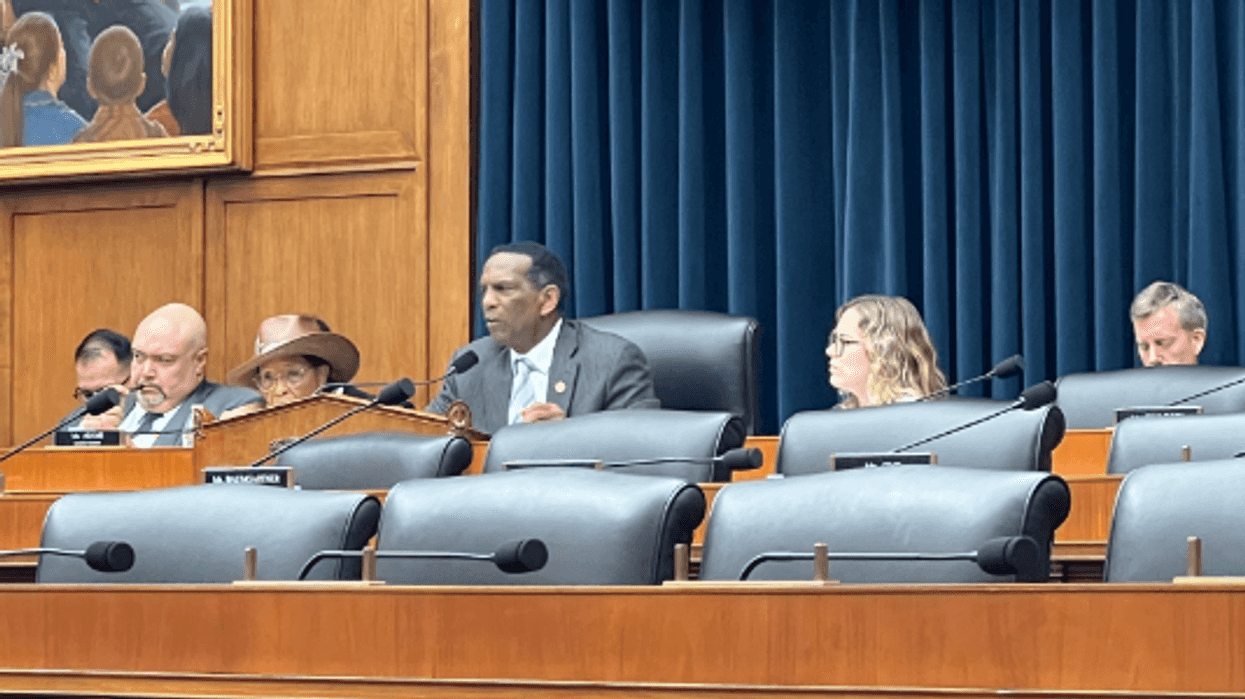
WASHINGTON — Witnesses and representatives sat in silence as Rep. Burgess Owens, R-Utah, spoke about how universities should strive for intellectual diversity and introduce controversial ideas. Rep. Alma S. Adams, D-N.C., agreed with his rhetoric, but went on to criticize her Republican colleagues for standing in the way of free expression.
“Unfortunately, what we often see, especially in hearings like this, is not a good faith effort to strike that balance, but a selective narrative,” Adams said. “My colleagues on the other side of the aisle frequently claim that there’s a free speech crisis on college campuses, arguing that universities lack viewpoint diversity and silence certain perspectives.”
Over the course of the hour-long hearing on Wednesday, Democrats and Republicans jabbed at each other, representing opposing ideas of what counts as suppressing students’ freedom of speech.
Democrats criticized the Trump administration for withholding funding from universities that failed to follow the president’s policies, such as his ban on diversity, equity, and inclusion programs. Democrats also bemoaned the administration’s crackdown on free speech for noncitizen students. Republicans, meanwhile, spoke about how universities have suppressed conservative voices by allegedly refusing to hire conservative professors. They also said conservative students have to self-censor, and universities deny funding to right-leaning student organizations.
The hearing marked the latest clash on higher education freedom of speech ideals in the federal government following the Trump administration’s crackdown on university grant funding in response to university diversity, equity, and inclusion practices and investigations into alleged antisemitism.
The Republican House majority meant that House Republicans were responsible for choosing most of the witnesses. Of the four witnesses, two came from right-leaning organizations, representing the Alliance Defending Freedom and the American Council of Trustees and Alumni. Only one witness represented a left-leaning organization: the American Civil Liberties Union.
Rep. Suzanne Bonamici, D-Ore., said the discussion on freedom of speech acted as a distraction from the crisis of higher education affordability, which she said was a larger issue.
“That’s what we should be having a hearing about, how to make colleges affordable,” Bonamici said. “But instead, my colleagues are continuing to villainize institutions of higher education.”
Bonamici read off a list of words the Trump administration removed from government websites, including words like “women”, “gender”, “sex”, and “immigrants”.
Rep. Mark Harris, R-N.C., said colleges had “weaponized recognition and fee processes against student groups they didn’t like.” He cited a 2020 lawsuit against California State University San Marcos, which alleged that the college awarded its LGBTQA Pride Center $296,498 for its activities. Meanwhile, it denied a recognized pro-life group’s $500 funding request for a speaker.
“This is just one clear example of how many colleges and universities show ideological preferences and funding with no transparency or how funding decisions were approved or denied,” Harris said.
Rep. Mark DeSaulnier, D-Calif., asked a witness for advice on how to encourage universities to create campuses that welcome all views.
“Having this free expression should be joyful… But it’s become so politically us against them without the acceptance that they might be right occasionally,” Rep. Mark DeSaulnier, D-CA, said, emphasizing the “occasionally” part of his sentence to his Democrat colleagues.
As the only witness from the left, Emerson Sykes, senior staff attorney at the ACLU, said, while students of all political opinions send in freedom of speech complaints to the ACLU, he focused on how the Trump administration has targeted blue states with legislation affecting freedom of speech.
Topics targeted by the Trump administration have included discussion of race, gender, climate change, and diversity, equity, and inclusion. Within the last year, the administration’s efforts resulted in over 300 higher education institutions dismantling their diversity, equity, and inclusion initiatives. The president’s executive actions also prevented transgender women’s participation in collegiate sports and targeted pro-Palestine protestors.
“What we're really seeing most in our country at the moment are efforts to prohibit the teaching of particular ideas, whether it's in K-12 or in higher education, and this sort of direct government censorship should not be lost in the discussions around self-censorship or discomfort around sharing conservative views in higher education institutions,” Sykes told Medill News Service after the hearing.
After the hearing, the committee published a recap that focused on three of the four witnesses, omitting any mention of the ACLU representative.
The recap’s conclusion said: “Too many universities have abandoned their mission to encourage students to think for themselves. Committee Republicans are working to hold colleges accountable and to protect students’ First Amendment rights, ensuring that higher education remains a place where ideas can be tested, challenged, and debated openly.”
Matthew Junkroski is a graduate student at Northwestern University.








The President Invited Iran to Bomb My Home