


Skip to content
Search

Latest Stories

Follow Us:
Top Stories

Meet the reformer: Kat Calvin, who wants you to get the right voter ID

Kat Calvin

Kat Calvin founded Spread The Vote to help people get the IDs they need to participate in elections in their states.

Photo courtesy Kat Calvin

A 36-year-old attorney, Kat Calvin founded Spread the Vote after the 2016 election. She said the results that year convinced her that the Supreme Court's striking down of the preclearance requirements under the Voting Rights Act has led to a wave of voter suppression across the country. Her answers have been lightly edited for clarity and length.

What's the tweet-length description of your organization?

Spread The Vote helps people obtain the government-issued photo identification cards required for voting in many states.


Describe your very first civic engagement.

Oh wow, I don't know! I do remember getting out of school in probably the fifth grade to vote for Bill Clinton with my mom.

What was your biggest professional triumph?

Discovering that I had built a team of incredible people who believed in each other and our mission enough to stick together through the hard times.

And your most disappointing setback?

Learning that no matter how hard you work, when you run a nonprofit you just cannot control when the money does and does not come in.

How does your identity influence the way you go about your work?

I'm a black woman. Black women are a high percentage of people living without IDs in this country and we face much bigger barriers to both obtaining those IDs and rebuilding our lives after we get them. I try to be conscious of the fact that it looks very different when a white man gets an ID and wants to get a job and start over and when a black woman gets an ID and wants to get a job and start over. She will always face 20 more layers of challenges than he will, and we have to think about how that affects the kind of services and opportunities we can both provide and find for our clients.

It's also much, much more difficult to raise money as a black woman and I have to live with donors and potential donors who sometimes say very racist and sexist things to me. There's a lot of grinning and bearing it and remembering why I'm here, and going home to drink bourbon and go for very long runs to calm down.

What's the best advice you've ever been given?

My mother always reminded me of Marian Anderson and said that if they're not listening you find higher ground and shout until they have to hear you.

Create a new flavor for Ben & Jerry's.

Jurassic Bark: chocolate ice cream with Oreo crumbles and peanut brittle in the shape of dinosaurs.

West Wing or Veep?

West Wing

What's the last thing you do on your phone at night?

Make sure I haven't missed any bonkers news or the apocalypse or something.

What is your deepest, darkest secret?

I don't know how much of a secret this is but I am a sucker for anything about serial killers — books, podcasts, movies, socks. I don't care. I'm in.


Read More

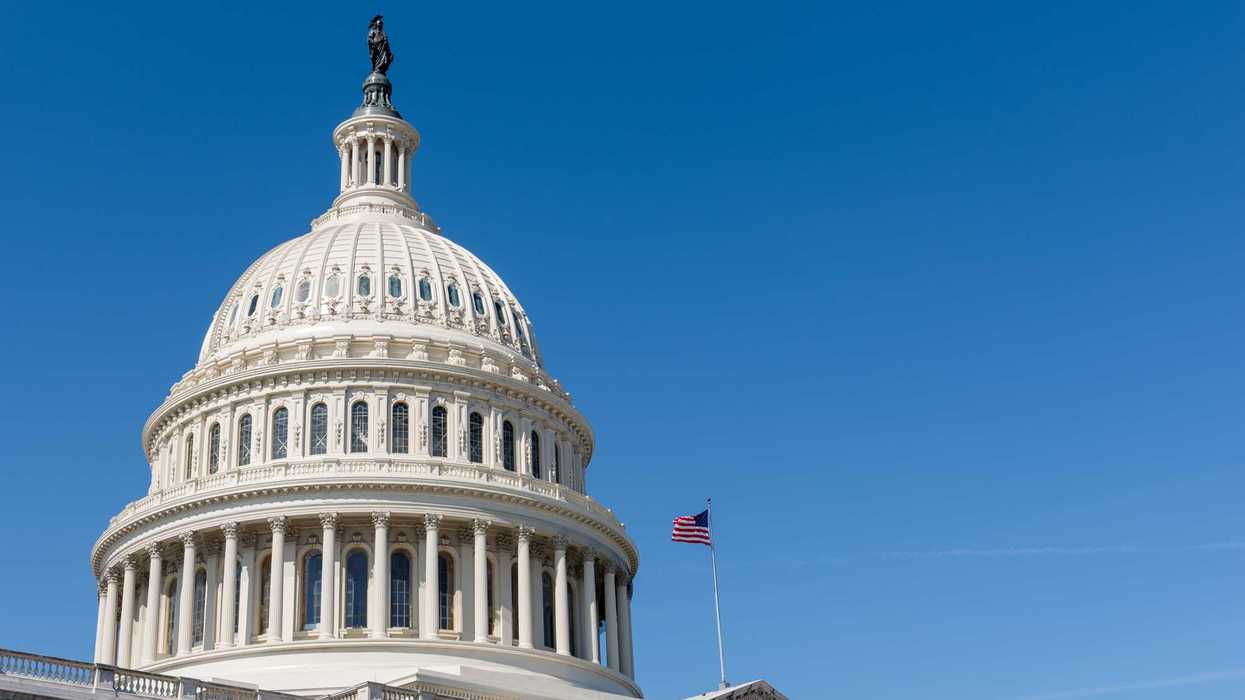
The American Experiment at the Brink Due To  Minority Rule

Can America overcome minority rule? Examining the Electoral College, NPVIC, campaign finance, and democratic reform in the 21st century.

adamkaz / Getty Images

The American Experiment at the Brink Due To Minority Rule

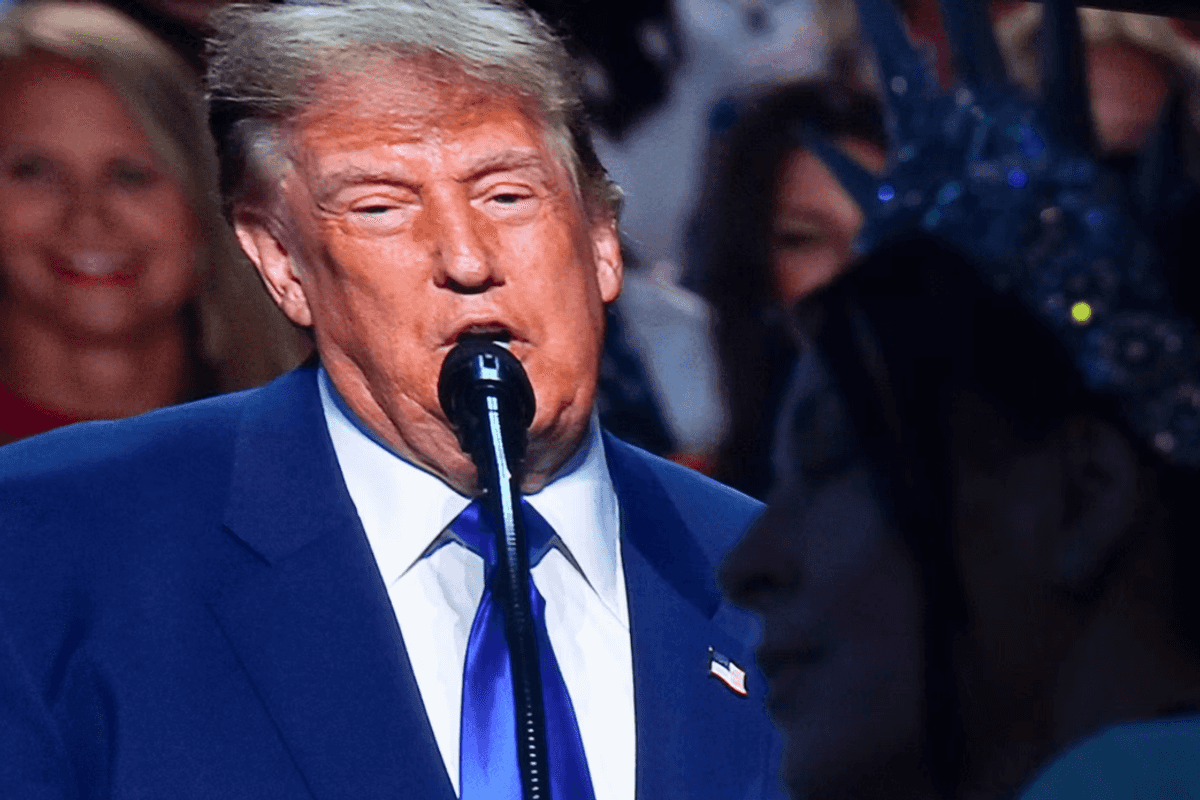
The challenge for continuing the American Experiment is recovering from the "Second Gilded Age" (1980s to the present). As of early 2026, the U.S. national debt is 122% to 125% of Gross Domestic Product (GDP). This situation has been exacerbated since 2000, when the U.S. national debt as a percentage of GDP was 33% to 35%. Americans can attribute this worsening situation to two non-popular vote presidents, Bush-43 and Trump-45. Directly, during their terms, and indirectly, with the aftermath of the 2008 Great recession and the aftermath of the COVID-19 pandemic. In 1894, toward the end of the 19th century “Gilded Age," the U.S. national debt was approximately 7% of gross domestic product GDP.

Minority rule occurs when a numerical or ideological minority holds the power to consistently thwart the will of the majority or govern over them. It thrives through the coordinated reinforcement of specific electoral, institutional, and legal mechanisms.

Keep ReadingShow less
Full frame shot of pins that say “vote” with red, white, and blue American flag theme.

An analysis of Project 2025, the Electoral College, and the National Popular Vote Interstate Compact, examining democracy, representation, and presidential elections.

Adrienne Bresnahan / Getty Images

Spirit of 1776 – Rejected by Project 2025, Embraced by NPVIC

Project 2025 is a structural undoing of the "Spirit of 1776." It fundamentally undermines the foundational principles of the Declaration of Independence in the following areas: democratic representation, equality, liberty, and checks/balances. The National Popular Vote Interstate Compact (NPVIC) restores the founding ideals of civic equality.

Spirit of 1776 – Rejected by Project 2025, Embraced by NPVIC

Keep ReadingShow less
California Voters Don’t Like Either Party. Good Thing the Primary Doesn’t Belong to The Parties.

California voters increasingly distrust both major parties. Here's why the state's Top Two primary gives independent voters more power to shape elections.

Image: Duncan Shelby on Alamy.

California Voters Don’t Like Either Party. Good Thing the Primary Doesn’t Belong to The Parties.

SAN DIEGO, Calif. - California voters have already received ballots for the June 2 primary, and the message they have going into these elections may not be what the political class wants to hear: They are not thrilled with either major party.

A recent analysis from the Public Policy Institute of California (PPIC) found that majorities of likely voters have unfavorable views of both parties—61% unfavorable toward the Democratic Party and 70% unfavorable toward the Republican Party.

Keep ReadingShow less
How the Voting Rights Act Reshaped Texas’ Electoral Maps

President Lyndon B. Johnson, Martin Luther King Jr., Clarence Mitchell Jr., Patricia Roberts Harris, and other guests at the signing of the Voting Rights Act on August 6, 1965.

Yoichi Okamoto - Lyndon Baines Johnson Library and Museum

How the Voting Rights Act Reshaped Texas’ Electoral Maps

In 2002, U.S. Rep. Henry Bonilla, a Republican, nearly lost his South Texas seat to Democrat Henry Cuellar. So when the GOP used its newfound majority in the state Legislature to redraw the voting maps the next year, they sawed through Cuellar’s hometown of Laredo and scattered Latino voters, who tended to vote Democratic, into other districts.

Latino advocacy groups sued under Section 2 of the Voting Rights Act, the cornerstone provision of the law that prevents government bodies from diluting the voting power of specific groups. The Supreme Court found Texas lawmakers had taken away Latino voting power “because they were about to exercise it.”

Keep ReadingShow less