



What do a recent grad, a disenchanted employee, and a parent returning to the workforce all have in common? They’re each trying to determine which skills are in demand and how they can convince employers that they are competent in those fields. This is easier said than done.
Recent grads point to transcripts lined with As to persuade firms that they can add value. Firms, well aware of grade inflation, may scoff.
Disenchanted employees need to spend time training for the jobs of the future, perhaps by working toward a badge or credential. Firms are rightfully skeptical of those, too. After all, there are hundreds of thousands of certificates these days—it’s unclear which are meaningful.
Parents try to convince firms that they remain as skillful as ever by highlighting their earlier work. Here, again, firms may have some questions. A hiring manager may not shake the nagging feeling that extended time off the job may have caused version skills to atrophy.
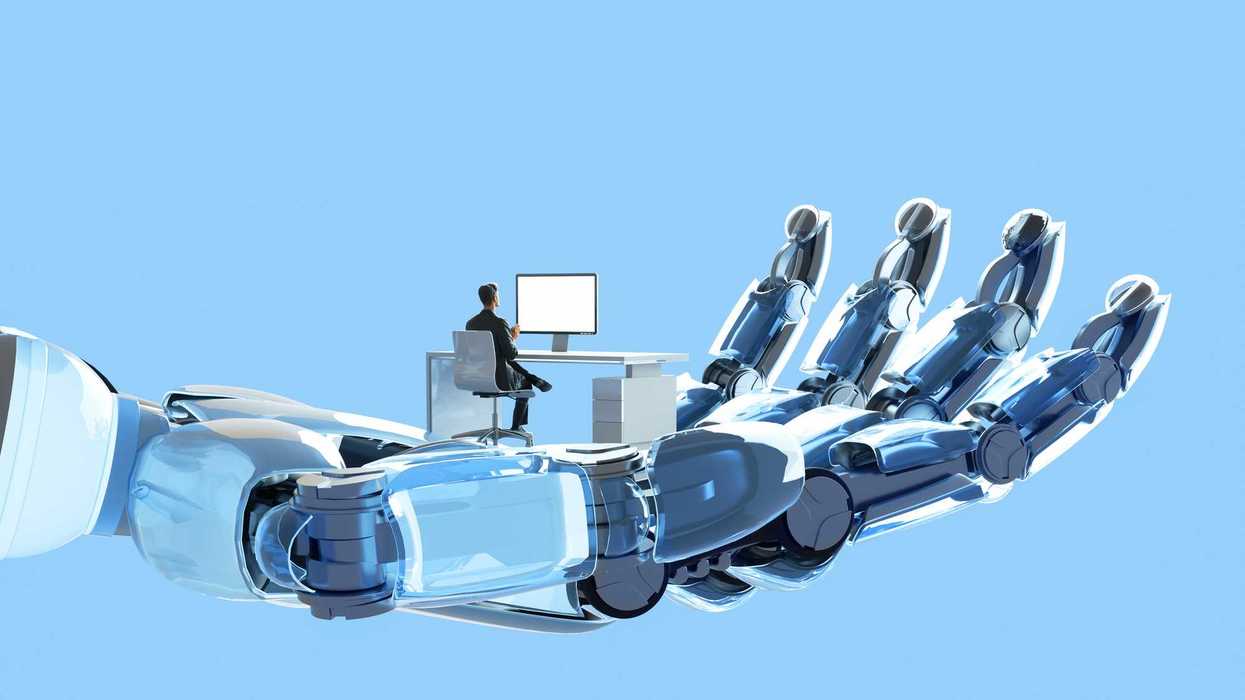
In a healthy, efficient labor market, it’d be possible for these workers to signal their skills and to find firms demanding such work. The aforementioned barriers all stand in the way of such a market. The introduction of AI makes this labor matching even more difficult. Firms don’t know which skills to seek out because it’s unclear what work will be completed by humans, human-AI teams, or just AI. Workers, too, are at a loss—hoping that the skills they seek to gain align with those demanded by firms over the long run.
In this market failure—when informational asymmetries prevent workers and firms from finding one another in as cheap and timely a manner as possible—it’s tempting to call on the government to step in. The thinking goes that the government can predict which skills will define the future and can set up programs for upskilling and retraining. This logic falls by looking to the advice of many a government officials to lean into computer science. While some firms may demand some individuals with such skills, early returns from the Age of AI suggest demand is dropping.
What’s a student to do? How can someone finally leave their firm and find a better role? How can a mom or dad get back into the office and stay there?
The answer is simple and, perhaps, daunting: we’re all entrepreneurs now. We all must be attentive to market trends, adaptive to meaningful shifts in labor demand, and willing to work in novel and, at times, unpredictable environments. In short, the career ladder may be broken, but it’s been replaced by a career flywheel—studying when necessary, shadowing as a trainee, and working in flexible arrangements.
No one—including AI experts and government economists—can detail the specific set of skills that will result in high-paying work that supports families and sustains the American Dream. Everyone must be willing to take risks—diversifying, deepening, and shifting their skill sets to be as valuable in the labor market as possible.
Politicians ought not try to forecast those skills but rather sustain an entrepreneurial approach to skill development. Three proposals can help channel the necessary entrepreneurial energy without being too prescriptive.
First, emulate South Carolina’s success by encouraging firms to offer more apprenticeships. South Carolina has quietly built one of the most effective apprenticeship ecosystems in the country. Through its registered apprenticeship initiative, the state helps firms offset training costs, coordinate curriculum with community colleges, and design programs that respond to real production needs rather than abstract projections. The result is a pipeline that places people into paid roles while they learn—reducing the risk for workers and giving firms a chance to assess talent in real time.
Second, encourage the creation of skills-based evaluations by high schools and higher education institutions. Workers can better market their services—and firms can hire with more confidence—when skills are legible, portable, and comparable. Today’s degrees obscure more than they reveal. Grade inflation compresses distinctions, transcripts say little about applied competence, and employers are left guessing.
The Department of Education—and state equivalents—can help by issuing guidance that promotes competency-based transcripts, standardized skill taxonomies, and verified portfolios that document what students can actually do. It can also serve as an information clearinghouse, publishing data on which institutions and programs reliably produce particular skills and outcomes.
Third, reform—or abandon—New Deal employment laws with rigid classifications that hinder the ability of workers and firms alike to engage in creative, flexible, and mutually beneficial arrangements. The Fair Labor Standards Act, built for an economy of factory floors and fixed schedules, struggles to accommodate project-based work, part-time experimentation, and hybrid human-AI roles.
Its binary distinctions between employee and contractor, for one, discourage firms from offering flexible pathways and push workers into all-or-nothing choices. Modernizing these rules—by allowing more fractional work, clearer safe harbors, and updated definitions of hours and supervision—would expand opportunity without sacrificing baseline protections.
The future of work will not be handed down in a syllabus or codified in a regulation. It will be discovered—through trial, error, and adaptation—by people willing to build, learn, and pivot. Policy should not pretend to know which skills will win. It should instead clear the runway so more Americans can take off, test their wings, and land somewhere better.
Kevin Frazier is a Senior Fellow at the Abundance Institute, directs the AI Innovation and Law Program at the University of Texas School of Law, and is an Affiliated Research Fellow at the Cato Institute.