
When the World goes Mad, one must accept Madness as Sanity, since Sanity is, in the last analysis, nothing but the Madness on which the Whole World happens to agree. (George Bernard Shaw)
Among the most prolific and famous playwrights of the 20th century, Shaw wrote “Pygmalion,” the play upon which “My Fair Lady” was based. Pygmalion was a Greek mythological figure, a sculptor from Cyprus, who fell in love with the statue he created. Aphrodite turned his sculpture into a real woman, promoting the idea that the “created” is greater than the “creator.”
There is a positive benefit to high expectations about belief in creation, one that wise parents frequently employ: the “Pygmalion effect.” Basically, it is a self-fulfilling prophecy: Tell your child he can, and the chances greatly increase that he will.
Yet, there is a negative connotation as well, a dangerous assumption, whether we’re talking politics, religion, or new innovations.
That is: what we believe to be true becomes true.
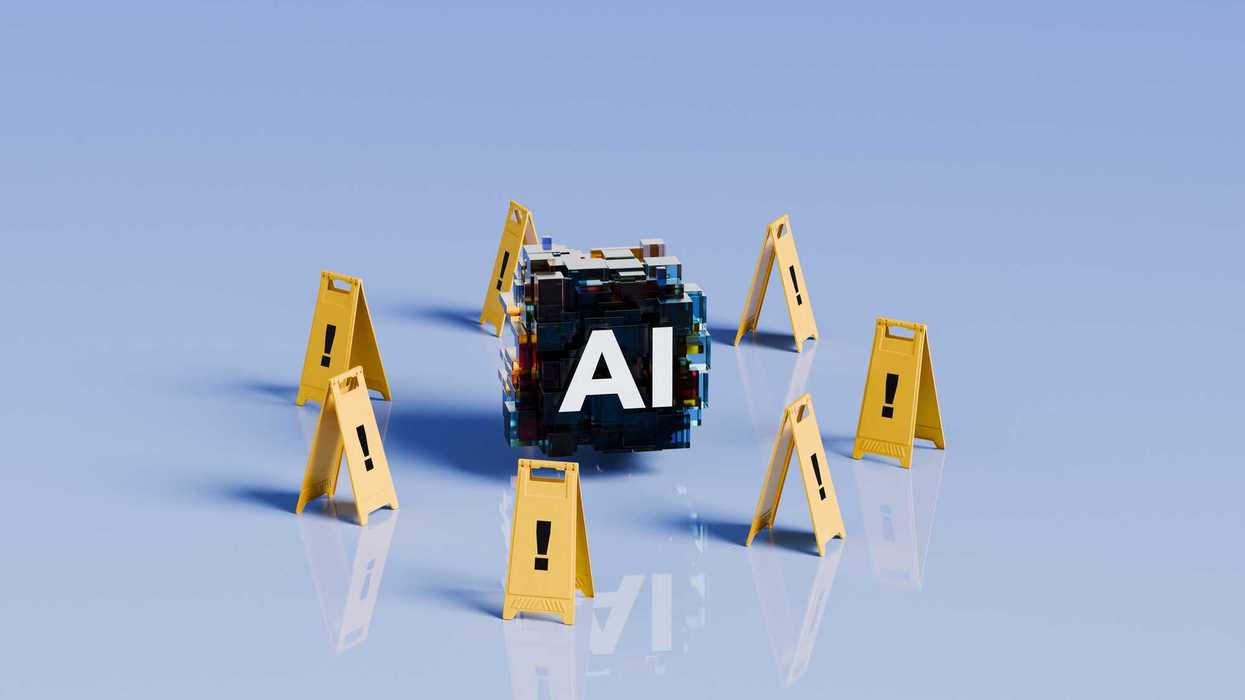
We cannot turn on a television, open a computer, pick up a newspaper, or magazine without encountering a new development in Artificial Intelligence (AI) and its ever-increasing grip on the world.
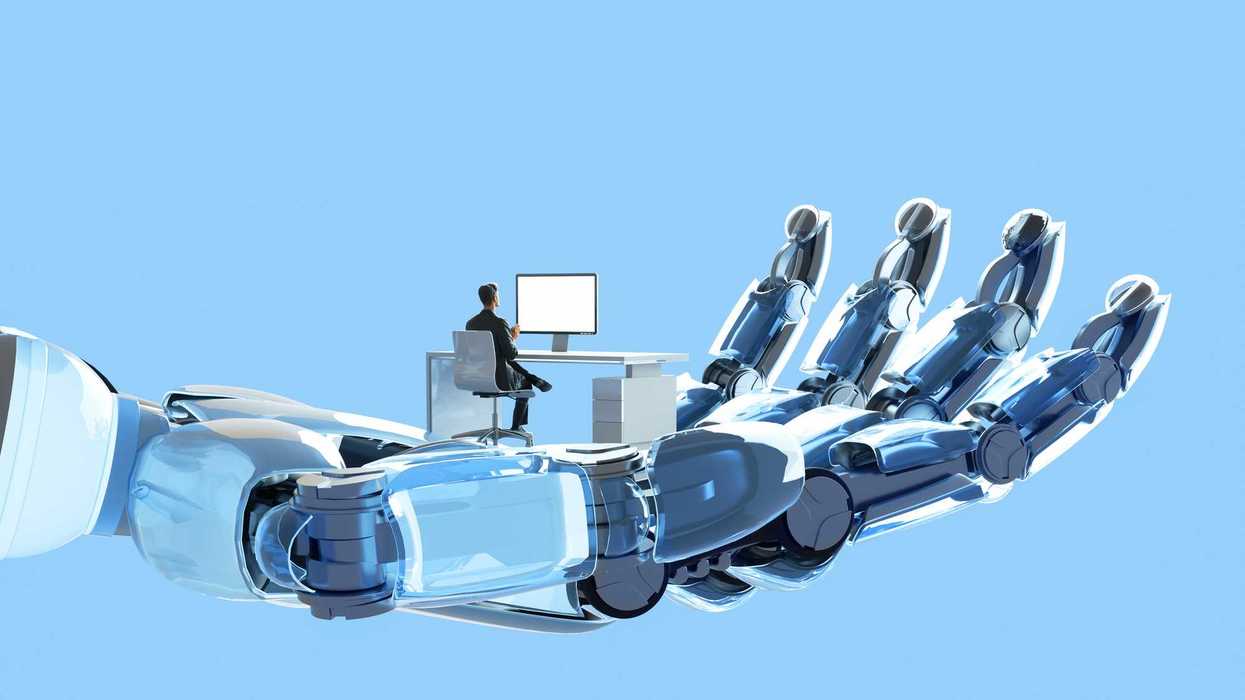
With fear and trepidation, many of us believe we are, or soon will be, at the mercy of AI. We see AI as a modern-day King Kong, unleashed and ruthlessly ravaging our society, embodying all the gorilla-monster’s savage single-mindedness.
We then essentially assume the role of Fay Wray, also known as the “Scream Queen,” who played the “damsel-in-distress” in the 1933 King Kong movie. There is no place to hide from this ferocious giant; we have no recourse. Our only hope is to be somehow rescued.
But how will our hoped-for “rescue” from total domination by the cold, virtual “machine” dubbed AI happen? How will we and our society survive if “Hal” is running the show? Meanwhile, the Titans of the AI industry, Elon Musk and Sam Altman, duke it out in court as to who will “rule the empire.”
Are we really so helpless in the wake of this “invasion?” Have we succumbed to the usual societal symptom of throwing ourselves at the mercy of the latest technological advances?
We use them excessively because we can.
But, if we do not employ discernment, aren’t we just guzzling the latest flavor of the Kool-Aid?
AI’s promotion and promises are meaningless unless they make a real connection to society’s betterment or to our personal benefit. The length of its leash is only as long as we unravel it.
AI’s potential is amazing, astounding, and astronomical. With our “combined knowledge,” we can cut processing, compare statistics, weigh possible outcomes, and summarize mountains of paperwork. Medically AI shows itself to be more phenomenal with each passing week.
New on the horizon is a Character AI called Pygmalion, which allows us to define character parameters without filters. Do we really believe it can empathize, can fulfill us? Or are we allocating our precious humanness to the diamond brilliance of perfection, forgetting the only “perfect diamond” is a fake diamond and not a diamond at all?
Society is—finally—recognizing the dangers of our social media obsession. We are not laboratory rats; we are not lemmings. “Influencers” can only influence us if we let them. We do not have to buy into it, and there is a movement towards authenticity.
Time for a similar reaction to the A-I phenomena, and the grim predictions concerning it.
Who is not tired of “answers” to all the “questions,” without discussion, sick of going to dinner when the diners talk more to Siri or Chat GPT than to each other? Are we all suffering from short-term memory loss and cannot remember the dislocation and isolation of the Co-Vid epidemic, how we longed for “real” connection?
AI, in condensed form, is a sum of our human knowledge, but without the humanity. It has already proven itself a valuable tool in our “toolbox.” Nonetheless, it is a tool.
It is more essential than ever to be able to tell the real from the fake. We must know where the decimal point goes, what is genuine, and what is virtual. Machines have helped us for centuries with menial tasks, and AI can help us with mental ones. But we must be able to discern.
The only path to developing this discernment is education. A popular belief of those growing up in the “electronic age” is that they can delegate their work to AI, that it is no longer necessary to have fundamental knowledge of the humanities, sciences, etc. This theory, if carried forward, will put future generations at the “mercy “of A-I.
We must understand the context. The truest value remains the human connection; the true connection is human values.
Throughout history, our innovations have changed the world: the Stone Age, the Bronze Age, the Iron Age, the Industrial Age, the Information Age, and now, on the brink of yet another breakthrough.
Let us decide what course we will pursue with AI, and how we can better our world with it. In this latest innovation of the information age, moral courage is required, and discernment is essential.
Nothing is at last sacred but the integrity of our own minds. (Emerson)
Amy Lockard is an Iowa resident who regularly contributes to regional newspapers and periodicals. She is working on the second of a four-book fictional series based on Jane Austen’s “Pride and Prejudice."