


Skip to content
Search

Latest Stories

Follow Us:
Top Stories

Blame AI or Build With AI? Only One Approach Creates Jobs

Opinion

artificial intelligence

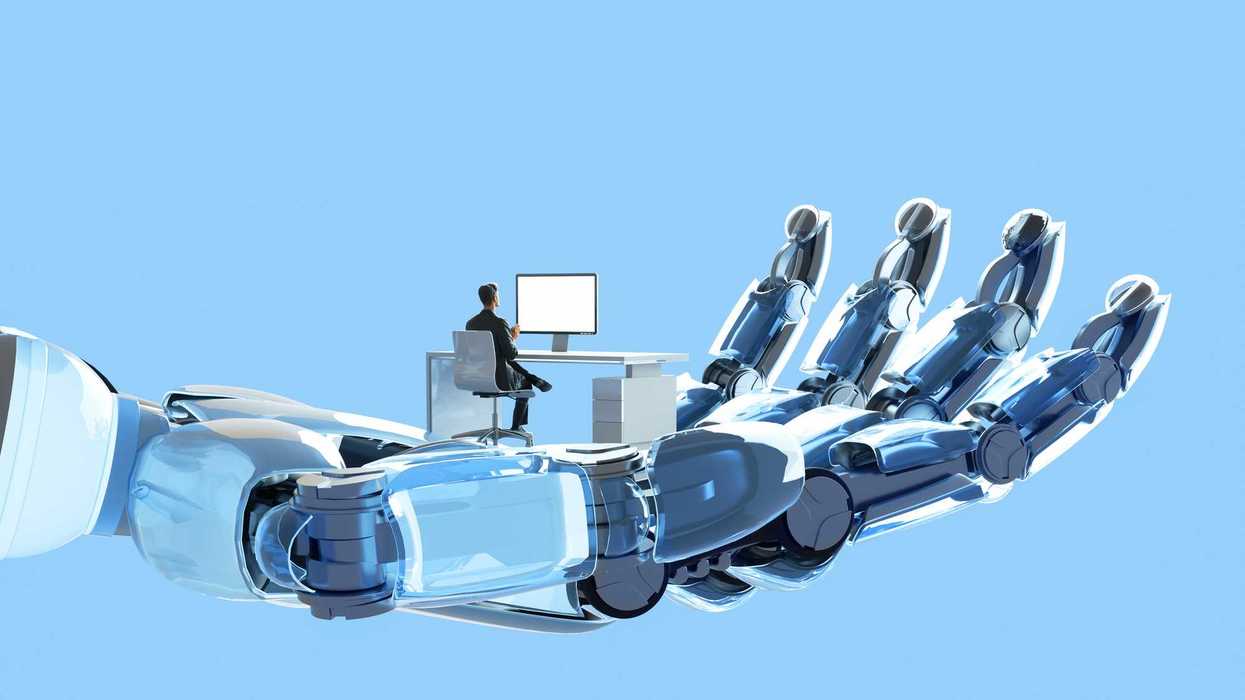
Rather than blame AI for young Americans struggling to find work, we need to build: build new educational institutions, new retraining and upskilling programs, and, most importantly, new firms.

Surasak Suwanmake/Getty Images

We’re failing young Americans. Many of them are struggling to find work. Unemployment among 16- to 24-year-olds topped 10.5% in August. Even among those who do find a job, many of them are settling for lower-paying roles. More than 50% of college grads are underemployed. To make matters worse, the path forward to a more stable, lucrative career is seemingly up in the air. High school grads in their twenties find jobs at nearly the same rate as those with four-year degrees.

We have two options: blame or build. The first involves blaming AI, as if this new technology is entirely to blame for the current economic malaise facing Gen Z. This course of action involves slowing or even stopping AI adoption. For example, there’s so-called robot taxes. The thinking goes that by placing financial penalties on firms that lean into AI, there will be more roles left to Gen Z and workers in general. Then there’s the idea of banning or limiting the use of AI in hiring and firing decisions. Applicants who have struggled to find work suggest that increased use of AI may be partially at fault. Others have called for providing workers with a greater say in whether and to what extent their firm uses AI. This may help firms find ways to integrate AI in a way that augments workers rather than replace them.


So far, this seems to be the choice of action. State legislatures around the country have introduced “blame AI” bills in a variety of forms. From Colorado to New York, officials have proposed and, in some cases, enacted laws that attempt to put the AI genie back in the bottle. Colorado’s AI Act, for example, requires firms that use AI in "consequential decisions," such as in employment matters, to use "reasonable care" to shield consumers from algorithmic discrimination. Compliance with this law entails several procedural hurdles, such as reports on the firm's use of AI and completion of regular impact assessments. National leaders, including Senator Bernie Sanders, have tried to move the entire nation in a similar direction. Sanders recently called for a moratorium on data center construction, which would stymie AI progress.

The problem with this approach? It doesn’t create jobs. It may save some jobs but only on a temporary basis. Tech-forward firms will win the economic future. It’s a tale as old as the steam engine. Factories that redesigned their operations around this new technology thrived as productivity surged and costs fell. The firms that tried to merely integrate the technology on a piecemeal basis--maintaining as much as the status quo as possible--suffered. AI-forward firms are poised to do the same--outcompeting their rivals that insist on operating like it’s 2022 rather than trying to prepare for the economy of 2032.

Rather than blame AI, we need to build: build new educational institutions, new retraining and upskilling programs, and, most importantly, new firms. To start, let’s build schools that assess and reward students for developing skills rather than awarding them grades that have become meaningless to employers. Next, let’s build retraining and upskilling programs that only receive funding if they demonstrate a proven capacity to improve the medium- and long-term economic prospects of participants. Finally, let’s champion the idea of being the best place in the world to start and scale AI-forward businesses. New jobs will not emerge from yesterday’s firms. The jobs of the future will come from companies that are still in the garage or on the bar napkin. Our task is creating pathways for them to go from personal gambles to community-wide opportunities.

Does this sound pollyannish? Hopelessly optimistic? Too pro-tech? The answer is likely “yes” across the board. But that sort of hope is what encourages entrepreneurs, sparks job creation, and gets us beyond playing the blame game.


Kevin Frazier is an AI Innovation and Law Fellow at Texas Law and author of the Appleseed AI substack.


Read More

Parv Mehta Is Leading the Fight Against AI Misinformation

A visual representation of deep fake and disinformation concepts, featuring various related keywords in green on a dark background, symbolizing the spread of false information and the impact of artificial intelligence.

Getty Images

Parv Mehta Is Leading the Fight Against AI Misinformation

At a moment when the country is grappling with the civic consequences of rapidly advancing technology, Parv Mehta stands out as one of the most forward‑thinking young leaders of his generation. Recognized as one of the 500 Gen Zers named to the 2025 Carnegie Young Leaders for Civic Preparedness cohort, Mehta represents the kind of grounded, community‑rooted innovator the program was designed to elevate.

A high school student from Washington state, Parv has emerged as a leading youth voice on the dangers of artificial intelligence and deepfakes. He recognized early that his generation would inherit a world where misinformation spreads faster than truth—and where young people are often the most vulnerable targets. Motivated by years of computer science classes and a growing awareness of AI’s risks, he launched a project to educate students across Washington about deepfake technology, media literacy, and digital safety.

Keep Reading Show less
child holding smartphone

As Australia bans social media for kids under 16, U.S. parents face a harder truth: online safety isn’t an individual choice; it’s a collective responsibility.

Getty Images/Keiko Iwabuchi

Parents Must Quit Infighting to Keep Kids Safe Online

Last week, Australia’s social media ban for children under age 16 officially took effect. It remains to be seen how this law will shape families' behavior; however, it’s at least a stand against the tech takeover of childhood. Here in the U.S., however, we're in a different boat — a consensus on what's best for kids feels much harder to come by among both lawmakers and parents.

In order to make true progress on this issue, we must resist the fallacy of parental individualism – that what you choose for your own child is up to you alone. That it’s a personal, or family, decision to allow smartphones, or certain apps, or social media. But it’s not a personal decision. The choice you make for your family and your kids affects them and their friends, their friends' siblings, their classmates, and so on. If there is no general consensus around parenting decisions when it comes to tech, all kids are affected.

Keep Reading Show less
Someone wrapping a gift.

As screens replace toys, childhood is being gamified. What this shift means for parents, play, development, and holiday gift-giving.

Getty Images, Oscar Wong

The Christmas When Toys Died: The Playtime Paradigm Shift Retailers Failed to See Coming

Something is changing this Christmas, and parents everywhere are feeling it. Bedrooms overflow with toys no one touches, while tablets steal the spotlight, pulling children as young as five into digital worlds that retailers are slow to recognize. The shift is quiet but unmistakable, and many parents are left wondering what toy purchases even make sense anymore.

Research shows that higher screen time correlates with significantly lower engagement in other play activities, mainly traditional, physical, unstructured play. It suggests screen-based play is displacing classic play with traditional toys. Families are experiencing in real time what experts increasingly describe as the rise of “gamified childhoods.”

Keep Reading Show less
Affordability Crisis and AI: Kelso’s Universal Capitalism

Rising costs, AI disruption, and inequality revive interest in Louis Kelso’s “universal capitalism” as a market-based answer to the affordability crisis.

Getty Images, J Studios

Affordability Crisis and AI: Kelso’s Universal Capitalism

“Affordability” over the cost of living has been in the news a lot lately. It’s popping up in political campaigns, from the governor’s races in New Jersey and Virginia to the mayor’s races in New York City and Seattle. President Donald Trump calls the term a “hoax” and a “con job” by Democrats, and it’s true that the inflation rate hasn’t increased much since Trump began his second term in January.

But a number of reports show Americans are struggling with high costs for essentials like food, housing, and utilities, leaving many families feeling financially pinched. Total consumer spending over the Black Friday-Thanksgiving weekend buying binge actually increased this year, but a Salesforce study found that’s because prices were about 7% higher than last year’s blitz. Consumers actually bought 2% fewer items at checkout.

Keep Reading Show less