



The Trump campaign has put its lawyers where the candidate's mouth is — although, all of a sudden, not where it is all the time.
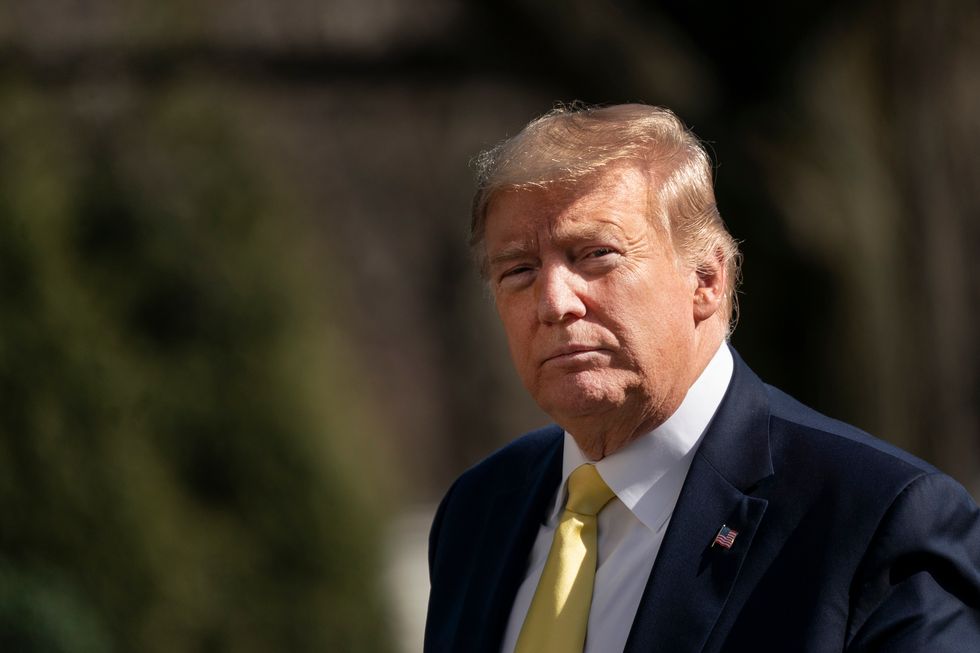
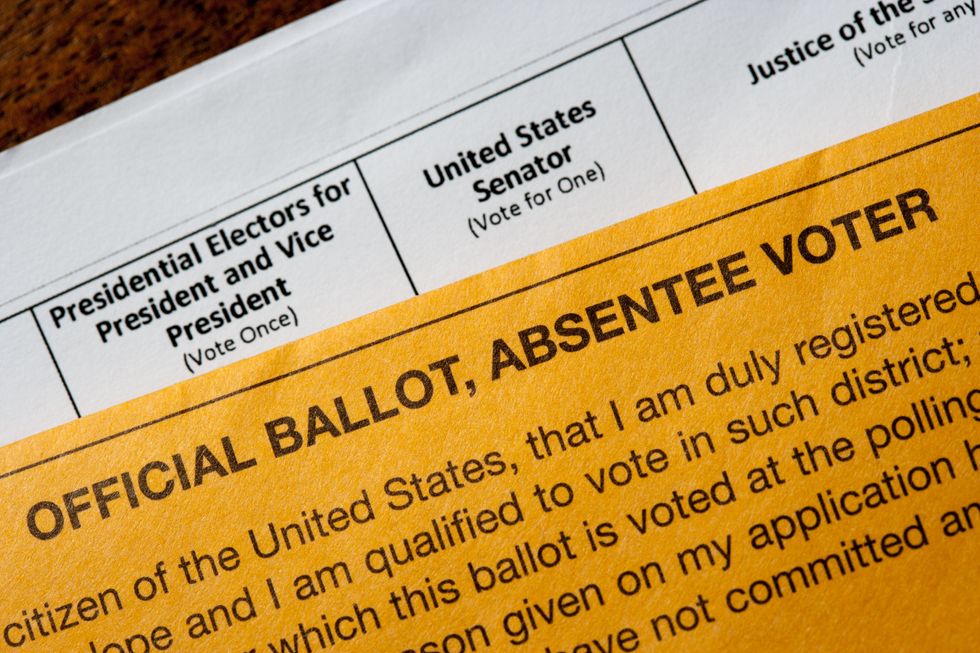
President Trump's re-election team sued late Tuesday to block the delivery of a mail-in ballot to every voter in potential battleground Nevada this fall. The lawsuit was filed just hours after Trump created one of the most whiplash-inducing moments of the campaign. After making baseless accusations dozens of times that easy voting through the mail guarantees a rigged election, he encouraged every voter in Florida — but only Florida, the biggest purple state — to find a stamp and vote from home.
In a tweet Wednesday, Trump asserted the situations in the two states were fundamentally different — both logistically, which is highly questionable, and, he conceded, politically:
"Nevada has ZERO infrastructure for Mail-In Voting," he said, disregarding that the state's primary in June was conducted almost entirely by mail. "It will be a corrupt disaster if not ended by the Courts. It will take months, or years, to figure out. Florida has built a great infrastructure, over years, with two great Republican Governors. Florida, send in your Ballots!"
Voting by mail looks guaranteed to surge this fall because of the intensifying coronavirus pandemic, even in states that have not already made that process easier. For months, Trump has claimed that expanded remote voting will make it easy for fraudsters to steal his second term, an unprecedented presidential rattling of the democratic process.
There is essentially no evidence to support his fear, but polling has shown many more Republicans believe the president than Democrats — a situation that has many GOP operatives worried that Trump's own sowing of doubt could assure his defeat.
The federal lawsuit, in which Trump was joined by the Republican National Committee and the Nevada GOP, says Nevada's new procedures for the fall election will make "voter fraud and other ineligible voting inevitable."
The plaintiffs claimed "a vital interest in protecting the ability of Republican voters to cast, and Republican candidates to receive, effective votes in Nevada elections and elsewhere," And, their suit said, "Major or hasty changes confuse voters, undermine confidence in the electoral process and create incentive to remain away from the polls."
Trump first threatened to sue on Monday, just before Gov. Steve Sisolak signed the measure, which his fellow Democrats in control of the Legislature cleared over the weekend. In addition to mandating an absentee ballot be delivered to all 1.6 million active registered voters, the law decrees that ballots postmarked by Nov. 3 will be counted if they're delayed in the mail as long as a week, and envelopes with unclear postmarks will be tabulated if they arrive three days late. Until now, ballots had to be in hand by Election Day, the rule in about two-thirds of the states.
The law also eases restrictions to allow party operatives to pick up and deliver the ballots of others — a practice, in place in about a dozen states, that Republicans label as "ballot harvesting" and say is ripe for abuse.
The suit derided those provisions as "head-scratching" because they were enacted after the June primary.
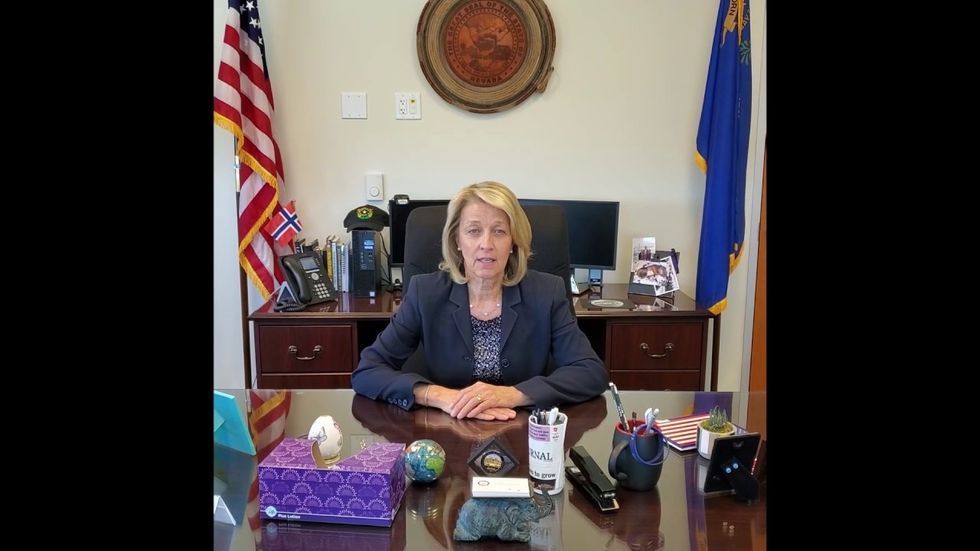
The highest-ranking Republican in Nevada, Secretary of State Barbara Cegavske, was the one who decided to proactively mail out ballots for that primary, a first in the state. And she told lawmakers in Carson City that she found no evidence of fraud. But she opposed the new law because of its ballot collection provision.
Nevada, with six electoral votes, Minnesota (10) and New Hampshire (4) are the states won by Hillary Clinton in 2016 that the Trump campaign has planned to contest.
Complicating matters has been Trump's effort to distinguish between the mail voting he disdains and absentee voting, which he says is fine by (and used by) him. The two terms are widely viewed as synonymous. In Florida, like most states, for example, no excuse is required to request an absentee ballot — and about one-third of all votes in recent elections have been mailed in using those forms.
"Whether you call it Vote by Mail or Absentee Voting, in Florida the election system is Safe and Secure, Tried and True," Trump tweeted Tuesday. "Florida's Voting system has been cleaned up (we defeated Democrats attempts at change), so in Florida I encourage all to request a Ballot & Vote by Mail!"
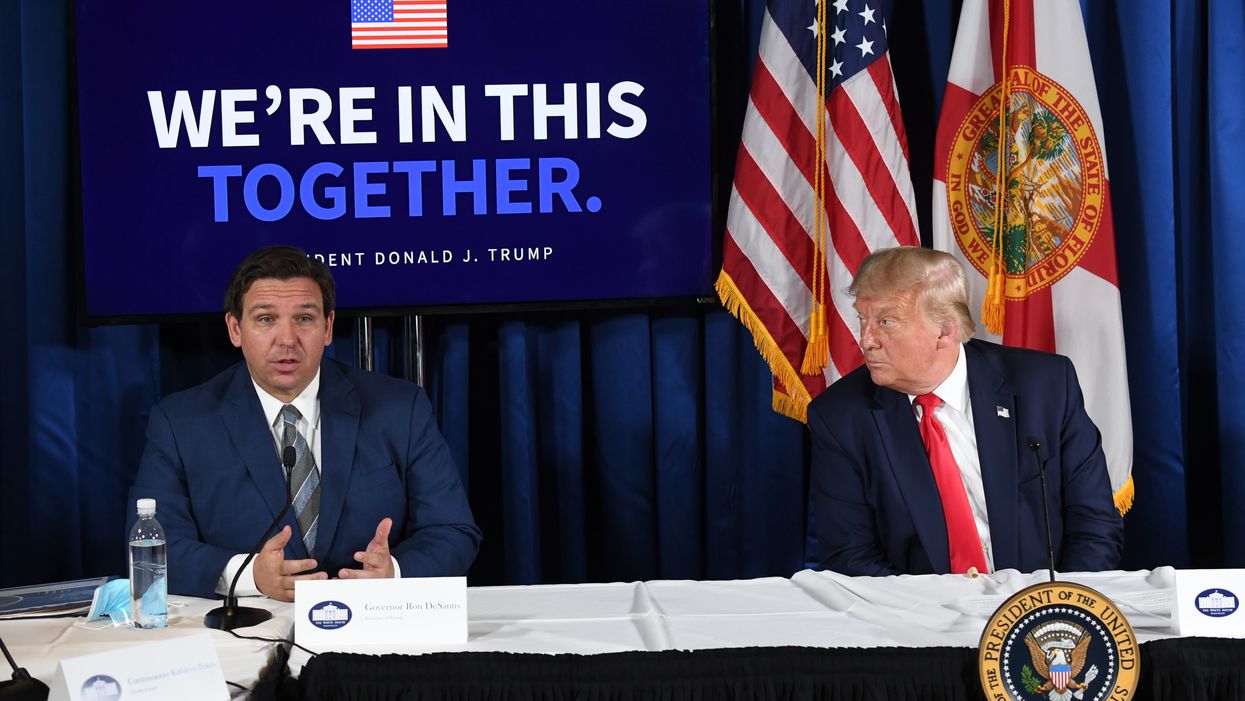
The president was perhaps referring to a recent settlement in which Republican Gov. Ron DeSantis ceded little ground to plaintiffs seeking easier paths to voting.
Recent polling suggests that Trump winning re-election without Florida's 29 electoral votes is increasingly implausible. The state's elderly population, which tilts decidedly to the GOP, has been especially reliant on absentee voting.
Eight other jurisdictions also plan to deliver mail ballots to all registered voters this fall. Hawaii, Colorado, Oregon, Utah and Washington planned to do so before the pandemic. Vermont, California and the District of Columbia decided to do so this summer.
Last week, he even suggested delaying the election rather than relying on so much more mail voting. The president does not have the power to do that, and the idea was immediately shot down by the Republcian leaders in Congress, which does have the power.
Claim: Michigan illegally sent absentee ballots to voters. Fact check: False
 Chiara Vercellone, Medill School
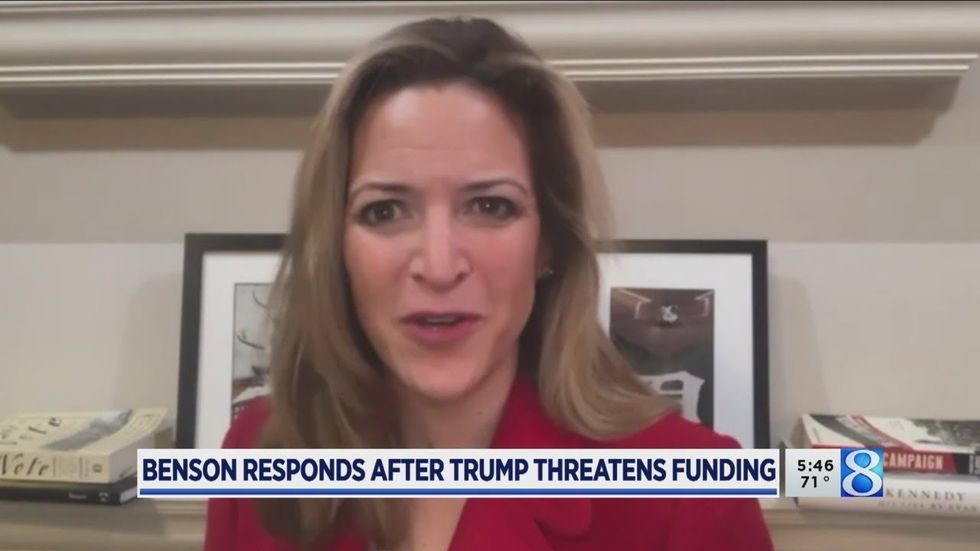
Michigan did not send ballots to registered voters like President Trump said. Michigan Secretary of State Jocelyn Benson, who has encouraged all voters to vote by mail for all elections held this year, announced Tuesday all 7.7 million registered voters would receive applications to vote by mail in the August primary and November general elections.
Responding to the president, Benson noted that her office was sending applications, not ballots, "just like my GOP colleagues in Iowa, Georgia, Nebraska and West Virginia." The applications sent out, Benson said, ensure "that no Michigander has to choose between their health and their right to vote."
In a similar tweet, Trump also accused the state of Nevada's election officials of sending mail-in ballots to voters. Earlier this month, Secretary of State Barbara Cegavske, a Republican, announced registered voters would start receiving mailed absentee ballots to vote for the primary, held predominantly by mail.
Claim: Nevada illegally mailed absentee ballots to registered voters. Fact check: False
 Kelly Cannon, Medill School
Nevada allows any voter to vote absentee by mail. Like in many other states adapting to carrying out elections amidst a global pandemic, Nevada Secretary of State Barbara Cegavske declared the upcoming primary would be carried out by mail due to the coronavirus. A federal judge recently ruled that conducting the primary election by mail ballot was lawful in rejecting an injunction to block Nevada's primary.
President Trump's tweet suggests voting-by-mail is fraudulent, despite a lack of evidence to support the claim. In a press release responding to Trump, Cegavske, a Republican, said Nevadans "have been voting by mail with no evidence of election fraud" for over a century, including members of the military, citizens residing outside the state, voters in designated mailing precincts, and voters requesting absentee ballots. Cegavske said all 17 counties have established processes and procedures in place for safe and secure mail-in voting. Research shows voter fraud with mail-in ballots is rare and even with the increase in mail voting over time, fraud rates remain "infinitesimally small," according to the Brennan Center.
The tweet also seems to suggest that Trump has the legal authority to "hold up funds" to the state of Nevada for carrying out its upcoming primary by allowing all voters to vote by mail. No such legal authority exists.
The statements made here are alike to those in another tweet Trump wrote, which levied substantially similar claims about the state of Michigan. Trump falsely accused Michigan Secretary of State Jocelyn Benson of illegally mailing out absentee ballots to 7.7 million Michiganders for the state's primary and general elections.
Claim: Vote-by-mail ballots will create a rigged election en California. Fact check: False
 Sara Wilson, Medill School
President Trump tweeted another claim about states "illegally" sending ballots or absentee applications to voters. His series of tweets about California specifically say that Gov. Gavin Newsom is sending ballots to "anyone living in the state, no matter who they are or how they got there," suggesting that people who aren't citizens are voting en masse.
Newsom issued an executive order on May 8 to send every registered voter — not anyone living in the state — a vote-by-mail ballot for the Nov. 3 election. People can still vote in person if they want.
Voter fraud in the United States is very rare. An analysis from a team of investigative journalists found 491 instances of absentee voter fraud between 2000 and 2012. "Mail ballot fraud is incredibly rare, and legitimate security concerns can be easily addressed," according to experts from the Brennan Center.
There is also little evidence that undocumented immigrants are voting in California or elsewhere. David Becker, the executive director of the Center for Election Innovation & Research, told Politifact in 2018 that "There's zero evidence of even dozens, let alone millions, of non citizens voting in this or any other election."
Claim: Voters in New Mexico are being sent multiple absentee ballots. Fact check: False
 Sam Cabral, Medill School
Charlie Kirk is conflating the issue mentioned in the photo he himself shared. As the post in the attached photo states, the household in question has received several applications to request a mail-in ballot for the upcoming election, but not ballots themselves, as Kirk falsely states.
Ahead of the state's June 2 primary election, officials in New Mexico are urging eligible voters to cast ballots by mail to reduce the risk of coronavirus transmission. Voters have responded in kind with a massive increase in requests submitted, and thousands of ballots have already been completed and returned.











The President Invited Iran to Bomb My Home